
We earn a commission if you buy through these links. Learn more
Out
A tense, unsentimental Japanese crime novel where a murder cover-up becomes a sharp study of debt, factory labor, and the women who are expected to absorb everything.
What It's About
Out is a Japanese crime novel first published in 1997 and translated into English by Stephen Snyder in 2003. It opens with a domestic killing. Masako Katori, worn down by a gambling, abusive husband, kills him in a moment of desperation, and instead of going to the police she turns to the women she works with on the night shift at a boxed-lunch factory on the edge of Tokyo. Together they begin hiding what she has done.
The book is a crime story in the sense that it follows a murder and its aftermath, but Kirino is less interested in clues than in pressure. The threats come from money, debt, and men who treat women as disposable, and the police feel like a distant presence. The narrative moves among several women's viewpoints, so the story builds through their conflicting motives, resentments, and choices rather than through a detective's reasoning.
The prose is brisk and plain, and it does not look away from the grim physical work of the cover-up or the monotony of factory life. Reading Out feels like being pulled along by a tightening knot. Expect darkness and moral ugliness, and expect sympathy that is complicated rather than comfortable.
Read this if you…
- want crime fiction driven by character, class, and social pressure rather than detective work
- are interested in dark, socially critical novels about women and work in contemporary Japan
- can handle graphic violence and a bleak, unsparing tone
Skip it if you…
- want a whodunit with a clever puzzle and a satisfying detective who solves it
- need likable protagonists or an uplifting arc
Key Ideas
- 1
Ordinary women pushed past their limits
The central figures are not criminal masterminds. They are tired, underpaid, and cornered, and the novel shows how a single desperate act can grow out of years of small humiliations. Kirino makes the reader understand how these women arrive at a point where violence seems like the only available option, without excusing what they do.
- 2
The factory as a trap
The bento plant, with its night shifts and repetitive tasks, is more than a setting. It represents a economy that depends on cheap, interchangeable labor, and the work itself becomes part of the story. The rhythms of the job shape how the women think, what they can get away with, and how little anyone notices them.
- 3
Male violence and the women who absorb it
Abuse, gambling, and indifference from men run through the book, and the consequences fall largely on women. Kirino examines how women are expected to endure, manage, and quietly clean up after men, and what happens when that expectation finally breaks.
- 4
Loyalty as both bond and leverage
The women's partnership is built on shared secrets, but it is also fragile and transactional. Each woman weighs what she owes the others against what she stands to lose. The novel is especially sharp on how friendship can turn into a form of control when money and fear are involved.
Limitations
Some readers find the shifting viewpoints uneven, and the characters are drawn with sharp strokes rather than deep interiority, so a few feel more like types than people. The bleakness is relentless, and the critique of gender and class offers little hope or resolution. Passages describing the dismemberment are graphic enough to be hard going for some. The economic details are tied to Japan in the 1990s, so readers should expect period-specific context.
Questions Readers Ask
- Is Out a mystery or a crime novel?
- It is closer to a crime novel than a traditional mystery. The murder happens early, and the book follows the cover-up and its consequences rather than asking who did it. The tension comes from whether the women can keep their secret and what that secret costs them, not from solving a puzzle.
- Is Out still relevant today?
- Its specific setting is the Japan of the 1990s, but its themes of precarious work, debt, and women carrying the burden of men's failures still resonate. Readers may find the economic background dated, but the emotional and social pressures it describes are easy to recognize.
- How does Out compare to Keigo Higashino's novels?
- Higashino is known for intricate puzzles and careful plotting, where the pleasure is in working out the solution. Kirino is grittier and more concerned with class, gender, and desperation. If you enjoy puzzle construction, Higashino may suit you better; if you want social bite, Out is the stronger choice.
- Published
- 2007
- ISBN
- 9788467225822
- Difficulty
- intermediate
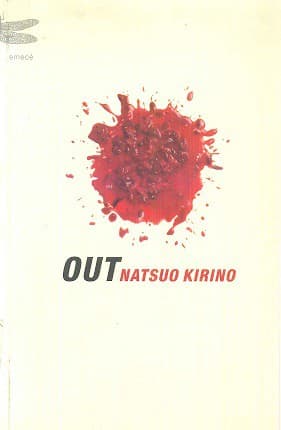
Book details and cover from Google Books.
Ready to read Out?
Get your copy on Amazon, or listen to it on Audible. We earn a commission if you buy through these links.