
We earn a commission if you buy through these links. Learn more
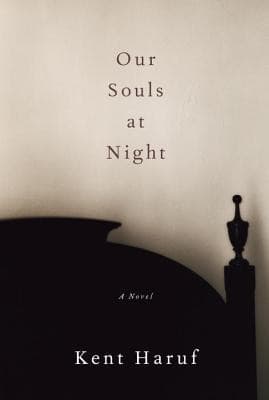
Our Souls at Night
by Kent Haruf
Guide by the Books of the Day editors · Updated · How we write our guides
A short, tender novel about two widowed neighbors who try an unusual arrangement against loneliness, told in Kent Haruf's plain, unhurried prose that rewards close, patient reading.
What Creators Say About Our Souls at Night
2 creators reviewed Our Souls at Night on YouTube between 2017 and 2019, with 36.4K views between them. Their opinions are their own; we picked these reviews, we didn't write them.
What It's About
Our Souls at Night is the last novel Kent Haruf completed before his death in 2014, published the following year. It is set in Holt, the fictional Colorado plains town that anchors his other books. The story opens with a simple, startling proposal: Addie Moore, an older widow, asks Louis Waters, a widower who lives down the street, whether he would come over and sleep beside her. She is clear that she wants company through the dark hours, not sex, and the arrangement tests how the town and their families respond.
The book is brief and written in Haruf's spare style, with short declarative sentences, little interior commentary, and dialogue that carries most of the weight. Much of the novel happens in bed, in the dark, where two people talk about their marriages, their regrets, and what they still hope for. The effect is intimate and quiet rather than plotted, and the emotional stakes come from small gestures and long silences more than from dramatic events.
Reading it feels like sitting with two people who have stopped performing for anyone. It is unsentimental about aging and loss, yet gentle about the courage it takes to ask for closeness late in life. Readers who know Haruf's other books will recognize the landscape and its moral seriousness, and newcomers will find it an easy place to start.
Read this if you…
- want a short, quiet novel about older people facing loneliness with dignity
- admired Plainsong or Haruf's other Holt books and want to return to that world
- enjoy stories driven by conversation and character rather than by plot
Skip it if you…
- need fast pacing, suspense, or a clear sequence of events
- want sharp social conflict or a wide cast of characters across a long story
Key Ideas
- 1
Companionship as a serious late-life need
The novel treats wanting someone to talk to in the dark as an ordinary adult need rather than a scandal to hide. Addie's proposal is practical and honest, and the book asks why society finds an older person's wish for closeness so uncomfortable. It never mocks the desire, and it takes both characters' loneliness seriously.
- 2
Private choices against small-town judgment
Holt is a community where everyone knows everyone's business, and gossip is a constant pressure. The tension between what the couple privately wants and what the town will say gives the story its social edge. The book shows how much courage a quiet, personal decision can require when others are watching.
- 3
Restraint as a form of moral seriousness
Haruf's plain sentences and avoidance of dramatic flourishes are not a limitation but a deliberate choice. The restraint makes ordinary gestures, like a hand held or a question asked late at night, carry real weight. Readers who enjoy understatement will find the style itself part of the emotional payoff.
- 4
Grief, regret, and the lives already lived
Both characters carry the weight of long marriages and losses. Their conversations return to what they had, what they missed, and what they did wrong, without sentimentality. The book suggests that older lives are not finished or small, and that reckoning with the past can open a door to something new.
- 5
Continuity with the Holt novels
Readers familiar with Haruf's Plainsong and its companions will recognize the setting, the weather, and the moral texture of the town. This book is narrower in scope than those, focusing on two voices rather than a crowd of characters. That focus makes it feel like a distilled version of the world he built.
Limitations
The book is deliberately slight in plot, and some readers find its dialogue repetitive or its central premise thin for a full novel. Its portrait of Holt is largely white, rural, and church-going, which limits the range of voices on the page. Because Haruf was ill while writing it and died before publication, some readers feel the prose lacks the fullness of his earlier work, and certain threads are left more open than a reader might like. Readers who want a more expansive or socially varied story may find it too small.
Questions Readers Ask
- Do I need to read Plainsong before this book?
- No. Our Souls at Night stands on its own, and you can follow it without any background in Haruf's other novels. Readers who start with Plainsong will recognize the town and its tone, which adds texture. Starting here is still a reasonable choice if you want a short, focused entry point into his work.
- Is the book still relevant for readers today?
- Yes. Its questions about loneliness, aging, and what people owe one another remain pressing, and the story does not depend on period details to work. It speaks well to anyone thinking about companionship later in life, whether they are living it, caring for someone, or simply curious about how small communities respond to unconventional choices.
- How does it compare with Plainsong?
- Plainsong follows many characters across several interlocking storylines, while this novel centers on two people and their private conversations. Plainsong feels broader and more populated, and this one feels narrower and more intimate. Readers who want community and multiple lives should begin with Plainsong, while those who prefer a concentrated emotional story may prefer this one.
- Published
- 2015
- ISBN
- 9783257069860
- Difficulty
- beginner
- Category
- Fiction
Book details and cover from Google Books.
Ready to read Our Souls at Night?
Get your copy on Amazon, or listen to it on Audible. We earn a commission if you buy through these links.