
We earn a commission if you buy through these links. Learn more
Ordinary Grace
A warm, unhurried coming-of-age mystery in 1961 Minnesota, seen through a minister's son who watches his town's grief and secrets up close, with real emotional honesty.
What It's About
Ordinary Grace is a coming-of-age novel narrated by Frank Drum, who looks back on the summer of 1961, when he was thirteen and living in a small Minnesota town. His father is a Methodist minister, and the family's routines are shaken when a run of deaths unsettles the community. The story moves between a boy's close attention to his family and a mystery that gradually pulls in the adults around him.
Krueger writes in a patient, warm voice that trusts the reader to sit with small moments: a piano lesson, a sermon, an argument at the dinner table. The mystery builds slowly, and much of the pleasure comes from watching Frank realize that the people he loves are more complicated than he assumed. The prose is clean and unhurried, closer to memoir than thriller, so readers expecting fast pacing may find the first half slow.
The reading experience is more elegiac than suspenseful. Krueger is interested in grief, moral compromise, and what it costs to stay decent in a community that prefers to hide its troubles. Expect a book that lingers, asks you to care about its characters before it asks you to solve anything, and stays with you after the last page.
Read this if you…
- want a literary mystery where the emotional story matters as much as the puzzle
- enjoy coming-of-age novels narrated with a reflective, slightly melancholy adult voice
- are interested in small-town life, faith, and the quiet moral choices families make
Skip it if you…
- need a fast-paced thriller with constant cliffhangers and a rapid plot
- want a clean, self-contained mystery with a tidy solution you can predict and enjoy
Key Ideas
- 1
Childhood remembered through an adult's eyes
Frank narrates as a grown man recalling what he understood then and what he understands now. That gap gives the book its ache, because you see the adults' choices more clearly than the boy could, and the narration never lets you forget how much a child can miss.
- 2
Grief as something a whole town carries
The deaths do not stay private. They ripple through neighbors, church members, and families, shaping who speaks and who stays silent. Krueger shows grief as a communal burden, not only a personal wound, and pays close attention to how people cope and what they avoid.
- 3
Faith tested without easy answers
Frank's father is a minister, so questions of belief, justice, and providence run through the story. The book takes faith seriously while refusing tidy resolution. It is more interested in how people keep trying to act decently under pressure than in whether God intervenes.
- 4
The cost of keeping up appearances
Small-town respectability often depends on silence. Krueger examines the quiet bargains people make to protect reputations and routines, and how those bargains can sit uneasily beside genuine kindness. The moral texture here is gray rather than villainous.
- 5
Family as both shelter and secret-keeper
The Drum household is loving but not transparent. Siblings, parents, and neighbors each hold pieces of what happened, and Frank's growing awareness of those gaps drives the emotional arc more than any single clue does.
Limitations
The pace is deliberate, and the first half in particular can feel slow to readers expecting a crime novel. Some critics find the sentiment thick and the moral lessons a little too neatly delivered. The portrait of 1960s small-town life is affectionate and can read as idealized, with limited attention to the racial and economic tensions of the era. The book also leans on coincidence and on an adult narrator's sense of destiny, which not every reader will accept.
Questions Readers Ask
- Is Ordinary Grace a mystery or a literary novel?
- It is both, but the literary side dominates. There is a real mystery driving events, yet Krueger spends more time on family relationships, grief, and Frank's growing understanding of adults. If you want a puzzle to solve, you may be less satisfied than readers who want an emotionally rich story with a crime at its center.
- How does it compare to To Kill a Mockingbird?
- Both use a young narrator in a small Southern-or-Midwestern town to examine community morality and injustice. Ordinary Grace is quieter and more focused on grief and faith, with less direct social argument. Readers who loved Scout's perspective often appreciate Frank's reflective voice, though the tone is gentler and the stakes more personal.
- Published
- 2013
- ISBN
- 9781451645828
- Difficulty
- beginner
- Category
- Fiction
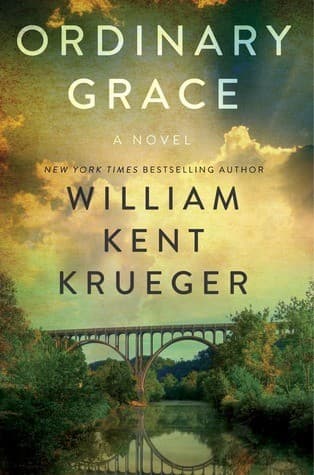
Book details and cover from Google Books.
Ready to read Ordinary Grace?
Get your copy on Amazon, or listen to it on Audible. We earn a commission if you buy through these links.