
We earn a commission if you buy through these links. Learn more
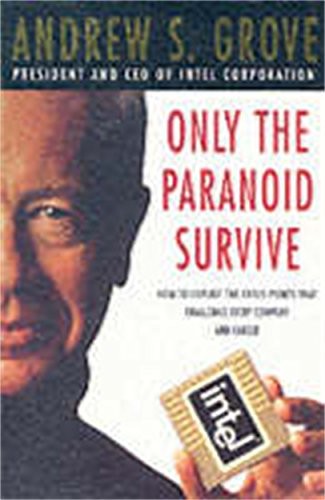
Only the Paranoid Survive
Andy Grove, who led Intel through its biggest turns, explains how to spot the moments when an industry changes shape and a company must act or fall behind.
What It's About
Only the Paranoid Survive is a short business book from Andy Grove, who ran Intel for a decade and helped make it one of the defining companies of the personal computer era. Its central subject is what he calls a strategic inflection point: a moment when the forces shaping an industry shift so sharply that the old rules stop working, and a company must change direction or be overtaken. Grove argues that these moments are easier to miss than to recognize, and that the people closest to a business are often the last to see them.
The writing is direct and conversational rather than academic. Grove draws heavily on Intel's own history, including its retreat from memory chips in the mid-1980s, and uses those decisions to test his ideas. He also adapts competitive analysis from strategy scholars, pushing the reader to think about customers, suppliers, complementary products, and new entrants. The tone mixes hard-nosed management advice with frank admissions about mistakes.
Reading it feels like sitting across from an experienced operator who respects your intelligence. The book is compact and quick to get through, and its lessons are more about attitude and attention than step-by-step technique. Expect examples tied closely to the technology sector of the 1980s and 1990s, which shapes how well the advice carries over to other fields.
Read this if you…
- want a concise, experienced operator's view of how industries change
- run or work inside a company facing a technology or market shift
- enjoy hard-won lessons from a famous business history told candidly
Skip it if you…
- want a detailed, step-by-step playbook for execution or strategy tools
- are looking for current examples from today's industries or recent tech markets
Key Ideas
- 1
Strategic inflection points change the rules
Grove's main concept is the inflection point, a turn in an industry that makes old strategies obsolete. He treats these shifts as normal rather than rare, and argues that a business survives them only by deciding early to reposition. The idea is useful as a way of asking whether the ground under your own work is moving.
- 2
Early signals appear at the edges
Grove suggests that warnings of change usually surface first among people near the front line, such as salespeople, engineers, and customers, rather than in executive reports. Leaders who want to notice a shift early need to pay attention to these sources and to be willing to hear unwelcome news before the numbers confirm it.
- 3
Competition comes from more than rivals
He widens the picture of competitive pressure to include suppliers, customers, makers of complementary products, and newcomers who can change the economics of a market. This broader view makes it harder to dismiss a threat because it does not come from the obvious competitor, and it encourages managers to map the whole system around their business.
- 4
Retreat can be the wise decision
Intel's exit from its original memory chip business is the book's most discussed case. Grove presents the choice as a painful recognition that the company was losing its position, and that a clear-eyed retreat freed resources for a stronger bet. The example shows that abandoning a long-held identity can be part of survival.
- 5
Healthy fear as a management habit
The title's paranoia is less about anxiety than about a standing habit of questioning your own assumptions and watching competitors closely. Grove presents this vigilance as a discipline that must be built into how a company operates, not a mood that comes and goes with a crisis.
Limitations
The examples come mostly from Intel and the semiconductor and computing industries of the 1980s and 1990s, so some of the specifics feel dated. Grove writes from the vantage point of a successful leader, and readers may notice that hindsight makes his decisions look clearer than they were at the time. The book offers a useful way of thinking but relatively little practical detail on how to carry out a repositioning, how to manage the people affected, or how to measure whether a change is working.
Questions Readers Ask
- Is Only the Paranoid Survive still relevant today?
- The core idea, that industries can shift sharply and companies must respond, remains valuable. The specific case studies are older and tied to the chip and computing industries of their era, so readers should treat them as illustrations and apply the reasoning to current markets rather than expecting up-to-date examples.
- Do I need a business background to read it?
- No. The book is short and written in plain language, and Grove explains his terms as he goes. A general reader with curiosity about how companies succeed or fail should follow it easily, though managers will likely get more out of the examples.
- How does it compare to other strategy books?
- It is much shorter and more personal than most strategy books, and it relies on one executive's experience rather than broad research. Readers who want a more systematic framework may prefer later works on strategy, while those who want a candid, opinionated account of leadership under pressure will find this one especially direct.
- Published
- 1998
- ISBN
- 9781861975133
- Difficulty
- beginner
Book details and cover from Google Books.
Ready to read Only the Paranoid Survive?
Get your copy on Amazon, or listen to it on Audible. We earn a commission if you buy through these links.