
We earn a commission if you buy through these links. Learn more
One Day
Guide by the Books of the Day editors · Updated · How we write our guides
A funny, tender account of two people whose lives keep crossing on one date each year, and a sharp look at how the years get away from us.
What Creators Say About One Day
2 creators reviewed One Day on YouTube between 2015 and 2024, with 14.7K views between them. Their opinions are their own; we picked these reviews, we didn't write them.
What It's About
One Day opens on the night of 15 July 1988, when Emma Morley and Dexter Mayhew, recent graduates of the University of Edinburgh, spend the night together after their graduation celebrations. The novel then returns to the same date in each following year. Rather than tracking every day, David Nicholls gives you one snapshot per year, so the gaps between chapters do much of the work. You get the mood of a single moment and then have to imagine what happened in between.
The two leads are sharply different. Emma is idealistic, quick-tongued and short of money, drifting through jobs while she works out what she wants from life. Dexter is charming, handsome and careless, and his career pulls him toward television and easy success. Their friendship, and the open question of whether they will ever be more than friends, runs under every chapter. Nicholls writes in a brisk, conversational third person that moves quickly and keeps the comedy coming, even when the material turns serious.
Reading it feels like going through a set of letters or photographs from people you know well. It is warm and often very funny, and it will likely make you wince at some of your own past choices. Expect a quick read with a strong pull toward the next July.
Read this if you…
- enjoy character-driven novels about friendship and romance across many years
- want a funny, emotional read that moves quickly and is easy to finish
- like stories about ordinary life and the regrets that come with growing older
Skip it if you…
- want a plot-driven story with suspense, mystery or a big surprise structure
- find sentimental romance hard to take, especially in its final stretch
Key Ideas
- 1
Time measured in single days
The yearly structure is the book's central device. Each chapter lands on the same date, so you see how much has changed and how little has, and you notice the distance between what the characters hoped for and what they got. The format rewards attention: a single line of dialogue can carry years of history, and the gaps create a constant tension between who these people are and who they might have become.
- 2
A friendship that refuses to stay simple
Emma and Dexter circle each other for twenty years, and the book is less about one grand romance than about how two people can matter enormously to each other while repeatedly failing to line up. Nicholls treats affection, jealousy, envy and loyalty as tangled rather than separate, which makes their relationship feel believable and often uncomfortable to watch.
- 3
Class, ambition and the cost of choices
Emma and Dexter come from different backgrounds and start from different advantages, and those differences shape their careers and self-images. The novel is alert to how money, confidence and social ease open some doors and close others. It asks what it means to chase a life you think you should want, and what gets lost when you do.
- 4
Comedy that turns into melancholy
The early chapters are light and quick, full of observational humour about youth, work and London life. Nicholls lets that tone gradually darken as the characters age, so the book shifts from a playful romp into something more reflective. The change is part of the appeal, though it also means the emotional weight arrives later than the laughs.
Limitations
The one-date-per-year structure means some years feel rushed, and important events often happen offstage between chapters. Dexter's arc leans on the familiar figure of the charming man who fails to live up to his promise, and some readers find him more of a type than a fully realised character. Emma's voice can feel conveniently witty at times. The late-1980s and 1990s cultural references are part of the book's charm but may feel dated to some younger readers. Many also find the closing stretch more sentimental than the rest of the novel.
Questions Readers Ask
- Is One Day a love story?
- It is, but it is also a close study of friendship, ambition and class. The romantic thread drives much of the reading experience, yet the book spends just as much time on who the characters become and how they handle disappointment. If you want pure romance, you may find the friendship portrayed in a more complicated way than you expect.
- Does One Day still feel relevant?
- The emotional questions hold up well: how to know what you want, how relationships change, and how far life drifts from early plans. Some period details, including music, technology and pop culture, now read as dated, which many readers enjoy as a kind of nostalgia. The book works best if you accept it as a snapshot of its era.
- Who will enjoy One Day if they liked Nick Hornby?
- Readers who like Nick Hornby's wry, conversational tone and his interest in ordinary people trying to figure out their lives will likely enjoy it. One Day is perhaps softer and more openly romantic than much of Hornby's work, so it suits readers who want warmth alongside the humour.
- Published
- 2009
- ISBN
- 9780307743770
- Difficulty
- beginner
- Category
- Fiction
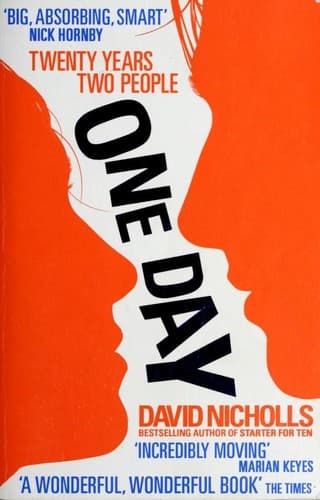
Book details and cover from Google Books.
Ready to read One Day?
Get your copy on Amazon, or listen to it on Audible. We earn a commission if you buy through these links.