
We earn a commission if you buy through these links. Learn more
Oliver Twist
On screen: Oliver! (film, 1968)
Guide by the Books of the Day editors · Updated · How we write our guides
Dickens's brisk, angry second novel turns an orphan's escape from a workhouse into a gripping look at London's thieves and the people who exploit them.
What Creators Say About Oliver Twist
2 creators reviewed Oliver Twist on YouTube between 2020 and 2021, with 498.6K views between them. Their opinions are their own; we picked these reviews, we didn't write them.
What It's About
Oliver Twist follows a boy born in a parish workhouse who, after a run of humiliations, is sent to London and drawn into a gang of pickpockets run by the scheming Fagin. Dickens wrote it as a monthly serial in the late 1830s, and you can feel that origin in the way each stretch ends on a hook and the cast keeps arriving in vivid, sometimes exaggerated, waves. It was written during public arguments over the New Poor Law, and its anger at the workhouse system drives much of the book.
The style is theatrical in the best sense. Dickens leans on caricature, nicknames, and melodrama, and he trusts readers to enjoy a memorable villain or a lurid street scene. The London he shows is crowded, smoky, and dangerous, with the criminal underworld rendered more energetically than the respectable world, which is part of why the villains steal the show. Expect long, ornate sentences, a narrator who comments freely, and a plot that depends on coincidence more than modern readers are used to.
Reading it is less like settling into a quiet, psychologically subtle novel and more like being pulled along by a brisk, sometimes sentimental storyteller who knows exactly when to make you laugh and when to make you wince. The pleasure lies in the energy and the character work rather than in the mystery structure, which is more scaffold than puzzle.
Read this if you…
- want a vivid Victorian page-turner with unforgettable villains
- are interested in how fiction can drive social reform
- enjoy serialized storytelling with big casts and cliffhanger chapters
Skip it if you…
- want subtle psychological interiority or a tightly controlled plot
- find sentimental coincidence and melodrama hard to take seriously
Key Ideas
- 1
Institutions that punish the poor
The workhouse opens the book and shapes everything after it. Dickens presents the parish authorities as cold bureaucrats more concerned with cost than with the children in their care. Read as a piece of social argument, the novel makes a plain case that a system designed to deter poverty ends up brutalising the people it claims to help.
- 2
Fagin and the economics of crime
Fagin is less a mastermind than a businessman who treats children as an investment. He feeds, trains, and controls them in exchange for a cut of what they steal. Dickens shows crime as a labour market shaped by hunger and debt, so the criminals come across as products of their circumstances as well as agents of harm.
- 3
Goodness tested in a corrupt city
Oliver's steady decency amid theft, violence, and betrayal is the moral centre of the story. Dickens wants readers to see that character can survive bad surroundings, and he sometimes makes that point with a heavy hand. The contrast between Oliver's innocence and the city's appetites gives the book much of its emotional force.
- 4
Caricature as a method of argument
Dickens draws characters in bold, memorable strokes, with exaggerated voices, habits, and physical quirks. These figures are not realistic in the modern sense, but they make the moral categories easy to see and hard to forget. Part of the pleasure is watching how far the author pushes a type before it tips into farce or menace.
Limitations
Oliver himself is often more a symbol of virtue than a fully developed person, so the emotional stakes can feel thinner than the surrounding drama. The sentiment is thick, and many coincidences strain belief. The portrayal of Fagin relies on antisemitic stereotypes that many readers find uncomfortable, and modern editions often include notes on this. Dickens's critique stops at reforming institutions rather than questioning the economic order that produced the poverty in the first place.
Questions Readers Ask
- Is Oliver Twist suitable for teenagers?
- Yes, many teenagers read it in school and enjoy it. The violence is mostly implied rather than explicit, and the plot moves quickly. Younger readers may need help with the Victorian vocabulary and the long, digressive sentences, and it helps to talk about the antisemitic caricature of Fagin when it comes up.
- How does Oliver Twist compare to Great Expectations?
- Oliver Twist is faster, more episodic, and more openly angry about social injustice. Great Expectations is more controlled, more personal, and more interested in the inner life of its narrator. If you liked the energy of the London underworld here, Oliver Twist is the better choice. If you want a tighter story about ambition and guilt, try Great Expectations next.
- Published
- 1822
- ISBN
- 9798719475431
- Difficulty
- intermediate
- Category
- Fiction
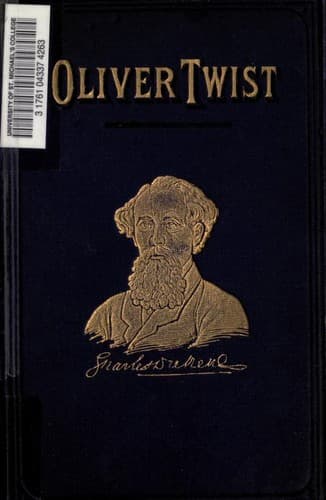
Book details and cover from Google Books.
Ready to read Oliver Twist?
Get your copy on Amazon, or listen to it on Audible. We earn a commission if you buy through these links.