
We earn a commission if you buy through these links. Learn more
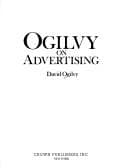
Ogilvy on advertising
by David Ogilvy
A short, opinionated classic from one of advertising's most influential practitioners, offering instincts on headlines, research and brand building that still hold up.
What It's About
Ogilvy on Advertising, published in 1983, collects the practical thinking of David Ogilvy, the British-born founder of the agency that carried his name. It draws on his memos, speeches and past campaigns rather than offering a formal theory. It reads more like a seasoned creative director talking across a desk, moving between stories from agency life, blunt advice about what sells, and examples of what worked and what didn't.
The approach is empirical. Ogilvy repeatedly argues that claims should be tested, that research into what readers actually notice should guide creative choices, and that cleverness for its own sake is a luxury most clients cannot afford. Much of the advice is concrete: how headlines earn attention, why detailed copy can outsell short copy, and how a brand is a set of consistent associations built over years rather than a series of novelties.
Reading it is quick and opinionated. The chapters are short and sometimes repetitive, and the tone is confident to the point of bossiness. The pleasure lies in the authority and specificity, and in watching a sharp mind argue against fashionable taste. You finish it with a set of instincts and rules of thumb rather than a mechanical method.
Read this if you…
- are writing ad copy, marketing a product, or running a small business and want practical instincts for persuasion
- want a classic, opinionated primer on how advertising was practised in the mid-twentieth century
- enjoy short, confident writing and don't mind strong opinions you may end up disagreeing with
Skip it if you…
- want current guidance on digital, social, or performance marketing, where the channels and metrics have changed completely
- are looking for a theory-driven academic account of persuasion or consumer psychology
Key Ideas
- 1
Headlines do most of the work
Ogilvy argues that the headline is often the only thing a reader sees, so it has to carry the selling promise. He favours headlines that offer a clear benefit and some genuine news. Once the headline has earned attention, the body copy has a chance to persuade, which is why he treats the headline as the most important piece of any advertisement.
- 2
Research should discipline creativity
He insists that agencies study what consumers respond to and test copy and visuals before committing money. He does not dismiss creative ambition, but he wants it checked against evidence. The idea is that taste is a poor guide when the client's budget is on the line, and that tested work beats work that merely impresses other people in the industry.
- 3
Brand image builds over years
Each advertisement should add to a consistent personality for a product, so that over time the brand comes to mean something specific. He contrasts this with campaigns that chase novelty and reset every year. The argument is that cumulative consistency is a long-term asset, and that every piece of advertising either builds or wastes that image.
- 4
Respect the reader with real information
Ogilvy defends long copy for considered purchases, arguing that people who are interested in a product want facts and will read them. He believes intelligence and respect for the reader sell better than tricks. This runs against the common assumption that audiences only skim, and the reasoning is worth weighing even if you disagree with the conclusion.
- 5
Advertising as a craft with duties
Throughout, he frames advertising as work with obligations: telling the truth about products, avoiding deception, and giving clients candid counsel even when it is unwelcome. This ethical thread is less flashy than the practical advice but gives the book a consistent moral backbone that many readers find as memorable as the tactics.
Limitations
Most of the examples come from print and television campaigns of decades ago, so the specifics feel like period pieces. The data tools and media landscape the book assumes are largely gone, and some rules of thumb read as personal taste presented as law. The agency's own work is foregrounded, which can feel self-congratulatory. Because the material was gathered from different sources, some points repeat. The underlying principles about clarity, testing and consistent brand building still hold up well for many readers.
Questions Readers Ask
- Is Ogilvy on Advertising still relevant today?
- The core principles about headlines, clarity, testing and consistent brand building still hold up, even though the channels and measurement tools have changed enormously. Treat the specific campaigns as historical examples and the reasoning behind them as the lasting part of the book.
- How does it compare to Confessions of an Advertising Man?
- Confessions of an Advertising Man, Ogilvy's earlier book, is more memoir-like and leans on his career and personal views of the industry. Ogilvy on Advertising is more practical and organised around the craft itself, so it suits readers who want working advice rather than an account of the agency's history.
- Is it useful if I'm not in advertising?
- Yes, for anyone who writes to persuade. Its advice on making a clear promise early, using specific information and respecting the reader applies to sales pages, proposals, newsletters and product descriptions, even though the examples are about advertising.
- Published
- 1983
- ISBN
- 9789021832586
- Difficulty
- beginner
- Category
- Advertising
Book details and cover from Google Books.
Ready to read Ogilvy on advertising?
Get your copy on Amazon, or listen to it on Audible. We earn a commission if you buy through these links.