
We earn a commission if you buy through these links. Learn more
No-no boy
by John Okada
Guide by the Books of the Day editors · Updated · How we write our guides
A bruising postwar novel about a Japanese American man who refused the army and the loyalty oath, and now must face his family and neighbors. Its spare, raw style rewards patient readers.
What Creators Say About No-no boy
2 creators reviewed No-no boy on YouTube between 2022 and 2023, with 4.1K views between them. Their opinions are their own; we picked these reviews, we didn't write them.
What It's About
No-No Boy, published in 1957 by John Okada, follows Ichiro Yamada, a Nisei man from Seattle who returns home in 1946 after two years in federal prison. During the war he answered "no" to two questions on the government's loyalty questionnaire, refusing to serve in the army and refusing to swear unqualified allegiance to the United States. The novel traces his attempt to rebuild a life in a Japanese American community that has largely moved on around him.
Okada's approach is blunt and close. Scenes are short, the phrasing often repeats, and the narration circles the same questions of guilt, identity, and family again and again. Much of the book reads as interior argument rather than action, and the street-level speech of Seattle's Japanese American neighborhood carries much of its weight. Reading it feels less like following a plot than sitting with a man who cannot settle on who he is.
The book asks for patience, and its power comes from unglamorous details of postwar life: job hunting, tense family meals, and the quiet judgments of people who fought or lost family in the war. It was largely overlooked when first published and was rediscovered in the 1970s, when Asian American writers and critics championed it as a foundational text.
Read this if you…
- want a postwar American novel about divided loyalty and the cost of standing apart
- are interested in the roots of Asian American literature and the history behind it
- enjoy slow, psychologically intense books that prioritize mood and argument over plot
Skip it if you…
- want a fast-moving story with a clear arc and a tidy resolution
- need a protagonist who is easy to admire or who consistently acts sympathetically
Key Ideas
- 1
Loyalty forced into a yes-or-no answer
The novel shows how the wartime questionnaire reduced a complicated identity to two binary questions. Ichiro's answers cost him his freedom and his place among his peers, and the book makes clear that for many Nisei, there was no safe option. The question of what loyalty means is never abstract here.
- 2
Guilt and a divided sense of self
Ichiro's refusal may be principled, but it leaves him isolated and second-guessing himself. The book examines how shame can grow out of conviction, and how a man can feel he has betrayed both his country and his community while believing he acted rightly.
- 3
Generational gaps inside one family
Ichiro's mother remains devoted to Japan, and his relationships with his parents and his late brother carry much of the emotional charge. The novel explores how immigrant parents and American-born children could share a home yet hold almost opposite views of the nation.
- 4
A community split by the war
Veterans, resisters, and families who simply kept their heads down all live side by side in the same neighborhood. Okada portrays the suspicion, judgment, and pressure to conform that followed, showing how wartime choices shaped daily social life long after the fighting ended.
- 5
Repetition as a way of thinking
The book's spare, looping style is not a flaw to be overlooked but a deliberate choice. The repeated phrasing mirrors Ichiro's obsessive mental replaying of his choices, so the form itself expresses the psychological trap he is in.
Limitations
The prose is uneven. Its repetitions and stiff, formal dialogue can feel mannered to modern readers, and some scenes drag. Women and minor characters are sketched more thinly than the central figure, and the mother's perspective is often filtered through Ichiro's resentment. Ichiro himself can be difficult to like, which some readers find frustrating. The book is also very much of its time in language and assumptions, so readers should approach it as a historical document as much as a novel.
Questions Readers Ask
- Is No-No Boy still relevant today?
- Yes. Its questions about loyalty, the pressure to prove one's Americanness, and the lasting damage of wartime policy remain pressing. It is also widely taught as a foundational Asian American text, so it still shapes conversations about the literature.
- How does No-No Boy compare to Citizen 13660?
- Both deal with Japanese American incarceration, but they differ in form. Okada's novel is fiction focused on one man's inner conflict and postwar return, while Mine Okubo's Citizen 13660 is a memoir of camp life told through sketches. Readers interested in the wartime experience might read both.
- Who is this book best suited for?
- It suits readers who are comfortable with a slow, introspective novel and want to understand how the war shaped Japanese American communities. It is less suited to those looking for escapism or a conventional plot.
- Published
- 1957
- ISBN
- 9780295994048
- Difficulty
- intermediate
- Category
- Fiction
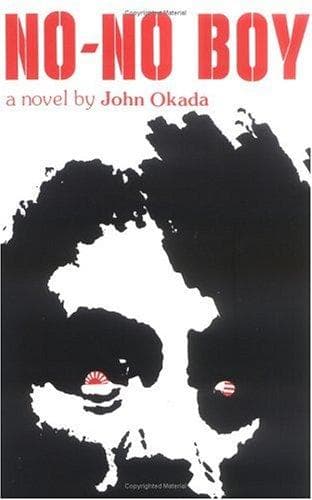
Book details and cover from Google Books.
Ready to read No-no boy?
Get your copy on Amazon, or listen to it on Audible. We earn a commission if you buy through these links.