
We earn a commission if you buy through these links. Learn more
Nights at the circus
A bawdy, baroque, and funny novel about a celebrated aerialist, her hunger for freedom, and the journalist who wants to find out whether her wings are real.
What It's About
Nights at the Circus, published in 1984, opens in late nineteenth-century London, where Sophie Fevvers is the star of a music-hall act built on the claim that she is a winged woman. An American reporter, Jack Walser, arrives to interview her and to expose the trick behind the spectacle. The novel is less a puzzle than a portrait of a performer who knows exactly how much the audience wants to believe.
Carter tells much of the story through Fevvers's own voice, a loud, funny, unapologetic cockney delivery full of puns, boasts, and bawdy asides. Because she is always shaping her own legend, the reader never quite knows how much to trust her. The book moves from the streets of London to a travelling circus crossing Siberia by train, and its tone shifts with the setting, from street comedy toward something stranger and more dreamlike.
Reading it feels like walking through a gaudy fairground. The sentences are rich, ironic, and often very funny, and Carter cares more about ideas, atmosphere, and set pieces than about tidy plotting. Expect a book that rewards close attention, enjoys misdirection, and treats the reader as a fellow spectator.
Read this if you…
- enjoy dense, witty prose and a narrator who lies charmingly
- like magic realism, picaresque adventure, or fairy-tale strangeness
- want a feminist novel that is bawdy and playful rather than earnest
Skip it if you…
- need a tightly plotted story that moves steadily forward
- find heavy wordplay and dialect tiring over several hundred pages
Key Ideas
- 1
Performance as the making of a self
Fevvers builds her identity as a continuous act, and the novel keeps asking what is real when an audience wants a marvel. Carter treats reputation, costume, and storytelling as the materials people use to construct who they are, and she is quick to notice how much of a public figure is staged for others.
- 2
Gender, appetite, and the New Woman
Fevvers's independence, humour, and sexual confidence push against Victorian and Edwardian expectations about women's bodies and roles. Carter keeps this feminism playful and unsentimental rather than preachy, so the politics arrive through jokes, excess, and characters who refuse to be tidy examples of anything.
- 3
Evolution, science, and the marvellous
The book plays with the era's fascination with classification, new scientific theories, freak shows, and the idea of the human as an animal in progress. It sets wonder against rationalism and asks whether a world that explains everything has any room left for the miraculous.
- 4
A narrator's voice drives the book
The distinctive storytelling lies in Fevvers's rambunctious speech and Carter's ornate prose, which together make the comedy and the sadness land at the same moment. Much of the pleasure comes from hearing a character who is both a fraud and a sincere believer in her own spectacle.
Limitations
The middle section, set on the train across Siberia, is the part most often criticised as loose, with episodes that wander and a lot of elaborate description. Some readers find the London opening more emotionally focused than the later sections. Others find the constant punning and cockney voice wearing. Critics have also questioned whether the book's frank sexuality and grotesque imagery always serve its feminist aims, and its depiction of Russia and Siberia has been read by some as shaped by Western fantasy rather than observation.
Questions Readers Ask
- Is Nights at the Circus a good first Angela Carter book?
- It can be, but it is long and dense, so many readers start with The Bloody Chamber, a shorter collection of retold fairy tales that shows her style in smaller doses. If you enjoy that, Nights at the Circus will feel like a bigger, looser, funnier version of the same imagination.
- Is the book still relevant today?
- Yes. Its questions about performance, public identity, gender, and who gets to tell a woman's story remain very live. The jokes about celebrity and the press also read as sharper now than they might have in 1984.
- How does it compare to Dickens?
- Carter borrows Dickens's comic energy, street-level characters, and appetite for episodic adventure, but her prose is more ironic and self-conscious. Where Dickens builds sympathy through moral clarity, Carter prefers ambiguity and a narrator who may be lying.
- Published
- 1984
- ISBN
- 9780701139322
- Difficulty
- intermediate
- Category
- Fiction
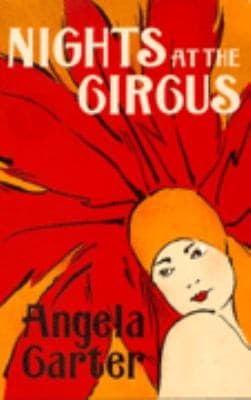
Book details and cover from Google Books.
Ready to read Nights at the circus?
Get your copy on Amazon, or listen to it on Audible. We earn a commission if you buy through these links.