
We earn a commission if you buy through these links. Learn more
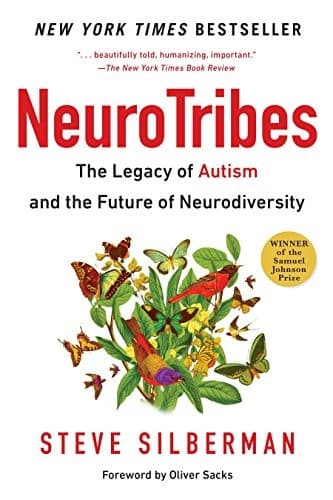
Neurotribes
Silberman turns the history of autism into a story of people, from the clinicians who named it to the families and autistic adults who fought over what it meant.
What It's About
NeuroTribes is a narrative history of autism, tracing how the condition was named, misunderstood, and contested from the 1940s to the early 2010s. Silberman, a longtime science and culture journalist, follows the people behind the diagnosis: the clinicians whose papers launched the field, the parents who were blamed for their children's condition, and the autistic adults who eventually pushed back. The book is built around stories rather than a textbook survey, so you meet characters as well as ideas.
The approach is part history, part reportage, and part argument. Silberman writes with warmth toward his subjects and clear impatience with a field that defined autism largely through experts who rarely asked autistic people what they needed. Reading it feels like following a long chain of cause and reaction: a diagnosis reshapes a family, a family reshapes a movement, and a movement reshapes the next diagnostic manual. It is dense with names and dates, but the narrative keeps moving.
The experience is less a guide than a reframing. You finish with a sharper sense of how much of today's autism debate rests on decisions made generations ago, and why the word neurodiversity became a political as well as a scientific claim. It rewards patience and pairs well with first-person writing by autistic authors.
Read this if you…
- want the history behind today's autism debates and how diagnostic categories came to be
- are a parent, clinician, or student trying to understand how the parents' and neurodiversity movements developed
- enjoy narrative history with a strong cast of characters and an open point of view
Skip it if you…
- want practical guidance on supporting an autistic child or adult, since this is history rather than a how-to
- need a neutral, up-to-date medical reference on autism's causes and treatments
Key Ideas
- 1
Autism was described from two directions at once
Around 1943 and 1944, two clinicians working in different countries described children with overlapping but distinct profiles. Silberman shows how their work was shaped by their settings, including wartime Vienna, and how one of the two versions stayed largely unknown in English for decades. The point is that the category was never a single, neutral discovery.
- 2
Blame fell on parents before evidence did
For years, popular and professional theories placed the cause of autism on emotionally cold parenting, especially mothers. Silberman shows how these ideas shaped treatment, produced guilt, and delayed research into biological causes. The chapters on this period are some of the most painful in the book.
- 3
Parents organized and changed the research agenda
Families who rejected blame built advocacy groups, pushed for services, and lobbied for funding. Silberman traces the tension between those who wanted to treat or cure autism and those who wanted the world to accept autistic people as they are. That split still shapes debates about research priorities today.
- 4
Neurodiversity as a civil rights framework
Autistic self-advocates argued that difference should not be treated only as deficit, and that supports should follow their needs. Silberman treats this as the book's central argument and gives its advocates real space. Readers who see the framing as contested will still find the case laid out clearly.
- 5
Diagnostic categories are social decisions
The book shows how the boundaries of autism moved across editions of the diagnostic manual, including the 2013 decision to fold Asperger's into a single spectrum. Silberman argues these changes reflect negotiation among experts, parents, and advocates as much as new science. This makes the history useful for understanding why labels mean different things to different people.
Limitations
Critics have argued that the book's advocacy for neurodiversity can flatten the experiences of autistic people with high support needs, including those who do not speak, and that its heroes-and-villains structure sometimes simplifies complicated debates. Its portrait of Hans Asperger was also later complicated by research into his wartime record, which surfaced after publication and suggested a more compromised figure than the book implies. Readers wanting current science on causes or treatments will find it dated; it is a history, not an update.
Questions Readers Ask
- Is NeuroTribes still relevant today?
- Yes, especially for understanding how the current diagnostic framework and the neurodiversity debate came about. The research on genetics, early intervention, and treatment has moved on since publication, so pair it with newer scientific work if you need current findings. Its value today lies mainly in the context it gives to present arguments.
- Is NeuroTribes a good first book about autism?
- It is a good first book if you want the social and historical context, the people involved, and why the field argues the way it does. It is less useful for practical strategies or detailed clinical information. Pair it with a first-person account by an autistic author for a fuller picture of lived experience.
- Published
- 2015
- ISBN
- 9781583334676
- Difficulty
- intermediate
- Category
- Psychology
Book details and cover from Google Books.
Ready to read Neurotribes?
Get your copy on Amazon, or listen to it on Audible. We earn a commission if you buy through these links.