
We earn a commission if you buy through these links. Learn more
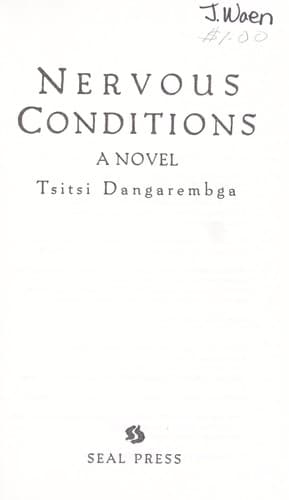
Nervous Conditions
Dangarembga's 1988 novel follows a Zimbabwean girl who seizes her chance at an education and finds that every door it opens comes with a cost.
What It's About
Nervous Conditions is set in the 1960s in the Rhodesian countryside and narrated by Tambudzai, called Tambu, who looks back on her girlhood in a crowded homestead where schooling is scarce and a boy's future is considered more worth paying for. When a family death opens an unexpected door, Tambu is sent to a mission school run in the colonial style, and she begins to measure her life against the new world she is entering.
The book is written in the first person, with a retrospective voice that is wry, observant, and unsentimental. Dangarembga traces several layers of pressure at once: colonial authority, traditional family obligations, Christian mission education, and the power of fathers, uncles, and husbands. Tambu sees these forces before she has words for them, so the reader often understands more than the narrator does, which gives the novel its tension.
The emotional core is Tambu's relationship with her cousin Nyasha, who has lived abroad and questions everything around her. Their friendship and clashes carry most of the novel's ideas, and the book treats its depictions of psychological strain without softening them. The result is a novel of ideas that works through domestic scenes rather than lecture. It is not a fast read, but its prose rewards close attention.
Read this if you…
- enjoy character-driven novels about family, power, and growing up
- want a coming-of-age story with a sharp postcolonial lens
- are building a foundation in African literature written in English
Skip it if you…
- want a fast plot with steady suspense and forward momentum
- prefer lush, highly ornamented prose, since this book is plain and direct
Key Ideas
- 1
Education as both escape and trap
Tambu's schooling offers her a way out of a limited future, but it arrives wrapped in the values of the institutions that provide it. The novel keeps asking what it costs to become educated, and who gets to decide what that education is for. Her ambition is never simply good or bad, and the book trusts the reader to hold both sides of that question.
- 2
Patriarchy that predates and survives colonialism
Dangarembga shows that gender hierarchy existed in the family long before the colonial system arrived, yet colonial structures reinforce it in new forms. Women's labour, marriage prospects, and access to schooling are all shaped by men's decisions. The book refuses to let colonialism serve as the only explanation for the injustices its characters suffer.
- 3
Colonial pressure in everyday life
Colonialism here is not only war or politics but a daily set of pressures: language, class distinctions among Africans, the lure of English manners, and the gap between the homestead and the mission. Dangarembga shows how these small hierarchies shape who people become. The novel's power comes from this attention to ordinary moments.
- 4
Nyasha and the strain of two worlds
Nyasha's struggle to live between her family's expectations and the values she absorbed abroad forms the book's most painful thread. The title draws on an idea associated with Frantz Fanon about the psychological damage of colonial life. Dangarembga handles mental distress with unflinching honesty, presenting it as a consequence of pressures rather than a personal failing.
- 5
A narrator who is still learning to see
Tambu's voice is clear but not all-knowing, and she often misjudges people and situations. That gap between what she reports and what the reader sees is one of the novel's distinctive features. Her growing awareness is the book's real subject, and reading it feels like watching someone slowly learn the terms of her own life.
Limitations
The novel is compact but its pace is deliberate, and readers used to brisk plotting may find the middle stretches slow. Some critics note that Tambu's hopes for advancement sit uneasily with the materialism she sometimes criticises, which the book leaves partly open. It centres one family and one social position, so it does not speak for every Zimbabwean experience. The independence war lies mostly beyond its frame, so readers wanting that history will need other sources.
Questions Readers Ask
- Is Nervous Conditions still relevant today?
- Yes. Its questions about schooling, gender, and the inner costs of colonial rule remain widely discussed and are often taught in university courses on postcolonial and African literature. Because it focuses on a family rather than on large historical events, its emotional concerns feel current even though its setting is decades in the past.
- How does it compare to Things Fall Apart?
- Achebe's novel is a broader, more communal account of Igbo life and the arrival of missionaries. Dangarembga's book is narrower and more intimate, following one girl's inner life inside a family, and it gives more attention to gender and women's experience. Readers who admire one often find the other rewarding for different reasons.
- Do I need to know Zimbabwean history before reading?
- No. The novel explains its world through the story and Tambu's observations. Some background on colonial Rhodesia will add depth to the mission school scenes, but it is not required. Readers can follow the characters and conflicts without prior knowledge.
- Published
- 1988
- ISBN
- 9781580051347
- Difficulty
- intermediate
- Category
- Fiction
Book details and cover from Google Books.
Ready to read Nervous Conditions?
Get your copy on Amazon, or listen to it on Audible. We earn a commission if you buy through these links.