
We earn a commission if you buy through these links. Learn more
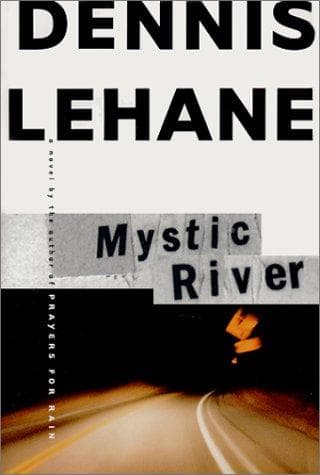
Mystic river
A grim, deeply human crime novel about three Boston childhood friends whose lives split apart after one afternoon in 1975, and whose bond is tested again when a murder pulls them back together.
What It's About
Mystic River is a crime novel about three boys from a tight working-class Boston neighborhood whose lives split apart after a single afternoon in 1975. Decades later, the grown men are pulled back together when the daughter of one of them is murdered, and the case forces old loyalties, guilt, and suspicion to the surface. The book works as a crime story, but it is really about what grows out of a childhood nobody talks about.
Lehane tells the story through close third-person chapters that rotate among the men and a few other characters, so the reader sees the same events from different sides and gradually learns how little each of them has ever said aloud. The structure is patient. Much of the book is about waiting, rumor, and the small talk of people who know each other too well, and the violence, when it comes, lands harder for that restraint.
The experience is heavy and emotionally direct rather than puzzle-driven. Readers come for atmosphere, moral weight, and a portrait of Boston's Irish-American streets, and they stay for the question running underneath everything: how much of a childhood can an adult carry before it shapes every choice he makes. Lehane is less interested in who did what than in what violence costs the people who loved the victims and the people who were once victims themselves. The prose is plain and muscular, with dialogue that sounds like people who grew up together.
Read this if you…
- want a crime novel driven by character, moral weight, and emotional honesty more than plot twists
- are interested in how childhood trauma shapes adult relationships and choices
- enjoy dark, atmospheric fiction set in a tight-knit working-class community
Skip it if you…
- need a fast-paced thriller with a clear puzzle to solve and frequent cliffhangers
- find graphic violence or abuse themes too hard to read, even when they are handled with restraint
Key Ideas
- 1
Childhood trauma that never leaves
The book treats one traumatic event in childhood as the root of adult behavior rather than a closed chapter. Each character has absorbed that afternoon differently, and the novel shows how silence, shame, and fear quietly steer their decisions for decades. It is less a story about what happened then than about how people keep living inside it.
- 2
Male friendship shaped by loyalty and secrets
The bond between the three men is the emotional center of the novel. Their friendship rests on shared loyalty, but also on things none of them has told the others. Lehane examines how that kind of closeness can protect people and also trap them, especially in a culture where men rarely name what they feel.
- 3
Working-class Boston and community suspicion
The neighborhood is a character in its own right. Everyone knows everyone, gossip travels fast, and loyalty to the block can matter more than the truth. Readers get a close look at how a tight community closes ranks, judges outsiders and insiders alike, and turns quickly from sympathy to suspicion.
- 4
Slow, shifting points of view
Rotating perspectives let the reader hold several versions of the same past at once, and the picture changes as the chapters pass. The method rewards attention and patience. Instead of a clean chase, you get a layered portrait of people deciding what they can live with, which is why the book feels more like a character study than a whodunit.
Limitations
The book is bleak and violent, and its treatment of childhood abuse is disturbing, which will put some readers off. Critics sometimes point out that the women characters are thinner than the men and mostly serve the men's stories. The Boston dialect, slang, and neighborhood detail can feel dense to outsiders. Some readers also find the resolution emotionally grim and unsatisfying, though others see that bleakness as the point of the novel.
Questions Readers Ask
- Is Mystic River the same as the Clint Eastwood movie?
- The 2003 film directed by Clint Eastwood is a faithful but compressed adaptation of the novel. It starred Sean Penn and Tim Robbins, and it won Oscars for both actors. The novel has more interior detail, more of the neighborhood texture, and a fuller view of each character's inner life, so reading the book gives you more than the film does.
- Do I need to read other Dennis Lehane books first?
- No. Mystic River is a standalone novel and is not part of Lehane's Kenzie and Gennaro series, which follows different characters. You can start here without any background, and the book explains everything it needs to as it goes.
- Is it still worth reading in the 2020s?
- Yes, especially if you care about character-driven crime fiction. The book is set in a pre-smartphone era, but its themes of trauma, loyalty, and community suspicion have not aged. The main thing that dates it is the setting's specific texture of local life, which adds to its atmosphere rather than weakening it.
- Published
- 2001
- ISBN
- 9780062068408
- Difficulty
- intermediate
- Category
- Mystery & Thriller
Book details and cover from Google Books.
Ready to read Mystic river?
Get your copy on Amazon, or listen to it on Audible. We earn a commission if you buy through these links.