
We earn a commission if you buy through these links. Learn more
My Brilliant Friend
by Chiara Lagani, Elena Ferrante
Guide by the Books of the Day editors · Updated · How we write our guides
A gripping, unsentimental portrait of a lifelong friendship between two girls in postwar Naples, and the first book of Ferrante's celebrated Neapolitan novels.
What It's About
My Brilliant Friend, by Elena Ferrante, is the first volume of the Neapolitan novels, a long sequence that follows two girls from a rough working-class neighborhood in Naples through childhood and adolescence in the 1950s. The narrator, Elena, is a diligent student who works her way into better schooling. Her friend Lila is quicker, fiercer and more gifted, and the book is shaped by the pull between them, with love and rivalry tangled together.
Ferrante writes in a direct, plain-seeming first person that often feels like confession. Elena looks back from later life, so the book carries an undertone of retrospect and unease, and she is candid about her own envy and small cruelties. The prose is unshowy rather than lyrical, but the details of streets, families, stairwells, shops and school corridors accumulate into a convincing world. Poverty, violence and dialect sit alongside ordinary rituals and jokes.
Reading it is less like following a plot than like living inside a community and watching a friendship change its shape. It is absorbing and often uncomfortable, because it refuses to make its characters easy to like. Most readers finish it wanting the next volume right away.
Read this if you…
- want a long, character-driven novel about friendship and its complications
- are interested in class, education and what talent can and cannot change
- like a candid first-person narrator who is not always flattering to herself
Skip it if you…
- need fast plotting, a clear arc, or a satisfying resolution within this volume
- are put off by bleak settings, frequent violence, or unlikable characters
Key Ideas
- 1
Friendship as both rivalry and dependence
The central relationship is not a simple bond of loyalty. Elena and Lila push each other, compare themselves constantly, and depend on each other for a sense of who they are. The book is interested in how closeness can produce resentment as easily as warmth, and it treats that ambivalence seriously rather than resolving it into a tidy moral.
- 2
Talent meeting the limits of class
Schooling offers Elena a route out of the neighborhood, while Lila's obvious intelligence runs into family expectations, money and the rules of her world. Ferrante asks what it means to be gifted in a place that has few channels for that gift, and how ambition can split a person from the people and places that formed them.
- 3
The neighborhood as a shaping force
The streets and buildings are almost a character in their own right. Family honor, local power and the threat of violence govern what people can want and what they can become. The book shows how ordinary social pressure, rather than dramatic events alone, narrows lives and keeps people in their place.
- 4
Language, dialect and the claim to write
Elena's relationship to Italian, standard speech and the dialect of her home is a recurring concern. Learning to write well is tied to leaving one world for another, and the narrator's act of setting her story down is itself a way of examining where she came from and what it cost her.
Limitations
The pace is slow, and the early chapters give a lot of attention to childhood routines that some readers find tedious. The book is also deeply tied to a specific place and period, and its portrait of Naples is seen through the eyes of a narrator whose view is partial. Some readers find the male characters thinly drawn, and the violence and social cruelty can be hard to sit through. It is also the opening volume of a longer story, so it does not feel complete on its own.
Questions Readers Ask
- Do I need to read the other Neapolitan novels?
- You can read this one alone, but it is the first of four connected books, and the story continues in the sequels. Most readers who enjoy it go on to the next volume, since the friendship and the neighborhood keep developing across the series. If you only want a single self-contained novel, consider this a taste rather than a complete experience.
- Is it a good starting point for Ferrante?
- Yes, it is the usual entry point and the best-known of her books. Her other novels are often darker and more psychologically intense, so if this one suits you, they may hit harder. If you prefer a shorter, more compressed novel, you might start with a different Ferrante title instead.
- Published
- 2023
- ISBN
- 9781609459468
- Difficulty
- intermediate
- Category
- Fiction
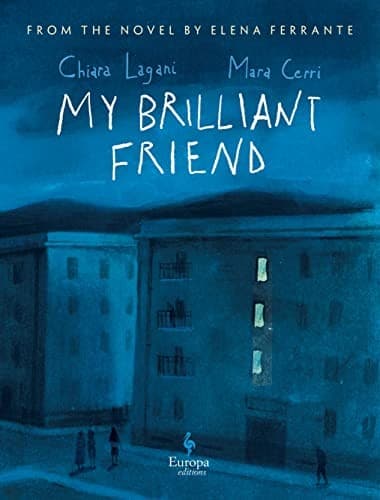
Book details and cover from Google Books.
Ready to read My Brilliant Friend?
Get your copy on Amazon, or listen to it on Audible. We earn a commission if you buy through these links.