
We earn a commission if you buy through these links. Learn more
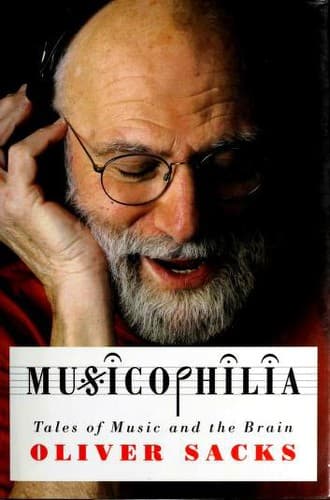
Musicophilia
by Oliver Sacks
Guide by the Books of the Day editors · Updated · How we write our guides
A warm, case-based tour of how music lives in the brain, showing how people lose and keep musical abilities, memories, and urges, through stories that read like clinical notes written by a curious friend.
What Creators Say About Musicophilia
2 creators reviewed Musicophilia on YouTube between 2008 and 2016, with 36.6K views between them. Their opinions are their own; we picked these reviews, we didn't write them.
What It's About
Musicophilia is Oliver Sacks's 2007 collection of case histories about how music is wired into the brain. Rather than offering a single theory of music, it is a set of portraits: people who cannot recognize melodies they once loved, people who hear music no one is playing, a man with Tourette's whose tics ease when he makes music, and patients with dementia who come alive while singing. Sacks writes as a neurologist who is more interested in people than in diagnosis.
The approach is narrative. Each chapter is built around a patient or a phenomenon. Sacks describes symptoms and tests, quotes what the people themselves said about their experience, and then steps back to consider what it suggests about perception, memory, and emotion. He moves easily between neuroscience and ordinary pleasure in listening, and his tone is warm and digressive, with reflections on musical history and on his own relationship to music. Reading it feels like sitting in on a long series of consultations with an unusually literate doctor.
It is less a textbook than an invitation to notice. Expect stories that are moving, sometimes sad, and occasionally strange. Sacks does not offer a tidy unified model, and the book leaves many questions open, which is part of its honesty.
Read this if you…
- are curious about how the brain processes music or why songs survive memory loss
- like case-based science written with literary warmth
- have a relative with dementia or a neurological condition and want to understand music's role
Skip it if you…
- want a technical, research-heavy account with data, trial results, and citations
- are looking for music history or a guide to listening and music theory
Key Ideas
- 1
Music is processed across many brain systems
Music is not a single faculty. Sacks shows how rhythm, pitch, melody, memory, and emotion can separate from one another after injury or disease, so a person may keep one while losing another. Cases of tone deafness and retained musical skill make this vivid, and they suggest why music can survive damage that erases language or recent memory.
- 2
Music as a route into memory and identity
Music often reaches people when other channels have closed. Patients with severe memory loss may recall lyrics, rhythm, or the feeling of a song when they cannot recall their names or recent events. Sacks treats this not as a curiosity but as evidence that musical memory is stored and accessed differently from ordinary memory, and that it can restore a sense of self for a while.
- 3
Involuntary music and the brain's own sounds
Musical hallucinations, earworms, and tunes that loop endlessly are examined as real neurological phenomena rather than mere annoyances. Sacks describes people who hear songs in their heads, sometimes alongside hearing loss, and explains how the brain can generate music with no external input behind it.
- 4
Music as therapy and a basic human need
Sacks surveys how steady rhythm and song can help people with movement disorders, such as using a beat to support walking, and asks why humans are so drawn to music at all. The book treats musicality as close to a basic human capacity rather than a talent reserved for trained musicians.
Limitations
Sacks's case studies are anecdotal and selective. They illustrate rather than prove, and the science has moved on since 2007, with newer imaging methods and more rigorous research on music therapy. Some critics find the dramatic framing of individual stories heavy, and Sacks's personal digressions can wander. Readers who want rigorous evidence should consult more recent, controlled studies alongside the book.
Questions Readers Ask
- Do I need a background in neuroscience to read Musicophilia?
- No. Sacks writes for general readers and explains medical terms as he goes. Some chapters on specific neurological conditions are more technical, but each case is a self-contained story, so you can follow the narrative without prior knowledge.
- How does Musicophilia compare to The Man Who Mistook His Wife for a Hat?
- Both are case-based and warm, and both are by Sacks. Musicophilia narrows the focus to music, so it is more thematic. The Man Who Mistook His Wife for a Hat covers a broader range of perception and identity. If you liked one, you will likely enjoy the other, but Musicophilia suits readers already drawn to music.
- Published
- 2007
- ISBN
- 9788845972614
- Difficulty
- beginner
- Category
- Psychology
Book details and cover from Google Books.
Ready to read Musicophilia?
Get your copy on Amazon, or listen to it on Audible. We earn a commission if you buy through these links.