
We earn a commission if you buy through these links. Learn more
Mrs. Miniver
by Jan Struther
A witty, tender run of sketches following an English housewife through ordinary days as the shadow of war gathers, rewarding slow, attentive reading.
What It's About
Mrs. Miniver is a collection of short sketches first published as a newspaper column in The Times of London in the late 1930s. Each piece is brief, often just a page or two, and follows a comfortably off English wife and mother through ordinary matters: shopping, social obligations, the small crises of family life, and the quiet business of running a household. Struther writes in a close, wry first person, with the feel of a private diary that someone has decided to share.
The approach is observational rather than plotted. Very little happens in the dramatic sense, yet the pieces accumulate. Humor comes from precise noticing rather than jokes, and warmth from the narrator's refusal to be sentimental about her own pleasant life. Read in sequence, the book also changes character. The domestic chatter gradually takes on the shadow of the international crisis building beyond the front door, so the everyday starts to feel like something being quietly lost.
The experience is slow, pleasant, and reflective. You read a few sketches at a time, and the book rewards that pace. It is a book about attention, about how people make a home and keep up appearances, and about living at the edge of history without yet knowing what is coming.
Read this if you…
- enjoy quiet, observational writing where little happens on the surface
- are curious about everyday English domestic life in the late 1930s
- like wry, character-driven humor with a melancholy undertow
Skip it if you…
- need a story with momentum, a clear arc, or a satisfying ending
- find fictional portraits of comfortable middle-class life tedious
Key Ideas
- 1
Attention to ordinary life
The book treats a shopping trip, a dinner party, or a child's illness as worth close study. Struther's gift is for noticing the small details that reveal how people really live, and she trusts those details to carry the reader without any larger plot machinery.
- 2
Humor through precise observation
The wit here is dry and based on accuracy rather than punchlines. The narrator sees the gap between what people say and what they mean, and the comedy comes from that gap. Readers who enjoy understated, observant humor will find it sharper than its gentle surface suggests.
- 3
Domestic life under a darkening sky
As the sketches move through the late 1930s, public events press closer to the family's private world. The book never becomes a war story, but its unease grows steadily, and ordinary concerns start to look fragile. This slow accumulation is the book's most distinctive effect.
- 4
Comfort and its unspoken limits
The narrator is aware of her privileges and of the people who serve her household, though the book's awareness has clear boundaries. Reading it today, you can see both the affection and the blind spots of its world, which makes it a useful document of class as well as a pleasure to read.
Limitations
The book reflects the class assumptions of its time, and its world of household staff and leisurely comfort will feel distant or uncomfortable to many modern readers. Its episodic form can seem slight if you expect a novel with sustained conflict. Some readers will also find the narrator's perspective narrow, since the book rarely looks far beyond her own social circle. Its later sketches are more affecting than its early ones, so patience helps.
Questions Readers Ask
- Is Mrs. Miniver still worth reading today?
- Yes, especially if you enjoy social history told through small, precise scenes. The book's view of class and domestic life is dated in places, but its sensitivity to ordinary moments and its growing sense of unease remain effective. It works well as a short, rewarding read for anyone curious about how people lived on the eve of the Second World War.
- How does the book compare to the 1942 film?
- The 1942 MGM film starring Greer Garson is a very different work. It was built into a wartime drama with heroism and propaganda aims, while the book is a set of quiet sketches largely focused on pre-war domestic life. Readers who know the film often find the book subtler and less sentimental, though it is a much gentler experience.
- Published
- 1939
- ISBN
- 9781850893646
- Difficulty
- beginner
- Category
- Fiction
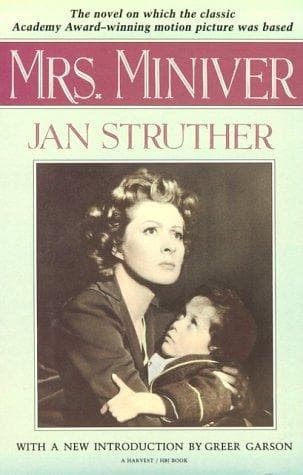
Book details and cover from Google Books.
Ready to read Mrs. Miniver?
Get your copy on Amazon, or listen to it on Audible. We earn a commission if you buy through these links.