
We earn a commission if you buy through these links. Learn more
Mother of Learning
A long, methodical fantasy where a young mage relives the same stretch of time, using each reset to get stronger and dig into the mystery, rewarding patient readers who enjoy planning and progression.
What It's About
Mother of Learning is a long fantasy novel that began as a web serial before being collected in print. It follows a young mage at a magical academy whose life keeps restarting. When he dies, he wakes back at an earlier point with his memories intact, and the book follows his attempts to use that knowledge to grow stronger, test ideas about magic, and work out why the loop exists. The premise fits in one sentence, but the pleasure lies in how carefully the consequences of each reset are worked out.
The style is patient and methodical. Much of the book is spent on training, planning, and small experiments, and the narrator keeps track of what has been tried and what failed across many loops. Readers who enjoy progression stories will find the logic of improvement satisfying, and puzzle lovers will enjoy watching the protagonist form hypotheses and check them. Scenes repeat with variations, so attention to small changes pays off.
It is less a fast action read than a slow-building immersive one. Expect long stretches of school life, friendships, and rivalries alongside the central mystery. The tone shifts between wry humor and sudden seriousness. The experience is closer to watching someone master a craft over years than to following a single adventure.
Read this if you…
- Enjoy progression stories where skill and knowledge build up over time
- Like puzzles, systems, and watching a character test ideas methodically
- Don't mind a slow start and long stretches of everyday school life
Skip it if you…
- Want fast-paced action or a tight, self-contained plot
- Find repetitive scenes tiresome, even when they change in small ways
Key Ideas
- 1
Repetition as a tool for growth
The loop is not just a gimmick. The protagonist treats each death as a data-gathering session, so the story becomes about how a person improves when they have unusual amounts of time to practice and reflect. Readers see skill built step by step rather than handed over.
- 2
Magic as a system to be understood
Magic in the book is treated like a discipline with rules, costs, and limits that can be explored. Much of the enjoyment comes from watching spells be combined and tested, and from seeing how deep knowledge of the rules changes what a character can attempt.
- 3
Planning, risk, and small changes
Because outcomes repeat with variations, the book keeps asking how small decisions ripple outward. Choices about who to trust, where to be, and what to reveal carry weight, and the protagonist must weigh the cost of knowing too much too early.
- 4
Mystery built through accumulated detail
The larger puzzle unfolds slowly, through clues gathered across many attempts. The book rewards readers who notice recurring details, and its answers come from patient assembly rather than a single dramatic reveal.
Limitations
The book is very long, and its early stretches can feel slow to readers expecting a quicker hook. Some critics find the prose dense or the dialogue uneven in places, and the constant reworking of the same days can wear on people who prefer forward momentum. The web serial origin shows in pacing and structure, with episodes that sometimes linger. Its emphasis on mechanics and planning means character interiority and emotional payoff can feel secondary to readers who prioritize them.
Questions Readers Ask
- Who is Mother of Learning best suited for?
- It suits readers who like long, detailed fantasy with clear magic rules and a protagonist who thinks like a problem-solver. If you enjoy strategy, progression, and slowly assembled mysteries, the book's patience will likely pay off. Readers wanting quick action or a short, complete story may find it too slow.
- Is it worth reading if I like time-loop stories like Groundhog Day?
- Yes, though it works differently. Groundhog Day uses repetition mainly for character change, while Mother of Learning uses it for skill-building and investigation. If you liked watching a character improve through repeated attempts, you will probably enjoy it, but expect a much longer and more technical story.
- Published
- 2021
- ISBN
- 9781955252096
- Difficulty
- intermediate
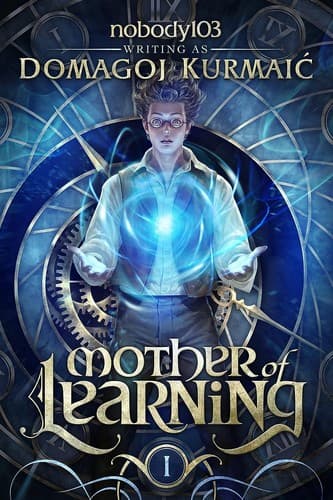
Book details and cover from Google Books.
Ready to read Mother of Learning?
Get your copy on Amazon, or listen to it on Audible. We earn a commission if you buy through these links.