
We earn a commission if you buy through these links. Learn more
Moon
Guide by the Books of the Day editors · Updated · How we write our guides
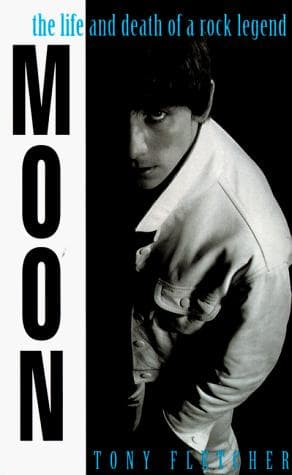
Tony Fletcher's biography of Keith Moon, The Who's wildly unpredictable drummer, asks what the legend hid. Who it suits, and what to read if it doesn't.
What It's About
Keith Moon is remembered as much for the mayhem as for the music: hotel rooms wrecked, drum kits blown up, and a death at 32 that closed a career already running on fumes. Fletcher's biography sets out to look past that reputation and ask what kind of person produced it. It follows Moon from his early years through his rise with The Who and his long decline, paying attention to the stretches when his playing and personality were at their most inventive.
The book is written in a narrative, chronological style typical of rock biography. It is more interested in atmosphere, band dynamics, and the changing music industry around The Who than in dense analysis. Readers who know the big hits will recognise the landmarks, but the pleasure is in seeing how the excess, ambition, and loneliness fit together over time.
Reading it is a little like watching a brilliant performer slowly lose control of the stage. The tone shifts from exuberant to uneasy as the story moves on, and the book does not hurry past the sad parts. It works best for someone who wants a human portrait of a musician whose behaviour was often more famous than his drumming.
Read this if you…
- Want a candid, human portrait of a rock drummer whose behaviour became legendary
- Are a fan of The Who and want to understand the band's most unpredictable member
- Enjoy music biographies that balance anecdotes with a sober look at addiction and decline
Skip it if you…
- Want a detailed technical study of drumming or music theory
- Prefer biographies that are mostly celebratory and avoid the darker stretches of a life
Key Ideas
- 1
The chaos as both performance and symptom
Moon's destructive antics are treated as a public show that doubled as a cry for help. The book asks how much of the wildness was a deliberate persona and how much was a sign of deeper problems, and it refuses to settle the question with a simple answer. That tension runs through nearly every chapter and gives the story its emotional weight.
- 2
Drumming as a driving force of The Who
Fletcher makes a serious case for Moon as a distinctive, melodic, and daring drummer rather than a novelty act. He shows how his looser, busier style shaped the band's sound and energy. Readers who care about rock's rhythmic side will find the musical discussion more satisfying than the gossip.
- 3
Friendship, dependence, and the band as family
Moon's relationships with bandmates, managers, and friends are central to the story. The book shows how loyalty, frustration, and enabling behaviour shaped his life. It presents the group less as a hit machine than as a fragile unit held together by affection and conflict.
- 4
The cost of fame in the 1970s
The biography places Moon's excess inside the wider rock economy of the time, with its tour schedules, money, drugs, and little real support for troubled musicians. That context helps explain why his decline was so hard to stop. It makes the story feel like more than a single man's self-destruction.
Limitations
Like many rock biographies, the book leans heavily on anecdote and the memories of people who were around Moon, and those accounts do not always agree. Readers looking for rigorous sourcing or a critical account of the music itself may find it thin. The focus is firmly on the man and his band, so it says little about Moon's solo work or the wider rock scene beyond what touches his story. Some readers may find the chronological structure repetitive as the excess cycles through the years.
Questions Readers Ask
- Is this book only for fans of The Who?
- No, though fans will get the most from it. The book explains the band's context well enough for newcomers. Its real subject is a difficult, compelling person, so readers interested in addiction, fame, and rock history can enjoy it without knowing every album. Some familiarity with the band's big songs will make the stories land more strongly.
- How does it compare to other rock biographies of drummers?
- It is less analytical than some music histories and more focused on personality than on technique. If you want a deep dive into playing style, you may prefer a book that concentrates on the instrument. If you want a vivid, emotionally direct life story, this one is a solid choice.
- Published
- 1999
- ISBN
- 9780380973378
- Difficulty
- beginner
- Category
- Biographies
Book details and cover from Google Books.
Ready to read Moon?
Get your copy on Amazon, or listen to it on Audible. We earn a commission if you buy through these links.