
We earn a commission if you buy through these links. Learn more
Mommie Dearest
A daughter's account of growing up in the household of a famous Hollywood star, and a rare look at how private cruelty can hide behind public glamour and a carefully managed image.
What It's About
Mommie Dearest is a memoir by Christina Crawford, one of the adopted children of the actress Joan Crawford. Published in 1978, shortly after Joan Crawford's death, it describes Christina's childhood in a home where, she says, appearances mattered far more than the people living in it. The book became a sensation largely because of its portrait of the star at home: rigid rules about order and cleanliness, sudden rages, and punishments that Christina presents as abusive. It was later adapted into a 1981 film, which helped fix its most famous images in popular culture.
The writing is direct and fast-moving rather than literary. Christina tells the story chronologically, mostly from a child's point of view, and she leans on scenes and dialogue more than analysis. Much of the emotional force comes from the contrast between the glamorous public figure and the frightened household she describes.
Reading it is less like studying a celebrity biography and more like sitting with a witness who has waited a long time to speak. It is uncomfortable, often bleak, and readable in a few sittings, and it leaves you thinking about what the adults around a child knew and chose not to see.
Read this if you…
- Are interested in how private abuse can coexist with public success and polished reputations
- Want a gripping, plainspoken family memoir rather than a detailed film-industry history
- Enjoy books about the Hollywood studio era viewed from the inside of a home
Skip it if you…
- Need a balanced, fully verified account of the Crawford family, since this is one daughter's version of events
- Find stories of childhood abuse too distressing to read right now
Key Ideas
- 1
Image versus private life
The book's central argument is that a carefully built public persona can conceal serious harm inside a family. Christina presents the house as a stage set where the star's reputation was protected at any cost, and where the children learned that what happened behind closed doors had to stay there.
- 2
Discipline as control
Christina describes punishments and rules that she frames not as ordinary strictness but as a way of asserting total control over the children. The reader is asked to weigh whether the rules were about order and cleanliness or about power, and how a child would experience the difference.
- 3
A child's view of an unequal household
Because the narrative stays close to Christina, the reader sees adult decisions through a child's limited understanding. This makes the family feel claustrophobic and unfair, and it shows how dependent children are on adults who control their daily lives.
- 4
Adoption, belonging, and inheritance
The book examines what it meant to be adopted into a famous family where love and security seemed conditional. Questions of loyalty, inheritance, and whether the children were ever truly secure are woven through the later chapters.
- 5
Telling the story after a parent's death
Christina's decision to publish while the mother was no longer alive is part of the book's meaning. It raises questions about memoir as a form of accountability, and about how family members who disagree with the account respond to it.
Limitations
The book is a single perspective, written by a child who later became an adult with her own grievances. Family members, including some of Christina's siblings, disputed parts of the account, and critics have questioned how much dialogue and detail can be reliably recalled decades later. Some of the material reads as sensational, and the Hollywood gossip element can overshadow the more serious questions about the children's welfare. It does not offer much of Joan Crawford's own perspective or the wider context of child welfare and adoption in that era.
Questions Readers Ask
- Is Mommie Dearest still worth reading today?
- Yes, especially if you are interested in memoirs about childhood abuse or in how public images conceal private harm. Some of its details may feel dated, and its claims are contested, but its questions about power, secrecy, and accountability in families remain relevant. Reading it alongside other accounts can give a fuller picture.
- How does it compare to the 1981 film?
- The film dramatizes the memoir and leans heavily into its most extreme scenes and memorable lines, which made it a cultural touchstone. The book is slower and more personal, spending more time on the everyday texture of the household and on Christina's own feelings. Readers often find the book more unsettling than the film.
- Published
- 1978
- ISBN
- 9780425063026
- Difficulty
- beginner
- Category
- Biographies
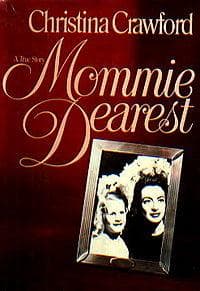
Book details and cover from Google Books.
Ready to read Mommie Dearest?
Get your copy on Amazon, or listen to it on Audible. We earn a commission if you buy through these links.