
We earn a commission if you buy through these links. Learn more
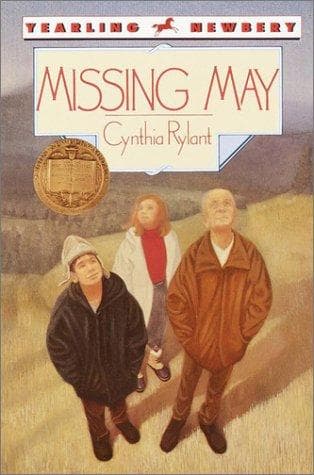
Missing May
A short Newbery Medal winner about a girl who loses the vivid woman who made home feel alive, told with restraint and warmth that make grief bearable for young readers.
What It's About
Missing May is a children's novel by Cynthia Rylant, published in 1992 and awarded the Newbery Medal the following year. It follows Summer, a girl living with her aunt May and uncle Ob in a small mountain community in West Virginia. The story centers on May, whose absence reshapes everything around her. It is a book about grief, but also about the small, stubborn ways people keep going after someone they love is gone.
Rylant writes in brief chapters and plain, precise sentences, with a voice that feels closer to conversation than instruction. Nothing is overwritten. She trusts ordinary details, a meal, a familiar road, a memory that surfaces at the wrong moment, to carry the emotional weight. Reading it feels quiet and intimate, like sitting with someone who is hurting rather than being lectured about loss. The pace is slow on purpose, and readers who want a plot engine may find it thin.
Adult readers often return to it for its honesty about how grief lives in ordinary days rather than in dramatic scenes. It works well as a read-aloud, as a first novel for confident young readers, or as a book to share with a child facing a loss. It does not offer tidy lessons, and that refusal is part of its appeal.
Read this if you…
- want a short, emotionally honest novel that treats young readers as capable of handling loss
- enjoy quiet, understated writing where small details carry the feeling
- are looking for a book to share with a child who is grieving or to read aloud together
Skip it if you…
- want a fast-moving plot with twists, suspense, or a clear mystery to solve
- prefer books that spell out their lessons and resolve every emotional thread neatly
Key Ideas
- 1
Grief inside ordinary days
The book locates mourning in routine moments such as chores, meals, and small habits that suddenly feel wrong. Rylant shows how loss often arrives as a series of quiet jolts rather than one big scene, which can feel more true to children who have been through it.
- 2
A community that holds people up
The small town around Summer and Ob matters as much as the family itself. Neighbors and everyday routines offer a kind of steady presence that does not fix the pain but makes it easier to carry, a theme that gives the story a gentle sense of belonging.
- 3
Spare prose that trusts small details
Rylant's style is deliberately economical. She chooses a few concrete images and lets them do the work, rather than explaining feelings outright. Readers who enjoy understatement will notice how much meaning sits between the lines.
- 4
Love expressed through what remains
Much of the emotional life of the book comes from how characters keep caring for one another after a loss. The attention to who shows up, who listens, and who keeps the house running gives the grief a purpose beyond sadness.
Limitations
Some readers find the book too slow or too sparse, especially if they expect a conventional story arc. Its focus on quiet emotional moments means that characters and events can feel understated, and adult readers may wish for more background on the setting and relationships. Because it is brief and gentle, it may not satisfy those looking for a deep exploration of Appalachian life or of grief over a long period. Its portrayal of rural community is affectionate but simplified, which some readers may notice. The book is also dated in a few ways that reflect its early-1990s origins.
Questions Readers Ask
- Is Missing May appropriate for young children?
- It is generally written for middle-grade readers, roughly ages nine to twelve, though confident younger readers can handle it with an adult nearby. Its subject is death and grief, handled gently but directly. Parents may want to read it first, especially if a child is currently dealing with a loss, since the book can open useful conversations.
- How does it compare to Bridge to Terabithia?
- Both books are well-known children's novels that deal with the death of someone close. Bridge to Terabithia is more dramatic and plot-driven, while Missing May is quieter and more focused on everyday emotional life. Readers who want a slower, more reflective experience often prefer Rylant's approach.
- Published
- 1989
- ISBN
- 9780439771283
- Difficulty
- beginner
- Category
- Children's Books
Book details and cover from Google Books.
Ready to read Missing May?
Get your copy on Amazon, or listen to it on Audible. We earn a commission if you buy through these links.