
We earn a commission if you buy through these links. Learn more
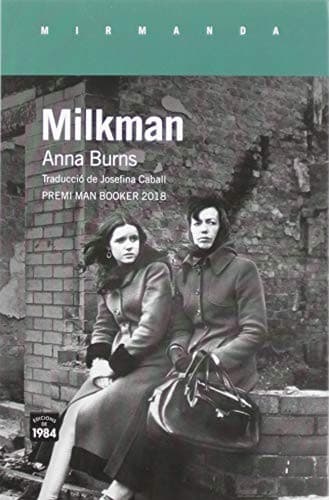
Milkman
by Anna Burns
Anna Burns's Booker-winning novel about a teenage girl hounded by gossip and a feared paramilitary man. Is it for you, and what to read instead?
What It's About
Milkman is set in an unnamed city during the Troubles in Northern Ireland and follows an eighteen-year-old narrator who is known only as middle sister. She is never given a name, and neither is almost anyone else. People are identified by their roles and relationships, such as maybe-boyfriend or third brother-in-law, which makes the community feel both intimate and strangely anonymous. Her troubles begin when a powerful paramilitary figure, the Milkman, starts pursuing her, and her neighbours quickly decide that she must be involved with him.
The book is written in a dense, relentless voice. Sentences run on for pages, paragraph breaks are rare, and the narrator's thoughts loop back on themselves as she tries to manage her reputation minute by minute. It reads less like a conventional story and more like a running commentary that refuses to slow down. The effect is claustrophobic, but also surprisingly funny, because the narrator's logic is precise and her neighbours' rumours are absurd.
Reading Milkman is demanding work. You have to hold a lot in mind and stay alert to who is who and what is being implied. The reward is a sharp sense of how gossip and suspicion can become weapons, and how ordinary people learn to live with constant watching. It is a book you feel in your body as much as follow with your head.
Read this if you…
- want a literary novel that rewards slow, effortful reading
- are interested in the Troubles through everyday domestic life rather than political events
- enjoy voice-driven fiction that turns a community's gossip into something frightening
Skip it if you…
- want a plot-driven story with clear stakes and a fast pace
- find long unbroken sentences and withheld names tiring rather than immersive
Key Ideas
- 1
Rumour as a weapon in a small community
In the book, talk is never idle. A rumour about who you are seen with can damage your standing as surely as an act, and the narrator spends most of her energy trying to control what others say about her. Burns shows how a closed community polices itself through whispers, and how hard it is to answer an accusation that nobody has actually made out loud.
- 2
A voice that withholds names
Refusing to name the narrator, her family, and most of the men around her is a deliberate choice with real effects. Without names, people become types and roles, and the reader feels the disorientation of living among people you can't fully place. It also makes the book's cast feel like a community defined by who is connected to whom rather than by who they are.
- 3
Everyday life under armed conflict
Violence hovers at the edges of the story, but the focus stays on routines: errands, family meals, walks, small social obligations. Burns presents the conflict as something that has seeped into ordinary life rather than as a series of dramatic events. This domestic angle is what makes the book feel distinctive among novels about the Troubles.
- 4
Female reputation and the pressure to conform
The narrator's main fear is not only danger but being seen as the wrong kind of young woman. Her reading habits, her walking alone, and her friendships all become evidence against her. The novel examines how a girl's sense of self can be shaped by the expectations and judgements of people who claim to protect her.
Limitations
The style is the main obstacle. Many readers find the long, unpunctuated sentences and the constant qualifying of every thought exhausting, and the absence of names can make the cast hard to track. Some critics feel the narrator's preoccupations, especially around reputation and romance, become repetitive over the book's length. Because the story stays so tightly inside her head, the wider political context is only glimpsed, which may frustrate readers who want more historical explanation.
Questions Readers Ask
- Do I need to know the history of the Troubles to read Milkman?
- It helps, but it is not required. Burns mostly shows the conflict through its effect on daily life, so readers can follow the emotional story without a detailed knowledge of events. A basic understanding of Northern Ireland in the 1970s and 1980s will make the atmosphere and the stakes of the rumours feel sharper.
- How does Milkman compare to Eimear McBride's A Girl Is a Half-formed Thing?
- Both use an intense, unbroken narrative voice that puts you inside a young woman's mind and asks a lot of you as a reader. Milkman is more overtly comic and more concerned with the wider community, while McBride's book is more fragmented and raw. If you liked the pressure of McBride's style, you will probably find Burns rewarding.
- Published
- 2018
- ISBN
- 9798726057835
- Difficulty
- advanced
- Category
- Fiction
Book details and cover from Google Books.
Ready to read Milkman?
Get your copy on Amazon, or listen to it on Audible. We earn a commission if you buy through these links.