
We earn a commission if you buy through these links. Learn more
Middlemarch
by George Eliot
George Eliot's sprawling, wise portrait of a provincial English town shows how ordinary ambitions and mistaken choices shape whole lives, and it rewards patient readers.
What It's About
Middlemarch, published in installments between 1871 and 1872, follows a cluster of people in a fictional English market town in the early 1830s, during the years of the Reform Bill debates. Its subtitle, A Study of Provincial Life, is accurate: the book is less interested in a single hero's rise than in how ordinary ambitions, marriages, debts and reputations knot together in a community where everyone knows everyone's business.
Eliot's approach is what makes it distinctive. The narrator is a confident, wry presence who steps forward to generalize about human nature, comment on the characters' choices, and sometimes admit uncertainty. The prose is dense and balanced, with long sentences that hold several clauses of judgment at once. Reading it is less like following a plot than like being slowly introduced to a town, and the pleasure comes from watching small decisions compound.
The experience is patient and rewarding rather than fast. Early chapters establish many threads before they begin to pull together, and the middle stretches can feel leisurely. Readers who give it time tend to find that the minor figures, including doctors, clergymen, farmers and shopkeepers, become as vivid as the central ones, and that the book's sympathy for mistaken and imperfect people is unusually generous.
Read this if you…
- like big, slow novels where the social world matters as much as the romance
- enjoy a wry, opinionated narrator who talks directly to you
- want a serious study of how ordinary people make and remake their lives
Skip it if you…
- need fast plotting and clear payoffs in every chapter
- find long Victorian sentences and digressions a chore you will not push through
Key Ideas
- 1
Ordinary choices add up to a life
Eliot's central claim is that character is built less by dramatic turning points than by many small decisions: what someone chooses to notice, whom they trust, which debt they let slide. The book tracks how these habits compound over years, so a reader sees that a life is often the sum of minor compromises rather than one moment of fate.
- 2
Idealism meets the limits of real life
Several characters begin with generous aims and discover how hard it is to act on them in a town with its own money, politics and gossip. Eliot treats their disappointment seriously without mocking the aspiration behind it, which makes the book feel both sympathetic and unsentimental about what idealism can achieve.
- 3
Marriage as a daily partnership, not an ending
Marriage here is less a happy-ending destination than a daily partnership whose success depends on temperament, honesty and what each person expects. The novel examines how couples misjudge one another and how little the social rules of courtship prepare anyone for living with another person's limits.
- 4
A narrator who judges and explains
The narrator is an active intelligence who generalizes about human nature, steps in to pass judgment, and sometimes admits uncertainty. Some readers find this a delight, offering wit and moral depth; others find it intrusive. Either way it shapes how you read every scene, since you are constantly invited to think alongside the author.
- 5
Public institutions shaping private lives
Money, medicine, religion and reform politics all appear in the book as forces that shape private lives. Eliot shows how public institutions and personal motives feed into each other, from a local hospital's funding to a town's reputation, so the story feels rooted in a real social world rather than a romantic backdrop.
Limitations
The book is long, and its pace can frustrate readers used to tightly plotted fiction; the early chapters introduce many people before their connections become clear. Some critics find the narrator's habit of generalizing preachy, and the coincidences and convenient turns of the plot can strain credibility. Its social assumptions about class, gender and religion reflect its era, and the world it describes is mostly the gentry, clergy and professional classes, so working-class lives appear only at the edges.
Questions Readers Ask
- Is Middlemarch worth reading if I find 19th-century novels slow?
- It can be, but go in expecting a different kind of pleasure. The first hundred pages do a lot of setup, and the momentum comes from accumulated detail and character rather than cliffhangers. Reading a few chapters at a time, rather than in long bursts, helps, and letting the narrator's asides become part of the enjoyment makes the slow parts pay off.
- How does Middlemarch compare to Jane Austen or Thomas Hardy?
- Like Austen, it is about manners, marriage and the moral intelligence of ordinary people, but it has a broader social scope and is more openly analytical. Compared with Hardy, it is less fatalistic: its characters are shaped by their choices as much as by circumstance, and the tone is warmer and more ironic.
- Is Middlemarch still relevant today?
- Yes, mainly for its close attention to how money, reputation and ambition shape private decisions, and how people misjudge their own motives. Details about 1830s reform politics and medicine may benefit from a companion guide, but the human material holds up well.
- Published
- 1800
- ISBN
- 9780359308620
- Difficulty
- advanced
- Category
- Fiction
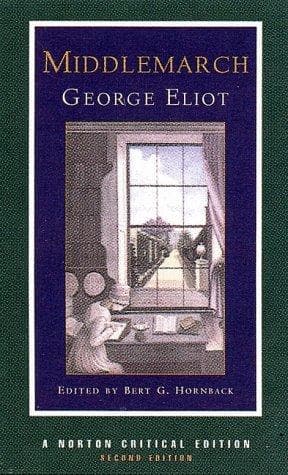
Book details and cover from Google Books.
Ready to read Middlemarch?
Get your copy on Amazon, or listen to it on Audible. We earn a commission if you buy through these links.