
We earn a commission if you buy through these links. Learn more
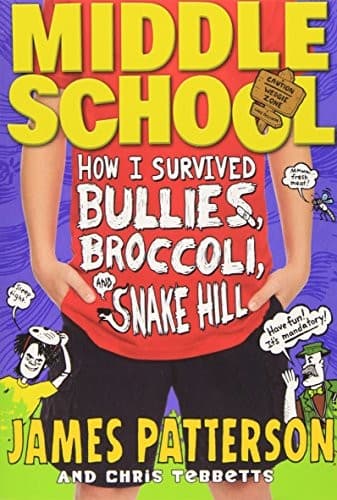
Middle School
by James Patterson, Christopher Tebbetts
Guide by the Books of the Day editors · Updated · How we write our guides
A fast, doodle-filled read told from a reluctant sixth grader's point of view, useful for kids who find books a chore and for adults curious about the hype.
What Creators Say About Middle School
2 creators reviewed Middle School on YouTube between 2020 and 2024, with 5.1K views between them. Their opinions are their own; we picked these reviews, we didn't write them.
What It's About
Middle School: The Worst Years of My Life is narrated by Rafe Khatchadorian, a sixth grader who would rather be almost anywhere else than at school. The book presents itself as his own account of a year that goes badly from the start, and it is packed with short entries, lists, and his own sketches, so pages turn quickly even when the story is mostly ordinary school life. James Patterson and Chris Tebbetts write in a voice that sounds like a kid talking rather than a grown-up imitating one.
The experience is closer to flipping through a notebook than reading a traditional novel. Chapters are brief, many run a page or two, and the humor comes from Rafe's exaggerated take on rules, teachers, and friends. Underneath the jokes, the book follows a boy who gets in trouble often, feels misunderstood, and slowly begins to notice that his own choices shape how the year unfolds.
It is an easy, quick read, and it works best as a bridge book for younger readers or for anyone who has bounced off longer fiction. Adults will spot the formula, and the emotional moments are delivered with a light hand. Expect a funny, low-stakes read with clear appeal rather than deep literary craft.
Read this if you…
- want a funny, fast read that feels like a kid's notebook
- are a younger reader or a parent looking for a bridge book after picture books
- enjoy a narrator who is unreliable in an obvious, good-natured way
Skip it if you…
- want complex characters, layered prose, or slow-building literary tension
- expect a plot with real surprises and high stakes throughout
Key Ideas
- 1
A kid's voice doing the heavy lifting
The first-person narration is the engine of the book. Rafe is funny because he is exaggerating, dodging responsibility, and sometimes misreading what adults and friends are doing. Readers get a sense of his perspective and can often see more than he does, which gives the story its quiet tension.
- 2
Humor as a way into a hard year
Beneath the jokes, the book deals with the pressures of starting middle school: being in trouble, feeling left out, and trying to be taken seriously. The comedy keeps these moments approachable for younger readers without pretending they are not real.
- 3
Visual storytelling inside a text book
Sketches, lists, and short entries change the rhythm of the page. Rather than long paragraphs, readers get bursts of text and images, which makes the book feel more like a personal notebook and lowers the barrier for reluctant readers.
- 4
Consequences delivered with a light hand
The book lets Rafe's mistakes have effects without turning every chapter into a lecture. The moral lessons are present but mostly implied, so readers reach their own conclusions about how choices and attitude affect friendships and school life.
- 5
Built for fast, confident reading
Short chapters and simple sentences make it a good first full-length book for many kids. It rewards momentum: readers who finish one entry usually want to see what happens next, which is the habit the series is designed to build.
Limitations
The book leans on a familiar formula: a mischievous narrator, a few stock adult figures, and situations that resolve more neatly than life usually does. Some readers find the humor repetitive or the emotional beats too tidy. Because it is part of a long series, later entries can feel like variations on the same pattern. Adults looking for literary depth or a fresh take on the middle-grade school story may find it thin, though it does its job well for its intended age group.
Questions Readers Ask
- Who is Middle School by James Patterson and Chris Tebbetts best for?
- It suits readers roughly in the upper elementary to early middle-grade range, especially kids who struggle with longer books or want something funny. Adults might enjoy it as a quick read or to understand what younger readers are excited about. It is less satisfying for readers who want intricate plots or sophisticated prose.
- Is the book still relevant for kids today?
- The core experiences of being a new middle schooler, including friendship trouble, teachers, and wanting to be seen as cool, remain familiar. Some references and details may feel a bit dated, but the book's appeal rests more on Rafe's voice and visual format than on specific trends, so it still works for many modern readers.
- How does it compare to Diary of a Wimpy Kid?
- Both use illustrated, diary-style narration and short entries aimed at young readers, so fans of one often enjoy the other. Middle School leans more on Rafe's rebellious, misbehaving streak and a slightly more emotional thread, while Wimpy Kid focuses more on everyday embarrassment and situational comedy.
- Published
- 2013
- ISBN
- 9780316248297
- Difficulty
- beginner
Book details and cover from Google Books.
Ready to read Middle School?
Get your copy on Amazon, or listen to it on Audible. We earn a commission if you buy through these links.