
We earn a commission if you buy through these links. Learn more
Middle passage
A witty, morally serious sea novel that turns a stowaway's picaresque voyage into a sharp reckoning with slavery, freedom, and American myth.
What It's About
Middle Passage is a 1990 novel by Charles Johnson, which won the National Book Award for fiction that year. Its narrator, Rutherford Calhoun, is a free Black man in 1830s America who, fleeing debts and a bad bargain, stows away on a slave ship bound from West Africa. Johnson builds the book on the bones of a picaresque: a roguish, self-regarding narrator who talks his way into trouble and out again, and who is often more bewildered by events than in command of them.
The voyage gives Johnson a floating microcosm. The ship's captain is an obsessive figure whose ambitions echo a famous whaling captain from American literature. The crew, the cargo, and the narrator's own moral education turn the trip into a test of how people justify what they do to others. Johnson writes with a scholar's attention to period detail, especially seafaring life, and lets the story take detours into philosophy, religion, and the question of what it means to be free.
Reading it is an experience of prose that is witty, rhythmic, and often lush, set against scenes of brutality rendered without sensationalism. Expect a book that asks you to keep up. It is funny in places and grave in others, and it rewards attention to its arguments about freedom and complicity more than to a simple plot.
Read this if you…
- enjoy historical fiction that treats the slave trade as a moral and philosophical problem, not only a backdrop
- like picaresque narrators who are funny, vain, and occasionally unreliable
- want a sea adventure that doubles as an argument about freedom and complicity
Skip it if you…
- want a fast plot with steady momentum and little digression
- prefer fiction that stays close to realistic detail and avoids philosophical interludes
Key Ideas
- 1
Freedom as a problem, not a status
Calhoun is legally free yet still bound by debt, fear, and social expectation. The novel keeps asking what freedom means in a country whose economy rests on slavery, and it suggests that a legal label settles very little about how a person actually lives.
- 2
The ship as a model of society
The Republic's hierarchy of captain, crew, and cargo shows how ordinary people rationalize cruelty once it is profitable and routine. Johnson uses the enclosed world of the ship to examine how institutions train decent men to look away from what they are doing.
- 3
A reversed echo of Moby-Dick
Johnson borrows the obsessed captain and the all-consuming voyage from a famous American novel, then turns the lens toward the myths of conquest and ambition behind them. Readers who know that book will notice the parallels, though the novel stands on its own without them.
- 4
Philosophy inside an adventure story
Johnson weaves in ideas drawn from Buddhism and other traditions about suffering, the self, and community. These come most visibly through the Allmuseri, a group whose values sharply contrast with the logic of the ship, and they give the adventure a reflective, questioning undertone.
- 5
Humor as moral pressure
The narrator's comic voice draws the reader in and keeps the story moving, which makes the horror harder to look away from. The jokes and the atrocities sit close together, and that tension is part of how the book works on the reader.
Limitations
Some readers find the philosophical digressions slow and the prose dense, especially in the middle sections. The Allmuseri are a constructed people more idealized than historically grounded, and critics have argued that their function as moral counterweight can feel schematic. The Melville parallel is also heavy-handed for some. The book makes a strong argument, and that can read as lecturing to readers who want the story to speak for itself.
Questions Readers Ask
- Who is Middle Passage best suited for?
- It suits readers who like literary fiction with a strong comic voice and a serious subject. If you enjoy sea narratives, picaresque adventures, or novels that argue about history and freedom, you will likely find it rewarding. Readers who want a straightforward historical account of the slave trade may find it an unexpected choice.
- How does it compare to Moby-Dick?
- Both novels use a ship, an obsessed captain, and a voyage to explore larger American ideas. Johnson's book is shorter and funnier, and it shifts the viewpoint to a Black narrator and to the people in the hold. Moby-Dick is more sprawling and digressive, so readers who loved Melville may enjoy Johnson's sharper, more pointed approach.
- Published
- 1990
- ISBN
- 9780689119682
- Difficulty
- intermediate
- Category
- Fiction
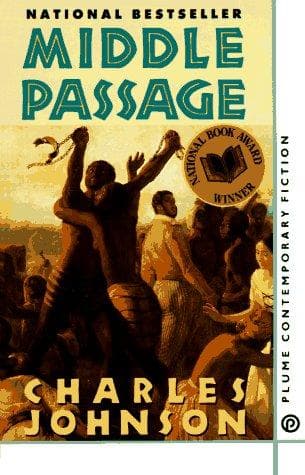
Book details and cover from Google Books.
Ready to read Middle passage?
Get your copy on Amazon, or listen to it on Audible. We earn a commission if you buy through these links.