
We earn a commission if you buy through these links. Learn more
Maximum City
by Suketu Mehta
A long, immersive portrait of Mumbai told through police officers, gangsters, dancers, filmmakers and migrants, written by a writer who left the city as a child and came back to look harder.
What It's About
Maximum City is nonfiction, despite the Fiction category on this page. Suketu Mehta spent years reporting on Mumbai, the city he left as a boy and returned to as an adult, and the result is a sprawling book that refuses to be only one thing. It blends reportage, memoir and street-level portraiture of a metropolis of roughly twenty million people, and it reads more like a set of intimate profiles than a textbook.
Rather than surveying the city's history or economy, Mehta builds the book around people he spends real time with: police officers and the men they hunt, women working in the city's dance bars, film people, politicians, builders, and migrants who arrived with almost nothing. He moves between these figures and his own family story, so the reader meets the city through individual lives and the tensions running through them, including crime and commerce, religion and politics, old neighborhoods and relentless construction.
The experience is immersive and sometimes uneven. The writing is energetic and vivid, and many of the stories are startling, but the book is long, and its jumps from one subject to the next can feel abrupt. Readers who want a tidy argument will find it loose. Readers who enjoy being carried into a place, with all its contradictions, will find it hard to put down.
Read this if you…
- want a vivid, character-driven picture of a major city rather than a dry history
- are curious about how crime, politics and film intersect in modern India
- enjoy long narrative nonfiction that wanders and still holds your attention
Skip it if you…
- want a tight, argument-driven book with a clear thesis and a neat conclusion
- prefer a short read and find long, sprawling books tiring
Key Ideas
- 1
Extremes living side by side
Mehta keeps returning to the way enormous wealth and grinding poverty sit within sight of each other. Towers and slums are not presented as separate worlds but as parts of one economy, and the book asks what it means for a city to function while its contradictions are visible on every street.
- 2
Crime as part of everyday commerce
The underworld in the book is not a distant threat but a thread running through property, film finance and local politics. Mehta shows how gangsters, police and businessmen depend on one another, which makes the question of who is actually in control harder to answer than it first appears.
- 3
Migration and the search for a foothold
Many of the people Mehta follows arrived from other parts of India hoping for a better life, and their stories show how migrants build livelihoods through informal work, family networks and sheer persistence. The city appears as both a promise and a trap.
- 4
Violence and memory of the 1990s
The riots and bombings of the early 1990s recur as reference points for the city's politics and its sense of itself. Mehta treats them as wounds that still shape how people talk about religion, belonging and who gets to claim Mumbai.
- 5
Memoir as a way into the city
Mehta's own return and his sense of being both insider and outsider give the book its emotional stake. He does not pretend to be a neutral observer, and that personal angle helps the reader see why the city's contradictions matter so much to someone who once called it home.
Limitations
The book is long, and its structure is looser than many readers expect, so some sections feel more gripping than others. Mehta's portraits are shaped by his selection of subjects and his own viewpoint, and some readers have questioned how representative the most dramatic stories are. Because it was written in the early 2000s, the city's politics, property market and nightlife have changed considerably, so it works better as a snapshot of a period than as a current guide.
Questions Readers Ask
- Is Maximum City a novel or nonfiction?
- It is nonfiction. Despite the category listed on this page, Maximum City is a work of reportage and memoir about Mumbai. It is built from interviews, observation and the author's own history, so readers looking for a novel with invented characters and a plot should look elsewhere.
- Is Maximum City still relevant today?
- Much of the city has changed since the book was written, including its real estate, nightlife and some of its political alliances. Still, the core themes of migration, inequality and the links between crime and power remain recognizable, so the book is valuable as a portrait of a period and a way into the city's ongoing tensions.
- How does it compare to Katherine Boo's Behind the Beautiful Forevers?
- Both books take a close look at the lives of people in an Indian city, but Boo's book focuses tightly on one neighborhood and a single unfolding story. Mehta's book is wider and more episodic, covering many people and institutions across Mumbai, and it includes much more of his own voice and family history.
- Published
- 2004
- ISBN
- 9780747259695
- Difficulty
- intermediate
- Category
- Fiction
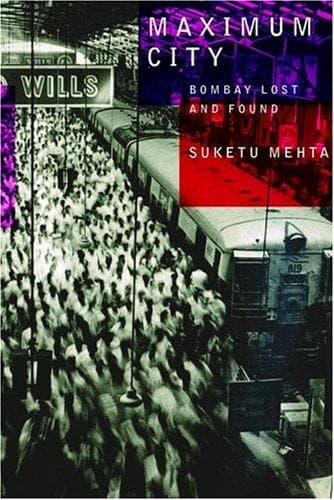
Book details and cover from Google Books.
Ready to read Maximum City?
Get your copy on Amazon, or listen to it on Audible. We earn a commission if you buy through these links.