
We earn a commission if you buy through these links. Learn more
Martin Eden
by Jack London
Martin Eden is a blunt, autobiographical novel about ambition, class, and the cost of rising above your origins, written with London's raw, muscular prose.
What It's About
Martin Eden follows a young laborer from the working waterfront of Oakland who falls for Ruth Morse, a middle-class young woman from a world he has only glimpsed. He decides the way to earn a place beside her is to become a writer. The novel draws heavily on London's own experience as a self-educated man trying to make a living from fiction, and that closeness gives it an urgency that more polished novels of its era often lack.
The prose is direct, sometimes overheated, and driven by argument as much as scene. Long passages wrestle with philosophy, reading, and social theory, and London lets his protagonist talk himself into and out of positions. Reading it feels less like watching a rise to fame than like sitting beside someone who is thinking aloud, sometimes brilliantly and sometimes too hard.
The book rewards patience. Its early chapters are vivid with physical work and sea life, while later sections turn inward and grow colder. Readers expecting a tidy success story will find the sympathies more divided and the tone far bleaker than they might anticipate, and the final stretch is likely to stay with you longer than the rest.
Read this if you…
- enjoy novels where ideas and argument drive the story as much as events do
- are interested in class, self-made success, and what it costs to change your station
- want a classic American novel with a raw, unfashionable emotional honesty
Skip it if you…
- want a fast, tightly plotted book with clean emotional payoffs
- find long philosophical digressions or overwrought prose hard to sit through
Key Ideas
- 1
Self-education as both liberation and trap
Martin's hunger to learn opens doors that his background had closed, but the same reading that lifts him also separates him from the people he came from. London shows how knowledge can change a person's place in the world without changing the world itself, and how the new self can feel like a stranger.
- 2
Class as a barrier money cannot dissolve
Martin discovers that earning money and gaining fame do not automatically earn acceptance. The novel is sharp about how respectability, manners, and inherited position work as a quiet system of exclusion, and about how hard it is to see that system clearly while you are still hoping to be admitted to it.
- 3
Ambition measured against love and belonging
Martin's writing begins as a means to win Ruth, and the book keeps asking what success is worth once its original purpose has faded. The tension between wanting a person and wanting a reputation runs through every chapter and shapes the emotional arc.
- 4
Philosophy pursued as a personal crisis
Martin does not treat ideas as abstractions. He tests each belief against his own experience and grows restless when one fails him. For readers who enjoy seeing a mind work through big questions in real time, this is the novel's most distinctive pleasure, even when the arguments feel unruly.
Limitations
London's prose can be florid and melodramatic, and some passages of philosophical argument feel repetitive or undigested. Ruth and the other women are drawn more as symbols of class than as fully realized people. The book also carries the attitudes of its period on race, gender, and ethnicity, which some modern readers will find jarring. Its politics are argued through its protagonist rather than resolved, which some readers find frustrating.
Questions Readers Ask
- Is Martin Eden still worth reading today?
- Yes, especially if you are interested in writers' lives, class mobility, or the gap between what success promises and what it delivers. The prose can feel dated and the ideas are sometimes rough, but the emotional honesty and the portrait of an ambitious outsider remain striking and rarely matched in American fiction of its time.
- How does Martin Eden compare to The Call of the Wild?
- The Call of the Wild is shorter, more propulsive, and closer to pure adventure. Martin Eden is slower and more introspective, with much more interest in the inner life and in ideas. If you liked London's animal-centered storytelling, the later novel will show you a darker and more personal side of his work.
- Published
- 1908
- ISBN
- 9782752905536
- Difficulty
- intermediate
- Category
- Fiction
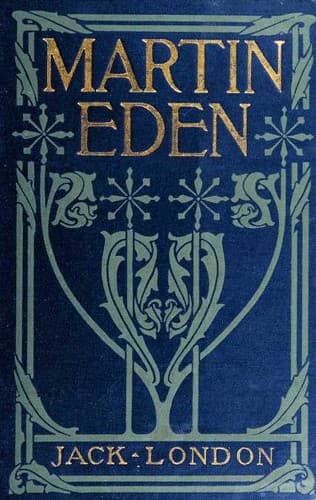
Book details and cover from Google Books.
Ready to read Martin Eden?
Get your copy on Amazon, or listen to it on Audible. We earn a commission if you buy through these links.