
We earn a commission if you buy through these links. Learn more
Maniac Magee
A fast, funny, big-hearted Newbery winner about an orphan who becomes a running legend and crosses the racial line dividing his small town.
What It's About
Jeffrey "Maniac" Magee is a boy who has lost his parents and, after a stretch of running away from relatives, turns up in Two Mills, Pennsylvania, a small town split into an East End and a West End. The two sides keep largely to themselves, and the boy belongs to neither. His speed on foot quickly makes him a local legend, and the stories that grow around him do as much work in the book as his actual movements.
Spinelli tells the story in short, brisk chapters that move like a tall tale. Much of the book is episodic, built from scenes that show how rumor, gossip, and admiration spread through a community. The voice is plainspoken and often wry, and the humor keeps the book light even when it turns to loneliness, prejudice, and the hunger for a place to belong.
Reading it feels like listening to a storyteller who trusts you to notice what the adults around the boy refuse to see. It is written for middle-grade readers, roughly ten to fourteen, but adults often return to it for its directness about how communities form their myths and how children get caught between them.
Read this if you…
- want a fast, warm novel that deals with race and community in terms a younger reader can follow
- enjoy tall tales, folk heroes, and stories where rumor shapes events
- are looking for a gentle entry point into books about prejudice for readers aged ten to fourteen
Skip it if you…
- want a gritty, realistic portrait of poverty or racism in America
- need complex adult characters and morally ambiguous plotting
Key Ideas
- 1
A town divided by an unspoken line
The setting makes segregation a physical fact of daily life. Residents know exactly which streets belong to whom, and the book asks what it costs when a child ignores those boundaries because he has never been taught them.
- 2
Legend as a way of making sense of strangers
Townspeople build stories around Maniac because they do not know where he came from. The book shows how these stories can inspire, distort, and sometimes harm, and how a reputation can outrun the person who has it.
- 3
Belonging without a family or a home
Orphanhood and homelessness shape the boy's search for connection. Rather than treating him as a symbol, the book follows his need for food, shelter, and people who will look out for him.
- 4
Children as moral observers
The novel gives young characters the clarity to see unfairness that adults have normalized. Their willingness to act, and their mistakes in doing so, drive much of the story's emotional force.
Limitations
Critics have questioned how the book handles race. Its portrait of the divided town is idealized and sometimes simplified, and some readers feel that the Black characters are seen largely through the boy's eyes and the town's mythmaking. The tone is often sentimental, and the resolution of the town's divisions can feel tidier than real history. The book also does not explore the economic and institutional roots of segregation in depth. It is best read as a children's story about empathy rather than a full account of its setting.
Questions Readers Ask
- Is Maniac Magee only for children?
- It was written for middle-grade readers, but many adults read it and appreciate its humor, pacing, and directness about community and prejudice. Its short chapters make it quick to finish. Adults looking for dense prose or psychological complexity may find it lighter than they want, though it rewards a second reading.
- How does Maniac Magee compare to To Kill a Mockingbird?
- Both novels use a young narrator or viewpoint to examine racial division in a small town. Mockingbird is longer, more adult in its moral texture, and more interested in the legal system. Maniac Magee is shorter, more fable-like, and focused on a boy's search for belonging, making it a good choice for younger readers.
- Is Maniac Magee still worth reading today?
- Yes. It won the Newbery Medal in 1991 and remains widely taught and read. Its themes of belonging, rumor, and division still resonate, though some of its treatment of race reads as dated to current readers. Discussing those choices is part of what makes it useful in classrooms and book groups.
What Creators Say About Maniac Magee
Reviews from readers on YouTube. Their opinions are their own.
- Published
- 1990
- ISBN
- 9781306760089
- Difficulty
- beginner
- Category
- Fiction
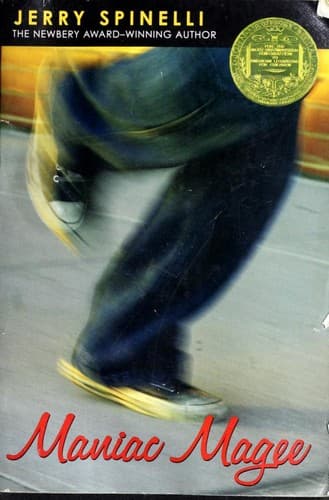
Book details and cover from Google Books.
Ready to read Maniac Magee?
Get your copy on Amazon, or listen to it on Audible. We earn a commission if you buy through these links.