
We earn a commission if you buy through these links. Learn more
Major Pettigrew's last stand
Guide by the Books of the Day editors · Updated · How we write our guides
A warm, witty story of an English widower and a Pakistani shopkeeper's widow, whose unlikely friendship exposes the quiet prejudices of a small village.
What Creators Say About Major Pettigrew's last stand
2 creators reviewed Major Pettigrew's last stand on YouTube between 2010 and 2011, with 28.2K views between them. Their opinions are their own; we picked these reviews, we didn't write them.
What It's About
Major Ernest Pettigrew is a retired army officer who lives by routine and old-fashioned manners in a quiet English village. When a family death unsettles his carefully ordered life, he finds himself drawn into a friendship with Mrs Jasmina Ali, a widow whose family has long been part of village life. Their companionship is slow, courteous and easy to root for, and it quickly becomes the subject of talk in every kitchen and shop.
Helen Simonson writes with dry, observational humour. She is funniest when she describes the Major's stiff self-regard and the small snobberies of a community that prides itself on being tolerant. The narrative keeps widening to take in other villagers, their assumptions and their loyalties, so the book reads as a portrait of a place as much as a love story between two people.
The experience is comfortable and quick to read, with moments of real tenderness and a current of melancholy about age, loss and the things people leave unsaid. It is not a heavy problem novel. It asks you to laugh at its characters, then to feel a little uncomfortable about why you were laughing.
Read this if you…
- enjoy gentle comedy of manners with a serious undercurrent
- want a love story between two older characters, handled with restraint
- are interested in how class and culture shape everyday English life
Skip it if you…
- want fast plot twists or a tightly driven thriller pace
- prefer fiction with a sharp, unsentimental edge throughout
Key Ideas
- 1
Duty and the cost of rigid codes
The Major's sense of honour, duty and propriety gives him real dignity, but it also makes him slow to admit what he feels. The book treats these codes with affection and irony at once, showing how they protect a man and how they can also keep him from living. Much of the story's tension comes from the gap between what he believes he should do and what he actually wants.
- 2
Grief that arrives late and sideways
Simonson is interested in how loss does not always announce itself. Characters carry old bereavements into new situations, and grief shows up as irritation, pride or sudden withdrawal. The novel suggests that mourning can reshape a person's sense of time, so that the future feels both unexpected and somewhat late.
- 3
Prejudice dressed up as good manners
Much of the village's unease about the friendship is expressed politely, through gossip, lowered voices and carefully chosen remarks. The book shows how class and racial assumptions can operate under cover of courtesy. Its humour lets readers see these habits clearly without the story turning into a lecture.
- 4
Living between two cultures
Jasmina's life sits between her late husband's community, her family's expectations and the English village she has made her home. The novel gives her real agency and a sharp mind, rather than treating her as a symbol. Her perspective shows that belonging is negotiated daily, not granted once.
- 5
Humour as a response to loneliness
The comedy in the book is not decoration. Many of the characters use wit, understatement and small rituals to hold loneliness at bay. Reading it, you notice how much of the warmth comes from people who are a little lonely and too proud to say so directly.
Limitations
Some readers find the romance sentimental and the ending too neatly arranged. Several villagers are drawn broadly, closer to types than fully realised people, which can make the social satire feel easy. Because the comic tone is so warm, a few critics feel it softens the racism it describes, letting readers laugh at prejudice rather than feel its weight. The book is also very much rooted in a particular English milieu, so its observations about village life and class may feel dated or specific to readers unfamiliar with that setting.
Questions Readers Ask
- Is Major Pettigrew's Last Stand a love story?
- Yes, but it is a quiet one rather than a passionate romance. The central relationship develops slowly between two people who are wary of change and of what others will think. Much of the pleasure lies in watching them learn to speak plainly, while the wider village reacts with curiosity and disapproval.
- Who will enjoy this book most?
- Readers who like character-driven fiction with gentle humour, such as admirers of Alexander McCall Smith or Anne Tyler, will likely enjoy it. It suits people who value warmth and social observation more than suspense. Readers who want a fast plot or a bleaker, more confrontational take on race and class may find it too soft.
- Is the book still worth reading today?
- Many of its themes, including cross-cultural friendship, grief in later life and the politeness that can hide prejudice, remain relevant. Some of the social details reflect the setting of its publication, but the emotional core still lands well. It is a good choice for a relaxed, thoughtful read.
- Published
- 2010
- ISBN
- 9781400068937
- Difficulty
- beginner
- Category
- Fiction
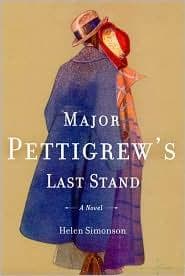
Book details and cover from Google Books.
Ready to read Major Pettigrew's last stand?
Get your copy on Amazon, or listen to it on Audible. We earn a commission if you buy through these links.