
We earn a commission if you buy through these links. Learn more
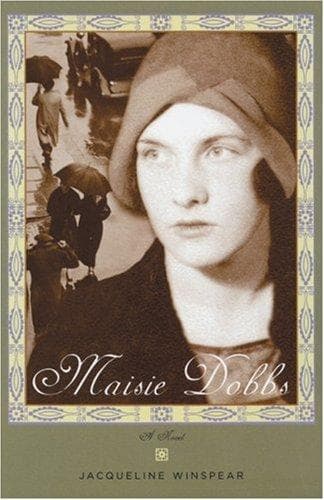
Maisie Dobbs (Maisie Dobbs #1)
Guide by the Books of the Day editors · Updated · How we write our guides
A quiet, atmospheric 1929 London mystery that uses a private investigator's case to explore the lasting damage of the First World War, with a heroine whose method is patient listening.
What Creators Say About Maisie Dobbs (Maisie Dobbs #1)
2 creators reviewed Maisie Dobbs (Maisie Dobbs #1) on YouTube between 2025 and 2026, with 984 views between them. Their opinions are their own; we picked these reviews, we didn't write them.
What It's About
Maisie Dobbs, published in 2003, is a mystery set in London in 1929 that opens with its title character setting up her own investigative practice after training under an older mentor. Her first commission looks routine, but it pulls her into the lingering damage of the First World War. The war is not just a backdrop here. It shapes how people behave, what they hide, and how they remember.
Winspear writes in a measured, close third-person voice and lets scenes unfold slowly, with careful attention to period texture: clothing, transport, class manners, and the rhythms of household life. Readers should expect atmosphere and character to matter more than the puzzle itself. The prose is clean and unfussy rather than ornate, and the pace is deliberate.
The reading experience is calm and reflective. Maisie's method relies on observation and an unusual sensitivity to people, so much of the book consists of conversation, inference, and quiet emotional attention rather than chases or confrontations. Readers who want a fast, cosy whodunit may find it slow. Those who want a historical novel with real emotional weight, and who don't mind a story that takes its time, will find a lot to settle into.
Read this if you…
- enjoy historical fiction set between the wars and want the period to feel lived in
- prefer slow, character-driven mysteries over puzzle-box plotting
- are interested in how the First World War affected ordinary lives after 1918
Skip it if you…
- want fast pacing, twists, and a steady stream of action
- are looking for a dense, fact-heavy history of the interwar period
Key Ideas
- 1
The war as an unfinished presence
The First World War is never simply past in this book. Its effects show up in grief, in strained families, in men who cannot quite return to ordinary life, and in the way characters decide what is worth telling. Winspear treats the war as a living force in 1929, which gives the mystery its emotional stakes.
- 2
Class and who gets listened to
Maisie moves between worlds, and the novel is alert to how social position shapes who is believed, who is dismissed, and who is expected to keep quiet. Servants, employers, and officers speak in different registers, and noticing those differences is part of the detective work.
- 3
Investigation as careful listening
Maisie's approach owes more to patient observation and psychological insight than to physical clues or dramatic action. Readers who enjoy watching a character think through what people say and don't say will find this the book's most satisfying pleasure.
- 4
Grief, duty and the cost of service
The novel returns again and again to what people owe one another after loss, and what service costs those who gave it. These questions give the story a melancholy undertone that lingers after the case itself is resolved.
Limitations
Some readers find the pace too leisurely, and the mystery itself can feel secondary to atmosphere and reflection. The emotional register is often restrained, which may feel muted to readers who want more drama. Because the book is the first in a long series, its character background is laid out gradually, and the novel's occasional expository passages can slow the middle. Its portrait of 1920s class and gender may feel idealised to some historians, though it is generally credited with careful period detail.
Questions Readers Ask
- Is Maisie Dobbs good for someone who doesn't usually read mysteries?
- Yes, if you are open to a slower book. The prose is accessible and the plot is not especially intricate. Many readers come to it for the historical setting and the character of Maisie herself rather than for clue-tracking, so it can work well as a first mystery in a historical vein.
- Should I read the series in order?
- It is best to start with the first book. Maisie's background, her relationships, and her way of working are set up here, and later books build on them. Reading in order gives you the full arc of her personal life and the changing social backdrop of the interwar years.
- How does it compare to Agatha Christie?
- Christie's mysteries usually hinge on puzzle construction and a satisfying reveal. Winspear is more interested in mood, interior life, and the aftermath of war. If you loved Christie's country-house sense of period but want something more reflective and emotionally serious, this is a natural next step.
- Published
- 2003
- ISBN
- 9781585474066
- Difficulty
- beginner
- Category
- History
Book details and cover from Google Books.
Ready to read Maisie Dobbs (Maisie Dobbs #1)?
Get your copy on Amazon, or listen to it on Audible. We earn a commission if you buy through these links.