
We earn a commission if you buy through these links. Learn more
Lud-in-the-mist
Guide by the Books of the Day editors · Updated · How we write our guides
A 1926 fantasy where a comfortable merchant town grows rich trading with a fairy realm, and where the wit and unease of its prose make it a singular, underrated classic.
What Creators Say About Lud-in-the-mist
2 creators reviewed Lud-in-the-mist on YouTube between 2014 and 2025, with 1.5K views between them. Their opinions are their own; we picked these reviews, we didn't write them.
What It's About
Lud-in-the-Mist is a 1926 fantasy set in Dorimare, a prosperous town whose economy rests on a quiet trade with Fairyland, the land on the other side of a mist that drifts over the river. Its goods are strange and seductive, and the town's leading families profit from them. The young Nathaniel Chanticleer finds his comfortable place in this order unsettling when the trade starts to look less like commerce than dependence.
The prose is ornate and playful, with a narrator who addresses the reader and a love of wordplay, proverb, and digression, so the book feels like an old-fashioned fairy tale told by someone with a sharp, ironic eye. Mirrlees builds a whole society with its own customs, politics, and logic, and she is more interested in how people rationalize what they cannot see than in spectacle. Reading it is slower than most modern fantasy but rewards attention, especially on a second pass.
Expect a book that asks you to settle in. Its scenes of civic life and its unusual structure can feel digressive, and the magic is handled through implication more than explanation. If you want a clear quest with defined rules, the book will frustrate you; if you enjoy a story in which the strangeness is the point, it is a rare and singular pleasure.
Read this if you…
- enjoy slow, ornate prose with a dry sense of humor
- prefer fantasy where the world and its unspoken rules matter more than the plot
- are curious about early twentieth-century fantasy that predates much of the genre's modern shape
Skip it if you…
- want a clear quest, defined magic systems, or fast pacing
- need a conventional romance or emotionally direct character arcs
Key Ideas
- 1
Commerce built on an unseen border
The town's prosperity depends on goods that cross from a neighboring realm the townsfolk know only through rumor and bargains. Mirrlees uses this to examine how a commercial society grows comfortable with what it cannot fully see, and how profit can quietly become a kind of dependence. Many readers take the fairy trade as a metaphor for economic arrangements, though the book never becomes a lecture.
- 2
Reason bending to protect comfort
Dorimare's people prefer explanations that suit their existing interests. Wonder is tolerated when it is useful and mocked when it is not. Mirrlees is sharp about the ways reason gets stretched to protect a settled way of life, and this gives the book its cool, skeptical edge.
- 3
Strangeness conveyed through implication
The magic arrives mostly through objects, hearsay, and unexplained effects rather than through systems or explanations. The reader has to infer the rules, which makes the world feel older and larger than the pages actually show. This restraint is a large part of why the book still feels unusual.
- 4
A knowing, playful narrative voice
The narration is witty, digressive, and sometimes teasing, giving the book the flavor of a fable told among friends. Its humor sits beside real unease, so a passage can be funny and disturbing at once. The voice is as central to the experience as the plot.
Limitations
Criticism often focuses on the book's pacing and its reliance on a knowing, sometimes arch narration that can feel mannered to modern readers. Some find the characters thin or the plot's movement uneven, and the book's allegory can feel either too sly or too obvious depending on the reader. It does not offer the sprawling world-building or series structure that much later fantasy provides; it is a single, self-contained novel, short but dense. Its reputation grew slowly after publication, so it is best approached partly as a period piece.
Questions Readers Ask
- Is Lud-in-the-Mist still worth reading today?
- Yes, especially if you like fantasy that prizes atmosphere and wit over action. Its prose is more mannered than current bestsellers and its pacing is slower, but its skepticism about comfortable societies still feels fresh. It suits readers who enjoy dense, idiosyncratic worlds and don't mind a book that works by suggestion.
- How does it compare to Tolkien?
- The two are very different. Tolkien builds a mythic history with languages, maps, and an epic quest, while Mirrlees writes a compact, ironic novel in which an otherworld presses in on a mercantile town. If you want Middle-earth's depth, look elsewhere. If you want fantasy that questions its own comforts, this is a good fit.
- Published
- 1926
- ISBN
- 9781434487537
- Difficulty
- intermediate
- Category
- Fantasy
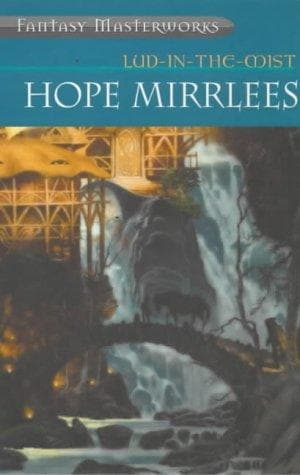
Book details and cover from Google Books.
Ready to read Lud-in-the-mist?
Get your copy on Amazon, or listen to it on Audible. We earn a commission if you buy through these links.