
We earn a commission if you buy through these links. Learn more
LMNO peas
by Baker, Keith
A bright, playful alphabet picture book in which a pod of peas wiggles into letter shapes, making early letter recognition feel like a game for toddlers and preschoolers.
What It's About
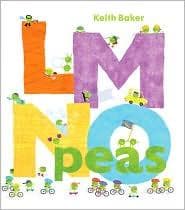
LMNO Peas is a picture book for very young children, built around the alphabet. Its premise is simple and visual: a crowd of identical peas arranges itself into letter shapes, so each page works like a living typeface. The text is short and rhythmic, written to be read aloud, and the pictures do much of the teaching. Adults reading with a toddler will find the rhythm easy to fall into, and many children enjoy asking for the same pages again.
The approach is playful rather than instructive in any heavy way. Letters are introduced as shapes made from something a child already recognizes, which makes the link between an abstract symbol and a familiar object easier to hold onto. Reading it feels more like looking at a picture puzzle than doing a lesson, and it rewards a slow look at the drawings.
The experience is brief, often finished in a few minutes, and it works best as a shared, lap-based activity. It is not a story with a plot or characters to follow, so it suits children who like patterns and sounds more than narrative. Older readers may find it thin, but as an early-literacy book it does its job cleanly.
Read this if you…
- are choosing a first alphabet book for a toddler or preschooler
- want a read-aloud that holds a squirmy child on your lap
- like books that turn letters into something visual and fun
Skip it if you…
- want a story with characters, a plot, or an emotional arc
- are looking for a school-age reader or a book that teaches phonics in depth
Key Ideas
- 1
Letters as shapes children can recognize
The book treats each letter as a form to be seen before it is named. By building letters out of a repeated, easily recognized object, it asks a child to notice the outline and structure of a symbol. This is a useful first step before phonics or spelling, because letter recognition depends heavily on visual shape.
- 2
Repetition and rhythm for early listeners
The text repeats patterns and sounds so that young listeners can predict what comes next and join in. Predictable language helps children feel they are reading along even before they can decode words. Read aloud with some energy, the verse carries the page, and the cadence often matters as much as the words themselves.
- 3
The alphabet's fixed order made familiar
Moving through the letters in their set sequence reinforces the order children will need later for dictionaries, alphabetizing, and song. Repeated readings turn that sequence into a path a child can anticipate and eventually recite along with the adult.
- 4
Humor and play as a learning engine
The peas are cheerful and the drawings invite close looking, which keeps a restless toddler engaged. The playfulness is the main reason the book holds attention, and attention is what makes the letter shapes stick.
Limitations
Critics of alphabet books in general point out that letter shape is only one part of reading. This book does not teach letter sounds, spelling, or how to combine letters into words. Its pictures are compact, so a child who has already mastered the alphabet will get little from it. Because it is short, some parents find it slight as a purchase, and it works best as one book among several rather than a complete literacy program.
Questions Readers Ask
- Who is LMNO Peas for?
- It is aimed at toddlers and preschoolers, roughly ages two to five, who are starting to notice letters. Parents and early-years teachers tend to use it as a read-aloud. Older children who already read fluently will likely find it too simple, but it can still be a fun way to talk about letter shapes with a younger sibling.
- Does it teach phonics?
- Not in any systematic way. The book focuses on letter shapes and playful rhythm rather than sounds. For phonics, pair it with a dedicated program or a book that links each letter to its sound. It is a good companion for shape recognition, not a complete reading course.
- Published
- 2010
- ISBN
- 9781416991410
- Difficulty
- beginner
- Category
- Fiction
Book details and cover from Google Books.
Ready to read LMNO peas?
Get your copy on Amazon, or listen to it on Audible. We earn a commission if you buy through these links.