
We earn a commission if you buy through these links. Learn more
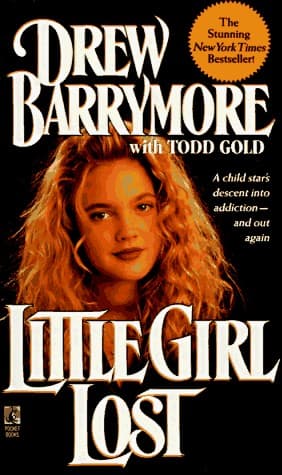
Little girl lost
A candid memoir written in Drew Barrymore's early twenties of age, no, as a teenager, offering a raw inside look at child stardom, a famous family, and addiction. Worth reading for its unfiltered honesty about growing up in public.
What It's About
Little Girl Lost is a memoir Drew Barrymore published as a teenager, so it is written close to the events it describes rather than from the distance of adulthood. It covers her childhood as a working actress, the weight of her famous family name, and the stretch of her early adolescence when drinking, drugs, and a chaotic lifestyle took over, along with the path toward getting sober.
The book's main value is its candor about what the child-star system did to a kid who had to grow up on camera. It is less interested in Hollywood gossip than in how a child learns to carry adult responsibilities, how her home life shaped her choices, and how those choices escalated. The prose is direct and conversational, closer to someone talking across a table than a polished literary memoir, and the emotional register is often raw.
Reading it is quick and intense. Because the author is still very young and writing from nearby, there is little reflective analysis or long-view perspective. Go in expecting a vivid personal account of one difficult period and an early recovery story, not a full life history. Her later career and adult life fall outside its scope.
Read this if you…
- want an unfiltered inside view of child stardom and what it cost a young performer
- are curious about Hollywood families and the pressure of an inherited famous name
- appreciate memoirs written close to the events, with rawness over polish
Skip it if you…
- want a reflective, adult perspective on the events, since this is written from very near them
- are looking for a complete life story covering her later career and success
Key Ideas
- 1
Growing up as a working child actor
The memoir shows how early fame turns a child's ordinary development into a job, with schedules, expectations, and public scrutiny arriving long before a young person has the tools to handle them. Barrymore frames this less as glamour than as a loss of normal childhood experience.
- 2
Family legacy and the pressure of a famous name
Her background as a member of a well-known acting family runs through the book. The name opened doors but also set expectations, and the memoir explores how inherited fame can feel both like a foundation and a weight she was expected to live up to.
- 3
Addiction seen from inside a young life
Rather than a clinical or moralizing account, the book describes substance use from the perspective of someone who was living it at a young age. It shows how the habit fit into her daily routine and relationships, which makes the story feel immediate and uncomfortable.
- 4
The difficult road toward early recovery
The later sections turn toward treatment and an attempt to stop. The memoir presents recovery as a process with setbacks rather than a single turning point, which gives the ending a more honest and unfinished feel than a typical redemption narrative.
Limitations
Because the book was written while Barrymore was still a teenager, it lacks the hindsight and analytical depth of a later memoir, and some passages feel more like raw recollection than considered reflection. Readers may find the perspective narrow, limited to one period of her life. The book also does not cover her subsequent career, adult relationships, or later recovery, so it should be read as a snapshot rather than a complete account of her life.
Questions Readers Ask
- Who is Little Girl Lost best suited for?
- It suits readers who enjoy candid, personal memoirs and want to understand the experience of growing up in the public eye. It is a quick read, accessible to general adult readers, but its emotional content around addiction may be heavy for some. Readers looking for polished literary craft or deep reflection may find it less satisfying.
- How does it compare to other celebrity childhood memoirs?
- It shares the raw, youthful voice of similar early memoirs, but its distinctive feature is that it was written so close to the events. Compared with later, more reflective celebrity memoirs, it offers less perspective and more immediacy. If you want hindsight and structure, you may prefer a memoir written in adulthood.
- Published
- 1990
- ISBN
- 9780671689230
- Difficulty
- beginner
- Category
- Biographies
Book details and cover from Google Books.
Ready to read Little girl lost?
Get your copy on Amazon, or listen to it on Audible. We earn a commission if you buy through these links.