
We earn a commission if you buy through these links. Learn more
Little, Big
Guide by the Books of the Day editors · Updated · How we write our guides
A sprawling, witty fantasy about an old house, a family that lives in it across generations, and fairies who work through coincidence and memory rather than spectacle. It rewards slow, rereading-friendly attention.
What Creators Say About Little, Big
2 creators reviewed Little, Big on YouTube between 2019 and 2022, with 29.5K views between them. Their opinions are their own; we picked these reviews, we didn't write them.
What It's About
Little, Big is a sprawling novel about the Drinkwater family and Edgewood, an old house on the edge of a city where the boundary between the ordinary world and something older feels thin. Across generations, family members and the people who marry into and around them move through the house and the surrounding countryside, and the story takes its time. Crowley tells it in a patient, layered voice, folding in letters, family lore, and digressions that often feel more important than the plot they interrupt.
The fantasy here is quiet rather than spectacular. Fairies are real in this world, but they rarely arrive with trumpets; they work through coincidence, misremembering, and the logic of stories. Crowley writes with an essayist's curiosity about how people keep faith with the past, and the prose is dense, witty, and full of allusion to literature, folklore, and history. Readers should expect a book that rewards slow attention and rereading.
Reading it feels less like following a single thread than like wandering a large house with many rooms, some of which you may not revisit for hundreds of pages. Some readers find it lush and enchanting; others find it slow, cluttered, or deliberately withholding. Both reactions are fair, and both are part of the book's effect.
Read this if you…
- love slow, digressive novels where atmosphere and detail matter as much as plot
- want fantasy that is literary, melancholy, and rooted in ordinary domestic life
- enjoy books that reward rereading and reward noticing allusions to folklore and older literature
Skip it if you…
- want a fast-moving quest or a clear, plot-driven magic system
- prefer a tidy story where questions are answered on schedule and loose threads are tied up
Key Ideas
- 1
Stories as a way of living in time
The novel treats narrative as something people use to order their lives, to make sense of loss, and to pass meaning down. Crowley is interested in how families retell their history until the retelling becomes the history, and he shows how that process can both comfort and mislead the people caught in it.
- 2
Fairyland as something half-forgotten
Rather than a separate magical kingdom, the fairy world here feels like something that has slipped out of common belief and survives in corners of memory, custom, and old texts. The book asks what happens to wonder when a culture stops expecting it, and whether it can still reach people who are not looking for it.
- 3
Family memory and inheritance
The Drinkwater household is shaped by what its members remember, misremember, and choose to hand on. Crowley pays close attention to the small continuities and breaks between generations, so the characters often feel like they are living inside a family story they only partly understand.
- 4
Dense, allusive prose as the point
The writing is deliberately layered, playful, and full of references, and it often moves through long passages of reflection before returning to plot. That texture is central to the experience: the reader is meant to feel the slow accumulation of detail and to notice how much the book holds in view at once.
Limitations
The book is long, and its pace is intentionally unhurried, which many readers find frustrating, especially in the middle sections. Its style is ornate and sometimes opaque, and characters can feel more like vehicles for ideas and atmosphere than fully drawn people. Readers looking for a clear map of its fairy lore or a satisfying plot arc may feel the novel withholds too much. It is also a product of its time in its approach to family and gender roles, which some contemporary readers will find dated.
Questions Readers Ask
- Is Little, Big good for someone new to fantasy?
- It can be, but it is not an easy entry point. The fantasy is subtle and the prose is demanding, so a reader who wants obvious magic and brisk pacing may struggle. Readers who already enjoy literary fiction and are curious about how fantasy can be quiet and reflective will probably get the most from it.
- How does it compare to Susanna Clarke's Jonathan Strange & Mr Norrell?
- Both draw on English folklore and an older sense of enchantment, but they feel very different. Clarke writes a more conventional, plot-driven historical novel with a clearer structure. Crowley is looser, more digressive, and more interested in family memory and atmosphere than in a sweeping narrative.
- Published
- 1981
- ISBN
- 9780553233377
- Difficulty
- advanced
- Category
- Fantasy
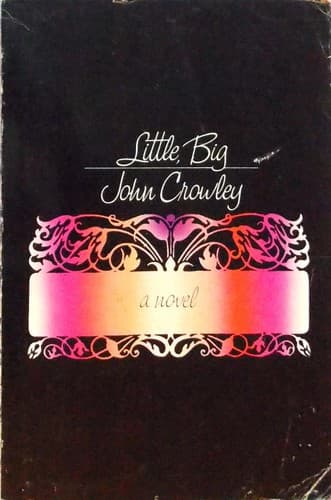
Book details and cover from Google Books.
Ready to read Little, Big?
Get your copy on Amazon, or listen to it on Audible. We earn a commission if you buy through these links.