
We earn a commission if you buy through these links. Learn more
Lit
by Mary Karr
Guide by the Books of the Day editors · Updated · How we write our guides
Mary Karr's raw, funny account of drinking, marriage, motherhood, and getting sober, written with a poet's ear and little interest in looking good.
What Creators Say About Lit
2 creators reviewed Lit on YouTube between 2009 and 2024, with 49.2K views between them. Their opinions are their own; we picked these reviews, we didn't write them.
What It's About
Lit continues the story Karr began in The Liars' Club and Cherry, following her from her years of heavy drinking and failed attempts at stability into marriage, pregnancy, and early motherhood, and then toward sobriety and a turn to faith. It is less a tidy recovery narrative than a record of a woman trying to stay sober while raising a son and making a living as a poet and teacher.
The style is the main draw. Karr writes as a poet, with dense sentences, sharp comic timing, vivid physical detail, and plenty of profanity. Chapters move in associative loops rather than strict chronology, so the reader often holds several threads at once and waits for them to meet. She is willing to make herself look bad, and that candor keeps the book from feeling self-congratulatory.
Reading Lit feels like sitting with a talkative friend who is unsparing about her own failures and funny about nearly everything else. It is harrowing in places and often very funny in the same paragraph. The material on faith is more argument than reflection in some sections, but it is persuasive because it is tied so closely to the daily labor of staying sober.
Read this if you…
- liked The Liars' Club or Cherry and want to see how that story continues
- are interested in addiction and recovery told by someone who writes with real craft
- want a spiritual memoir that does not flatter its author
Skip it if you…
- want a clear, step-by-step guide to getting sober
- need a linear narrative that is easy to track without rereading
Key Ideas
- 1
Addiction as a fight for self-honesty
Karr treats drinking less as a moral failing than as a long campaign of self-deception. Much of the book's tension comes from watching her lie to herself, notice the lie, and lie again. Recovery, in her telling, begins when she stops being the most convincing narrator of her own life.
- 2
Faith as a practical, unglamorous choice
Her turn toward Catholicism is not presented as a sudden epiphany. It reads as a series of stubborn decisions made while struggling with doubt, shame, and the need for something larger than her own willpower. Readers who are skeptical of religious memoir will find it more concrete than most.
- 3
Motherhood under the pressure of the past
Karr examines how her own childhood shapes her fears as a parent. The sections about raising her son are among the most tender in the book, and they show how getting sober changes not just her habits but her capacity to be present for another person.
- 4
Language as a tool for self-examination
Because Karr is a poet, the book constantly tests its own sentences. She pays attention to how words hide or reveal what she feels, and that attention is part of what makes the memoir feel like thinking in progress rather than a finished verdict on her life.
Limitations
Some readers find the faith sections preachy or repetitive, especially if they came for the addiction story. The nonlinear structure and dense, allusive prose can be tiring over a long stretch, and it helps to have read Karr's earlier memoirs for family context. The frank depictions of drinking, sex, and self-destruction are not for everyone. Karr does not offer a general theory of recovery, so readers looking for broader advice will need to look elsewhere.
Questions Readers Ask
- Do I need to read The Liars' Club before Lit?
- You don't have to, but it helps. Lit assumes some familiarity with Karr's childhood and family, and her earlier memoirs supply the background that makes her later choices easier to follow. Many readers start with The Liars' Club because it is the most accessible entry point into her work.
- Is Lit mainly about addiction or about religion?
- Both, and the two are hard to separate in the book. Addiction and sobriety drive most of the narrative, while Karr's turn to faith is presented as part of how she stayed sober. Readers interested only in recovery may find the religious passages more substantial than they expected.
- Is the book still worth reading today?
- Yes. Although it was published in 2009, its concerns about addiction, shame, parenthood, and the search for meaning remain current. The memoir's value lies in its specific voice and honest self-scrutiny more than in any historical detail, so it reads as fresh to new readers.
- Published
- 2009
- ISBN
- 9780060596989
- Difficulty
- intermediate
- Category
- Biographies
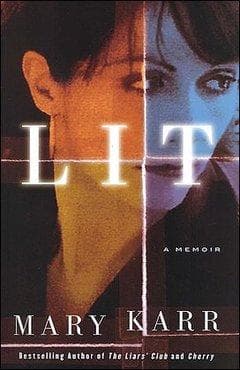
Book details and cover from Google Books.
Ready to read Lit?
Get your copy on Amazon, or listen to it on Audible. We earn a commission if you buy through these links.