
We earn a commission if you buy through these links. Learn more
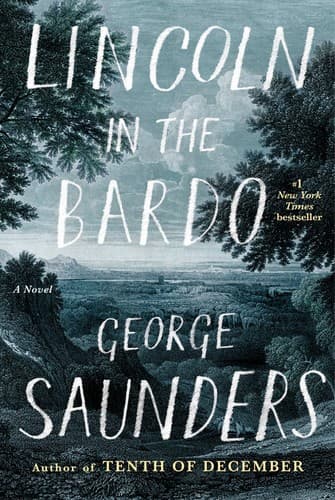
Lincoln in the Bardo
by George Saunders, Amir Tsukerman
Guide by the Books of the Day editors · Updated · How we write our guides
A ghost-filled chorus of a novel about grief, set in a cemetery where Abraham Lincoln mourns his son, worth reading for its voices, humor, and sheer originality.
What It's About
Lincoln in the Bardo is George Saunders's first novel, published in 2017 and that year's Booker Prize winner. It is set in a Washington, DC cemetery in 1862, where the dead who have not yet moved on linger in a state the book borrows from Tibetan Buddhism as the bardo. At the center is Willie Lincoln, the president's eleven-year-old son, who has just died. The president comes to the cemetery to hold him, and the spirits there react to what they see.
Saunders builds the book from voices rather than a single narrator. Dozens of ghosts speak in turn, often interrupting one another, and between their monologues come short passages from invented and historical sources, such as accounts and documents from the period. The effect is closer to a play or a choir than a conventional novel. The prose is full of fragments, dashes, and shifting viewpoints, and some readers find the opening chapters disorienting until the rhythm takes hold.
The experience is funny, grim, and tender at once. Saunders has a sharp ear for how ordinary people talk, and that keeps the grief from becoming unbearable. The real subject is how both the living and the dead hold on to things they cannot let go. The audiobook, with its large cast of readers, is widely praised and is a good way in for many people.
Read this if you…
- Enjoy experimental fiction that uses many voices and an unusual structure
- Want a moving novel about grief that also makes you laugh
- Are curious about how historical events can be told from unexpected angles
Skip it if you…
- Prefer a single narrator and a straightforward plot you can follow easily
- Find dialogue-heavy, fragmented prose tiring over a long stretch
Key Ideas
- 1
Grief as a shared, unfinished condition
The novel treats mourning as something that binds the living and the dead together. The ghosts cannot move on, and the father cannot let go either. Saunders shows how loss can keep people in a kind of limbo, and he asks what it would take to release them.
- 2
Polyphony as the engine of the story
Rather than following one protagonist, the book moves through a crowd of speakers with their own grievances, jokes, and confusions. Each voice reveals something different about the cemetery and the people in it, so the structure is part of the meaning, not just a style choice.
- 3
Invented documents mixed with history
Interleaved passages from sources of the period give the book a documentary texture. Because the sources blend real and imagined material, the novel makes readers think about how history is recorded, remembered, and sometimes distorted by those who write it down.
- 4
Comedy as a way into sorrow
Many of the spirits are petty, vain, or absurdly chatty, and Saunders plays their foibles for laughs. That humor makes the sadder passages land harder, because the reader has come to care about these voices before the emotional weight arrives.
Limitations
The format is demanding. The large cast and rapid shifts between speakers can be confusing, and some readers find the ghostly chorus wearing over the length of the book. Lincoln himself appears only sparingly, so readers hoping for a conventional portrait of the president will be disappointed. Some critics also find the sentimental moments heavier than the book's otherwise sharp, ironic style. The historical material mixes real and invented sources, which some readers find slippery.
Questions Readers Ask
- Do I need to know Lincoln's history to enjoy this book?
- No. The book assumes only a basic awareness of the Civil War era and the Lincolns' loss. The historical passages are fragments that the novel explains through context, so the story works on its own terms. Readers who know more about the period will catch extra references, but they are not required for the emotional core.
- How does it compare to more traditional historical novels?
- It is far less conventional. Traditional historical fiction usually follows a main character through a chronological plot. Lincoln in the Bardo instead relies on a cemetery full of ghosts, shifting voices, and invented documents. If you want a clear narrative arc, this may frustrate you, but if you like formal experiments, it rewards close attention.
- Published
- 2017
- ISBN
- 9788324055425
- Difficulty
- intermediate
- Category
- Fiction
Book details and cover from Google Books.
Ready to read Lincoln in the Bardo?
Get your copy on Amazon, or listen to it on Audible. We earn a commission if you buy through these links.