
We earn a commission if you buy through these links. Learn more
Linchpin
by Seth Godin
Seth Godin's short manifesto argues that replaceable work is losing value and makes a persuasive case for judgment, generosity, and creative initiative, though it offers more inspiration than practical steps.
What It's About
Linchpin is Seth Godin's argument that the old bargain between workers and employers has broken down. For much of the last century, a job meant following instructions well, and many people were paid to be interchangeable parts. Godin contends that as routine work gets automated or shipped elsewhere, the people who stand out are those who bring judgment, generosity, and creative initiative that cannot be scripted. He calls these people linchpins.
The book is short and deliberately provocative. Godin writes in brief, punchy sections, often a page or two long, with plenty of white space and repeated phrasing meant to be underlined rather than studied. It reads more like a manifesto or a long pep talk than a research-driven business book. He offers few case studies and little data, so the persuasion comes from tone and conviction rather than evidence.
Reading it feels like being challenged by a blunt mentor who wants you to stop waiting for permission. Some readers find it energizing and clarifying; others find it repetitive and light on practical steps. The experience depends heavily on whether you already sympathize with its view of work as a chance to make something personal and generous.
Read this if you…
- feel your job rewards compliance and want a clearer case for doing more meaningful work
- enjoy short, provocative books and like being pushed by a strong voice
- are a freelancer or employee who suspects the safe path is becoming the riskiest one
Skip it if you…
- want a practical, step-by-step career plan with exercises and measurable tactics
- find motivational, manifesto-style writing hollow or expect strong evidence behind every claim
Key Ideas
- 1
Replaceable work is losing its value
Godin argues that jobs built around following a checklist are the easiest to outsource, automate, or treat as commodities. Staying safe by being predictable is therefore a weaker position than it used to be. He frames this as a shift in what organizations pay for, moving away from simple compliance toward judgment and connection.
- 2
Art as a generous, personal contribution
Godin uses the word art broadly: any work made from your own point of view and offered to other people, not only painting or music. The point is less about innate talent than about intent, meaning the decision to create something that connects with others and that you would be willing to put your name on.
- 3
Fear and the lizard brain resist good work
He describes an internal resistance that pushes people toward familiar, safe choices and makes them hide their best work. He treats this as a predictable obstacle rather than a personal failing, and suggests that recognizing it is the first step toward doing work that matters.
- 4
Emotional labor and connection as value
Godin argues that people who handle difficult conversations, build trust, and make others feel seen create value that machines and cheap labor cannot easily replace. This kind of work is harder to measure, which is part of why he thinks it is so often undervalued.
- 5
Ship your work and accept judgment
Godin emphasizes releasing work into the world, accepting criticism, and taking ownership of outcomes instead of waiting for a boss's approval. The book pushes readers to stop hiding behind process and to put their own judgment on the line.
Limitations
Critics say the book leans on broad generalizations about the economy and about who succeeds, with little data to test them. Its advice on how to become a linchpin is often abstract, and the repetition can wear thin even in a short book. The framing also assumes a degree of freedom and security that not every worker has, so the message may feel like a luxury to someone juggling survival-level bills. Some examples feel dated, and some readers will find the tone preachy.
Questions Readers Ask
- Who is Linchpin best suited for?
- It suits office workers, freelancers, and small-business owners who feel their work is being squeezed into a template and want to be more than replaceable. It works well as a single-sitting read and as a prompt for reflection. It is less useful if you want technical or industry-specific guidance.
- Is Linchpin still relevant?
- The core argument about automation, commodification, and the value of judgment has aged well and arguably matters more now. Some examples and the overall tone feel tied to 2010, and the book offers little on specific tools or platforms, so pair it with more current material from your field.
- How does Linchpin compare with The War of Art?
- Both deal with resistance and creative fear, but Steven Pressfield focuses narrowly on overcoming the internal barrier to making creative work, while Godin extends the idea to careers, organizations, and generosity at work. Read Pressfield if you are stuck on starting; read Godin if you want to rethink your role.
- Published
- 1960
- ISBN
- 9780307705501
- Difficulty
- beginner
- Category
- Self-Improvement
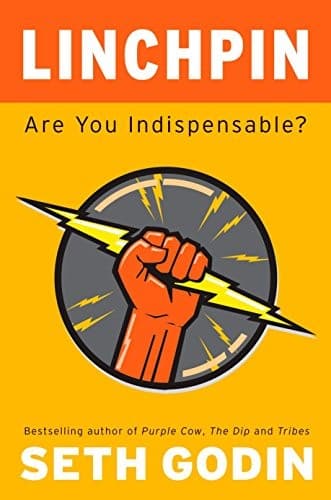
Book details and cover from Google Books.
Ready to read Linchpin?
Get your copy on Amazon, or listen to it on Audible. We earn a commission if you buy through these links.