
We earn a commission if you buy through these links. Learn more
Life on Earth
A warm, wide-angle tour of how life on Earth developed, built around vivid animal examples, and still one of the most readable introductions to natural history.
What It's About
Life on Earth is the book Attenborough wrote to accompany the 1979 BBC television series of the same name, and it still reads as a sweeping account of how living things came to fill the planet. Rather than organizing itself around habitats or species alone, it follows the long sequence of changes that produced today's animals and plants, from the earliest single cells through the colonization of land to the rise of mammals and, finally, people. The narrative is anchored in specific animals and places, so you are always looking at something concrete while the bigger argument unfolds.
The style is that of a broadcaster speaking directly to you: warm, curious, a little wry, and clearly delighted by the odd solutions evolution has produced. Much of the pleasure comes from the pacing, which moves from deep time to close observation and back again. The illustrations and photographs were an essential part of the original package, and reading the book feels a little like watching a documentary you can pause and reread.
It is an experience of wonder more than of argument. Attenborough is not writing a textbook, and he rarely stops to weigh competing theories in detail. What you take away is a strong sense of scale, of how interconnected living things are, and of how contingent the whole story has been.
Read this if you…
- want a vivid, big-picture introduction to the history of life without needing a science background
- enjoy natural history written with warmth, curiosity, and a sense of wonder
- like to understand animals through the pressures that shaped them rather than through lists of species
Skip it if you…
- want an up-to-date account that reflects modern genetics, dating methods, or climate science
- are looking for detailed argument, debate between scientists, or a rigorous textbook treatment
Key Ideas
- 1
Life as a long chain of adaptation
The book treats evolution less as a single dramatic event than as a patient accumulation of small adjustments. Each creature is shown as a solution to a local problem of food, shelter, or survival, and the solutions often look strange until you see the pressures behind them. The reader comes away with a habit of asking why an animal looks the way it does.
- 2
The difficult move onto land
One of the book's most engaging threads is the story of plants and animals leaving the water. Attenborough makes clear how many obstacles stood in the way, from drying out to supporting weight without buoyancy. It is a useful corrective to the idea that the transition was simple or inevitable.
- 3
Organisms shaping one another
Predators, parasites, pollinators, and competitors are presented as forces that reshape each other over time. Relationships between species drive much of the diversity on display. This framing makes ecosystems feel like a web of pressures rather than a catalogue of separate animals.
- 4
Extinction and the role of chance
Mass extinctions and environmental upheavals appear throughout the story as turning points that cleared space for new forms. The book suggests that which lineages survived was partly a matter of luck, not only of superiority. This makes the present look like one moment in a long and unpredictable sequence.
- 5
Humans as late and recent arrivals
People appear at the end of the long timeline, which gives the book a reflective tone in its final stretch. The placement is meant to remind readers how brief the human presence has been against the history of life. Some readers will find this framing moving, others a little dated.
Limitations
Published in 1979, the book predates modern molecular genetics, many fossil discoveries, and the revised timelines that later research produced, so some specifics are out of date. Its treatment of the current climate and extinction crisis is limited because it was written before those concerns dominated the field. Because it accompanied a television series, coverage is selective and built around memorable examples, and some groups receive far less attention than others. The closing emphasis on human arrival can also feel anthropocentric to modern readers.
Questions Readers Ask
- Is Life on Earth still worth reading in the 21st century?
- Yes, for its storytelling, its sense of scale, and its clear explanations of how evolution works. Readers should treat specific dates, classifications, and claims about fossils as historical, and supplement the book with a newer survey if they want current science. As a piece of popular natural history it remains engaging and easy to follow.
- How does it compare to Attenborough's later books?
- Life on Earth is broader and more chronological, covering the whole history of life in one sweep. His later works often focus more tightly on particular regions, ecosystems, or environmental problems, and they reflect newer research. If you want the full arc of life, start here; if you want current conservation themes, look at his later titles.
- Do I need any background in biology?
- No. The book is written for a general adult reader and introduces ideas through concrete animals and plants rather than technical vocabulary. Some terms are explained as they come up, so curiosity is the main requirement.
- Published
- 1705
- ISBN
- 9780002199414
- Difficulty
- beginner
- Category
- Science
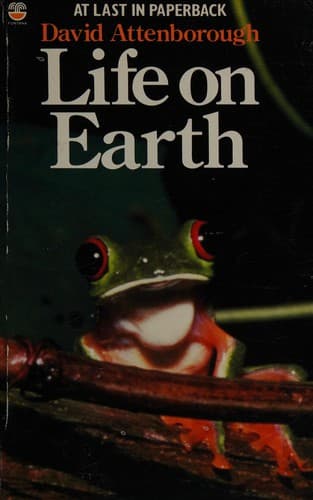
Book details and cover from Google Books.
Ready to read Life on Earth?
Get your copy on Amazon, or listen to it on Audible. We earn a commission if you buy through these links.