
We earn a commission if you buy through these links. Learn more
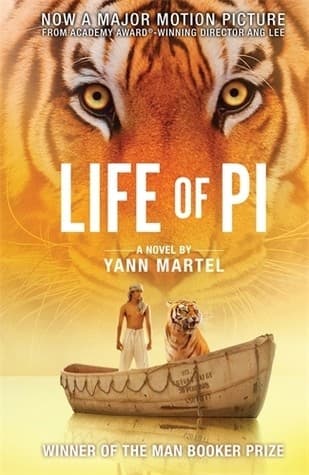
Life of Pi
by Yann Martel
On screen: Life of Pi (film, 2012)
Guide by the Books of the Day editors · Updated · How we write our guides
Yann Martel's novel pairs a gripping survival story, a boy alone with a Bengal tiger, with a sharp meditation on faith and the act of telling a story.
What Creators Say About Life of Pi
2 creators reviewed Life of Pi on YouTube between 2014 and 2016, with 122.7K views between them. Their opinions are their own; we picked these reviews, we didn't write them.
What It's About
Life of Pi follows Piscine Molitor Patel, a teenager from Pondicherry, India, whose family runs a zoo. When political upheaval pushes them to emigrate, their freighter sinks in the Pacific, and Pi ends up alone in a lifeboat with a Bengal tiger named Richard Parker. The survival story is gripping, but it is only part of what the novel does.
Martel tells the story as a frame narrative. An adult Pi recounts his experience to a writer who has come looking for a story about God, and the book keeps reminding you that you are listening to someone choose how to shape a painful memory. The prose is plain and direct, with long stretches of practical detail about animals, boats, and the sea, alongside shorter passages of reflection that lean toward philosophy without becoming a lecture.
Reading it feels like being taken on a long, odd adventure by someone who is clearly trying to persuade you of something. It is fast, often funny, and emotionally direct, and it asks more of you at the end than at the start. It is a short read for an adult and rewards readers who enjoy being unsure what to believe.
Read this if you…
- want a page-turning survival story with serious ideas underneath
- enjoy novels that make you question what you have been told
- are curious how a single person can hold several faiths without contradiction
Skip it if you…
- want a strictly realistic or gritty survival account, since the sea and animals serve the meaning more than strict realism
- dislike books that deliberately leave you to decide what is true
Key Ideas
- 1
Faith as a personal, lived practice
Pi's habit of belonging to several religions at once is the book's central provocation. Martel treats faith less as a checklist of doctrines and more as something a person builds and tests against hardship. The novel asks whether belief is a comfort, a discipline, or a kind of storytelling we do to get through the day.
- 2
Survival and the disciplined self
Much of the book follows Pi's practical struggle to stay alive and to keep himself human. Routines, rules, and care for another creature shape his days. The book examines what structure and responsibility do to a person who has lost every social support and must decide who he is without them.
- 3
Storytelling as a moral choice
The frame keeps the reader aware that every account is an arrangement of facts. Martel makes you consider how stories are shaped, what they are for, and why we often prefer one version of events over another. This is the part of the book that lingers after the adventure is over.
- 4
Animals as mirrors of human nature
Pi's knowledge of zoo animals gives the book its detail and its unease. Richard Parker works as a figure for raw instinct and for the wildness Pi must restrain in himself. The animal scenes carry as much thematic weight as the spiritual ones, which is why they feel more than decorative.
Limitations
Some readers find the frame and the closing move more clever than moving, and feel the book is nudging them toward a conclusion. The reflections on religion can read as earnest or obvious to people who have already thought about these questions. The zoo and animal-behaviour passages slow the opening for some readers. The book is also sometimes shelved as Young Adult, although Martel wrote it for adult readers, and its violence and themes are aimed at them.
Questions Readers Ask
- Is Life of Pi really a young adult book?
- Some bookstores and library catalogues shelve it as Young Adult, and many teenagers read it with pleasure. Martel wrote it as an adult literary novel, and it won the 2002 Man Booker Prize. Its philosophical framing and its violence are aimed at adult readers, so it works best as general fiction.
- Is the book still worth reading today?
- Yes. Its questions about belief, suffering, and how we make meaning from hard experience have not dated. Some of the reflections on religion may feel familiar to modern readers, but the storytelling is sharp and the closing section still provokes discussion.
- Published
- 2000
- ISBN
- 9781565117808
- Difficulty
- intermediate
- Category
- Young Adult
Book details and cover from Google Books.
Ready to read Life of Pi?
Get your copy on Amazon, or listen to it on Audible. We earn a commission if you buy through these links.