
We earn a commission if you buy through these links. Learn more
Life
Guide by the Books of the Day editors · Updated · How we write our guides
Keith Richards tells the story of the Rolling Stones and his own rough, restless life in a loose, candid voice that makes rock history feel like a late-night conversation.
What Creators Say About Life
1 creator reviewed Life on YouTube in 2020, with 897 views between them. Their opinions are their own; we picked these reviews, we didn't write them.
What It's About
Life is the memoir of Keith Richards, the Rolling Stones guitarist, written with the journalist James Fox. It moves roughly in time order, from a childhood in postwar Dartford and the teenage hunger for American blues records, through the early years of the Stones and the touring, recording and legal trouble that followed. Richards is the one telling it, and that is the point: the book reads like someone talking across a table rather than a polished chronicle.
The style is digressive and frank. Richards wanders off to explain how a song was built, how a guitar was tuned, or who taught him a riff, and then circles back. Long stretches cover drugs, heroin in particular, and the blurry years when he was rarely sober, and he discusses them without much apology or much moralizing. Fox's role is mostly to shape the material into a readable arc, and the voice stays recognizably Richards.
Reading it feels less like studying a music career and more like spending time with a stubborn, funny, often exhausted man who has outlived a lot of people. The music passages will please anyone who plays or loves the records, and the tour and studio scenes have plenty of texture. Expect a long book that rewards patience more than speed.
Read this if you…
- want a first-hand view of the Rolling Stones' early years and their music-making
- enjoy conversational, rambling memoirs more than tidy chronologies
- are curious about the blues and rock records that shaped British bands in the 1960s
Skip it if you…
- want a balanced, outside account of the band's history or its business dealings
- find long digressions about drugs or guitar technique tedious
Key Ideas
- 1
Music learned by ear and by feel
Richards describes absorbing American blues and rock and roll by playing along with records rather than through formal training. The book treats feel, tone and the right loose groove as more important than technical correctness, and it returns again and again to the idea that a riff should sound lived-in rather than polished.
- 2
A bond with Mick Jagger, part loyalty, part rivalry
The partnership with Jagger runs through the whole book as the central relationship of Richards's working life. He gives his own account of how their songwriting and business tensions developed, and the friendship comes across as stubborn and affectionate even when it is plainly strained.
- 3
Addiction as a lived fact, not a lesson
Drug use is a recurring thread rather than a single chapter. Richards presents it as part of the texture of his years on the road and in the studio, and he frames his survival partly as luck and partly as sheer stubbornness, which gives the account its edge but also invites skepticism.
- 4
A band as a long, difficult family
The Stones are portrayed as a group that kept going through changing members, grudges, money disputes and punishing schedules. Richards suggests a band is closer to a marriage than a business, and that its longevity depends on tolerance as much as talent.
- 5
Storytelling that refuses a tidy arc
The looping structure is itself one of the book's ideas. Memories surface out of order, get corrected or revisited, and sometimes contradict earlier passages. That mirrors how memory works, but it also means the reader has to do some of the work of assembling the timeline.
Limitations
The book is written from one very strong perspective, so disputes with Jagger, former bandmates and managers come mostly through Richards's memory and grudges. Readers should treat those passages as his version and check them against other sources. The digressions and repetitions can make the book feel long, and some readers find its candor about drugs more romantic than it is reflective about harm. Those who want a rigorous, documented history of the band will need to look elsewhere.
Questions Readers Ask
- Do I need to know Rolling Stones music to enjoy Life?
- It is not essential, since Richards explains most of the background as he goes. Still, the book is much richer if you know the major albums and songs, because many passages revolve around how particular records were made. Casual fans will follow along, but you may find yourself reaching for a playlist.
- How does Life compare with other rock memoirs?
- Patti Smith's Just Kids is more lyrical and focused on a single relationship. Richards's book is looser and covers a larger stretch of time, with more attention to the road, the studio and the mechanics of playing guitar in a band. It is less polished but more sprawling.
- Published
- 2010
- ISBN
- 9780316034388
- Difficulty
- beginner
- Category
- Biographies
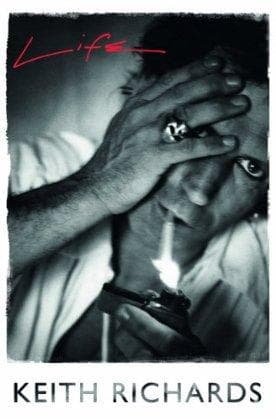
Book details and cover from Google Books.
Ready to read Life?
Get your copy on Amazon, or listen to it on Audible. We earn a commission if you buy through these links.