
We earn a commission if you buy through these links. Learn more
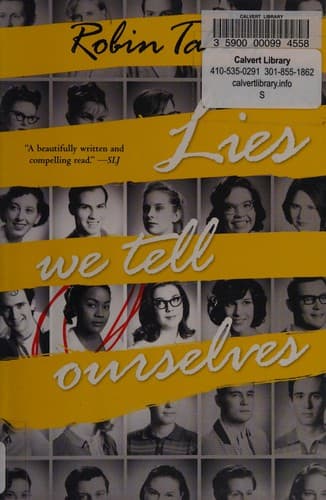
Lies we tell ourselves
by Robin Talley
Guide by the Books of the Day editors · Updated · How we write our guides
A tense, alternating-narrator YA novel set in 1959 Richmond during school closures over integration, worth reading for its sharp look at how people justify inherited prejudice.
What Creators Say About Lies we tell ourselves
2 creators reviewed Lies we tell ourselves on YouTube between 2014 and 2015, with 4K views between them. Their opinions are their own; we picked these reviews, we didn't write them.
What It's About
Lies We Tell Ourselves is a young adult historical novel set in Richmond, Virginia, in 1959, when the state's response to court-ordered school integration was to shut public schools rather than let Black and white students learn side by side. Talley alternates chapters between two teenage narrators: Sarah Dunbar, one of the few Black students sent to an all-white high school, and Linda Hunter, a white student whose family is invested in the segregationist cause. Their paths collide in ways that are uncomfortable from the first pages.
Talley writes in plain, close first person. Because the chapters let you see the same tense moments from opposite sides, the gap between what each girl tells herself and what is actually happening becomes the engine of the story. The prose is brisk and the dialogue carries much of the tension, so the book reads quickly even though its subject is heavy. A romance runs through the politics and is handled as part of the characters' moral reckoning rather than as a side plot.
The experience is less a history lesson than a study of how ordinary people rationalize what they have been taught. Readers who want exact historical detail or a sprawling cast should look elsewhere. This is a focused, emotionally direct novel that works best when you are willing to sit with discomfort.
Read this if you…
- want a historical novel that examines segregation through characters on both sides of the divide
- like alternating narrators that let you see the gaps between perception and reality
- are comfortable with a romance woven into a heavy, morally serious story
Skip it if you…
- want detailed, documentary-style history of the Massive Resistance era
- need a light, escapist read without painful themes
Key Ideas
- 1
Segregation framed as tradition and duty
Linda's world presents resistance to integration as loyalty, custom, and protecting a way of life. The novel shows how respectable-seeming families build moral justifications for exclusion, and how easily those justifications pass for ordinary decency when everyone around you repeats them.
- 2
Two narrators, one tense moment
Alternating point of view lets the reader hold both perspectives at once. Sarah's chapters show what the same events cost her, while Linda's show how carefully she avoids seeing it. The structure turns the reader into the one person who can notice the distance between them.
- 3
Massive Resistance felt from the ground
The school closures are not background scenery. They affect what students can learn, where they can go, and what their families risk. Talley makes the political crisis personal by tying it to daily pressures like exams, friendships, and fear of being seen in the wrong place.
- 4
Self-deception as the central theme
The title points to the novel's real subject: the stories people tell to protect their comfort and identity. Both protagonists are tested by what they want to believe about themselves, and the book keeps asking what it costs to keep believing it.
- 5
Romance as a pressure point
The relationship at the heart of the book is not a rest from the politics. It raises the stakes, forcing both characters to weigh loyalty to their communities against honesty with each other and with themselves.
Limitations
Some readers find the book's perspective limited, since the white protagonist's arc can feel more examined than the broader community it depicts. The historical framing is simplified for a young adult audience, so it works as an entry point rather than a full account of the period. The romance can feel rushed for readers who prefer the political plot to drive the story. Because it is written for teens, adult readers may find the emotional beats more direct than they would like.
Questions Readers Ask
- Is Lies We Tell Ourselves suitable for adults or only teens?
- It is written as young adult fiction, with short chapters, accessible prose, and teenage narrators. Many adults read it comfortably, especially those interested in the civil rights era. Readers looking for dense historical analysis or literary complexity may find it lighter than they expected, but its emotional and moral questions hold up at any age.
- How does it compare to other novels about school integration?
- It is more intimate and less sweeping than broad historical novels about the civil rights movement. Talley focuses on two girls and their immediate choices rather than a large cast. If you want a fuller picture of the era's politics, pair it with nonfiction on Massive Resistance in Virginia after reading.
- Published
- 2014
- ISBN
- 9780373211333
- Difficulty
- beginner
- Category
- Fiction
Book details and cover from Google Books.
Ready to read Lies we tell ourselves?
Get your copy on Amazon, or listen to it on Audible. We earn a commission if you buy through these links.