
We earn a commission if you buy through these links. Learn more
Leviathan
Westerfeld's YA alternate-history adventure pairs a girl hiding her identity aboard a British airship with an Austrian prince fleeing on a walking machine, as the First World War begins.
What It's About
Leviathan is a YA alternate-history adventure set in 1914, as the First World War is starting, in a version of Europe where two schools of technology have split the world. Darwinists build living machines grown from engineered animals; Clankers build steam-powered mechanical machines. The story follows two teenagers on opposite sides: Deryn Sharp, a Scottish girl hiding as a boy to serve as a midshipman aboard a British airship, and Alek, a young Austrian prince who has to flee his homeland on a clanking walking machine.
Westerfeld alternates chapters between the two, so the reader sees both sides of the conflict and the daily detail that comes with each: the routines of an airship crew, the mechanics of the machines, the politics of royal courts. Keith Thompson's drawings, which run alongside the text, do real work here. They show the creatures and machines the reader might otherwise struggle to picture, and they give the book the feel of a hybrid between a novel and an illustrated volume.
The experience is closer to a fast, witty adventure with a historical undercurrent than to a dense literary novel. The worldbuilding arrives mostly through action and the characters' own curiosity rather than long explanations, so you learn the rules as the protagonists do. Readers who enjoy Westerfeld's humour and his young, slightly rebellious heroes will find it easy to sink into, even if the book cares more about spectacle than about the psychology of war.
Read this if you…
- enjoy alternate history with a steampunk flavour and a light, comic tone
- want a YA adventure that also works for adult readers
- like stories about young people testing what duty and loyalty ask of them
Skip it if you…
- want a serious, grim account of the First World War
- prefer dense prose and find illustrated pages distracting
Key Ideas
- 1
Two machines, two philosophies of progress
The contrast between living, bred machines and clanking mechanical ones drives the whole story. Westerfeld uses it to ask what counts as natural, what counts as progress, and how each side comes to see the other as monstrous. The idea is presented through the characters' everyday choices rather than through lectures, which keeps the worldbuilding lively.
- 2
Two protagonists on opposite sides
Deryn's disguise gives the book its tension about gender and belonging inside a rigid military service, while Alek's exile shows royal privilege from the inside, stripped of its comforts. Because the two arcs run in parallel, the reader holds both perspectives at once and sees how much each side misunderstands the other.
- 3
Illustration as part of the storytelling
The drawings are not decoration. They explain how the creatures and machines work and make the setting concrete in a way prose alone might not. Readers who like visual detail will find the pages engaging, and the book's mix of text and image is a large part of its distinct texture.
- 4
War seen through adventure and wonder
The 1914 backdrop gives the story real stakes, but the book leans toward sense of wonder, airborne action, and young people testing their loyalties. It is more interested in what it feels like to be caught up in events than in trench-level realism, which suits its audience well.
Limitations
Some readers find the worldbuilding thin on how the machines actually function, and the politics are simplified into a fairly clear good-versus-bad framing. Historical figures and events are used loosely, so readers who know the period well may find it impressionistic. The tone can feel breezy for a story about a world war. It is also the first book in a trilogy, so the larger conflict remains open at the end of this volume.
Questions Readers Ask
- Is Leviathan suitable for adults, or is it only for teenagers?
- Yes, many adults enjoy it. It is marketed as young adult, with an accessible style and short chapters, but its alternate-history premise, its handling of the start of the First World War, and its wit appeal to older readers as well. Expect a brisk read rather than a demanding one.
- Do I need to read the sequels after Leviathan?
- Leviathan works as an opening volume, but it is the first part of a trilogy that continues with Behemoth and Goliath. If you enjoy the setting and characters, the sequels develop the larger conflict. If you only want a self-contained story, this book alone will still give you a satisfying adventure.
- Published
- 2009
- ISBN
- 9781410425720
- Difficulty
- beginner
- Category
- Science Fiction
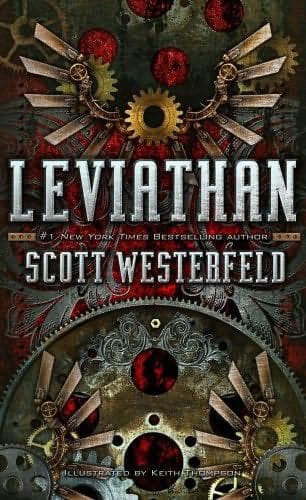
Book details and cover from Google Books.
Ready to read Leviathan?
Get your copy on Amazon, or listen to it on Audible. We earn a commission if you buy through these links.