
We earn a commission if you buy through these links. Learn more
Less
A funny, tender novel about a middle-aged writer who flees an ex's wedding by accepting every far-flung invitation he can find, and what that flight teaches him.
What It's About
Less is a comic novel about Arthur Less, a San Francisco writer approaching fifty whose career has quietly stalled and whose love life is mostly a memory. When his younger former partner announces his wedding, Less cannot face attending, so he accepts a string of distant lectures, residencies, and literary events and sets off around the world, partly to avoid the one invitation he cannot bear. The premise is simple, and the book is built on the small, absurd situations that follow.
Greer writes in close third person, and the voice is the main event: dry, self-mocking, quick to puncture its own pretensions, and suddenly tender when a joke runs into something real. The travel scenes work as set pieces where Less's clumsiness and vanity become funny, but the narration keeps circling back to aging, desire, and what a life amounts to when it has not gone to plan. Greer is interested in how we tell stories about our own failures.
Reading it feels like spending a few days with a witty companion who is nobody's idea of a hero. The pages move quickly, the sentences reward slowing down, and the emotional payoff comes from accumulated small moments rather than big revelations. It is a book to read for its humor and its ache together, and it is best approached as a character study rather than a plot-driven adventure.
Read this if you…
- enjoy witty, character-driven literary comedy with real emotional weight
- are curious about middle age, lost love, and the vanity of artists
- want a short, pleasurable read that still rewards close attention to sentences
Skip it if you…
- need a fast plot with clear stakes and a steady sense of direction
- find self-deprecating narrators tiresome or prefer a conventional, linear story
Key Ideas
- 1
Comedy as a way of managing loss
Less uses humor as armor, and the book takes that habit seriously. Its jokes are often defenses against grief, embarrassment, and disappointment. Part of the pleasure is watching the narrator's wit slip, revealing how much he is hiding and how much he still wants.
- 2
Aging and the shrinking of desire
Less measures himself against younger men, his changing body, and the expectations he once had for his life. The novel treats middle age candidly and without sentimentality, asking what romance and self-worth look like when the future is shorter than the past.
- 3
Travel as both escape and self-inspection
The journey starts as an excuse to avoid a wedding, but it becomes a way of seeing himself from outside his usual routines. Each new place sharpens his attention to his own habits, insecurities, and assumptions.
- 4
Literary vanity and the writer's self-image
Because Less is a novelist, the book also examines the gap between a writer's reputation and the actual work, along with the small vanities of the literary world. It is affectionate toward its protagonist while refusing to let him off the hook.
Limitations
Some readers find the humor too mannered, and the sequence of far-flung episodes can feel episodic, with some stops adding more atmosphere than momentum. The novel is closely tied to a particular kind of gay, bohemian, literary-world experience, and its portrait of a privileged, cosmopolitan man may not resonate with everyone. Because so much of its charm lives in the voice, readers who tire of the narrator's wit may find the book wearing by the middle.
Questions Readers Ask
- Is Less a good first Andrew Sean Greer novel?
- Yes. It is self-contained and needs no prior knowledge of Greer's other work. Its wit is accessible, and its emotional core does not depend on references or context. It works well as an entry point to his fiction.
- Does Less feel dated?
- Its concerns about aging, romantic regret, and a fading literary career feel largely timeless. Some cultural details and its picture of the literary world reflect the 2010s, but the central story is about a person rather than a moment, so most readers find it holds up well.
- Published
- 2017
- ISBN
- 9780316316149
- Difficulty
- beginner
- Category
- Fiction
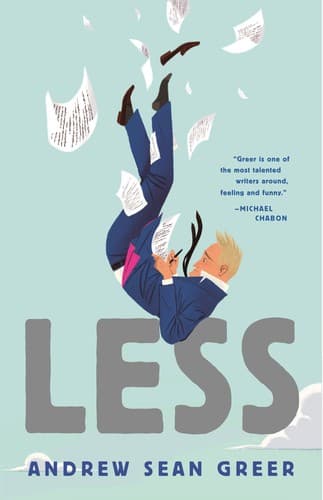
Book details and cover from Google Books.
Ready to read Less?
Get your copy on Amazon, or listen to it on Audible. We earn a commission if you buy through these links.