
We earn a commission if you buy through these links. Learn more
Legends of the fall
by Jim Harrison
On screen: Legends of the Fall (film, 1994)
Guide by the Books of the Day editors · Updated · How we write our guides
Jim Harrison's Montana novella, about a ranching family torn apart by war and appetite, is worth reading for its sensuous prose, its wild and sorrowful characters, and its deep feeling for the land.
What Creators Say About Legends of the fall
2 creators reviewed Legends of the fall on YouTube between 2024 and 2025, with 1.6K views between them. Their opinions are their own; we picked these reviews, we didn't write them.
What It's About
Legends of the Fall is a collection of novellas, and the title piece is the one most readers remember. It is set mostly in Montana in the early twentieth century and centers on the Ludlow family: a retired army colonel, his three sons, and especially the restless, reckless Tristan, whose hunger for wilderness, drink, and women makes him both magnetic and hard to live with. The story moves across frontier ranching, the First World War, and the years after, with love and loss shaping each stage.
Harrison writes long, sensuous, unhurried sentences full of weather, landscape, food, animals, and the physical labor of work. The pace is leisurely, with digressions that let scenes breathe, and the dialogue is spare and often funny. The narrative sympathies lean toward men who feel too much in a world that rewards restraint, and the book treats sex and violence with bluntness rather than polish.
Reading it feels like sitting with a storyteller who knows this country by heart. Its emotional force builds through accumulation rather than surprise, so the experience is melancholy, earthy, and absorbing. Readers who want a tight plot or a quick engine may find it slow, but those who enjoy atmosphere and character will likely find it rewarding.
Read this if you…
- love immersive, sensory prose that lingers on landscape and daily work
- enjoy flawed, passionate characters whose choices are hard to excuse but easy to understand
- want a melancholy family saga set in the American West and shaped by war
Skip it if you…
- need a fast-moving plot with clear suspense and frequent turns
- find explicit sex and graphic violence off-putting in literary fiction
Key Ideas
- 1
Wildness as both gift and curse
Tristan embodies a desire to live outside social rules, chasing hunting, drink, and instinct. Harrison shows the appeal of that freedom while also making clear what it costs the people who love him. The book never fully settles whether his way of life is admirable or self-destructive, and that ambiguity drives much of its tension.
- 2
Family bound by loyalty and rivalry
The brothers and their father relate to one another through a mix of devotion, envy, and disappointment. Their bonds hold through separation and hardship, but the book is attentive to how pride and temperament pull them apart. Family is the book's central unit of meaning, more than any single romance or adventure.
- 3
War arriving in a rural world
The First World War reaches a remote Montana family and changes them in ways that cannot be undone. Harrison is less interested in battle scenes than in the quiet aftermath, the way grief and memory alter ordinary routines. The war functions as a force that reshapes personal fate rather than as a backdrop.
- 4
The land as a living presence
Rivers, forests, seasons, and animals are rendered with close, loving attention, and the natural world often seems to govern human choices. Harrison's descriptions of hunting and fishing are detailed and physical. This gives the stories their sense of time and scale, making the characters feel small against the land.
- 5
Prose that favors feeling over plot
Harrison's style is lush, digressive, and patient, so meaning accumulates through mood and sensory detail. Scenes often linger on a meal, a walk, or a conversation, and the effect is immersive. This approach rewards attentive reading and can frustrate those expecting a conventional narrative drive.
Limitations
Some readers find the characters, especially the women, thinly drawn compared with the men, and the romantic and sexual material can feel dated or self-indulgent. The stories also rely heavily on hunting, drinking, and masculine rituals, which some will find repetitive. Harrison's digressive style is a strength for many but can blur momentum, and the book offers little in the way of historical context about Montana's changing economy or the Indigenous communities of the region.
Questions Readers Ask
- Is Legends of the Fall a novel or a collection?
- It is a collection of novellas, and the title novella is the best known. The stories share a regional setting and some thematic concerns, but each has its own shape. Readers expecting one continuous novel should adjust their expectations, though the connections between the pieces give the book cohesion.
- Is it still worth reading today?
- Yes, especially for readers drawn to American regional fiction about land, war, and family. Some attitudes toward gender and violence feel of their era, so it helps to read with that in mind. Its portrait of a vanished rural way of life still has real emotional power.
- Should I watch the film before reading the book?
- The 1994 film is loosely based on the title novella and changes a good deal. Reading the book first gives you Harrison's prose, interiority, and the texture of the original stories, which the film only partly captures. Watching the film afterward can be an interesting comparison.
- Published
- 1978
- ISBN
- 9780440054627
- Difficulty
- intermediate
- Category
- Fiction
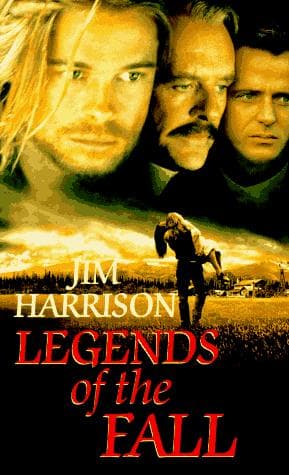
Book details and cover from Google Books.
Ready to read Legends of the fall?
Get your copy on Amazon, or listen to it on Audible. We earn a commission if you buy through these links.