
We earn a commission if you buy through these links. Learn more
Landmarks
A travelling study of how the words we use for land, from Gaelic and regional dialect terms, shape the way we see and protect the places we live.
What It's About
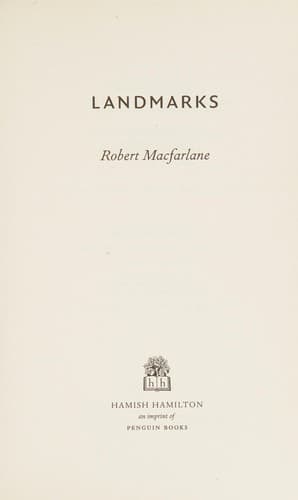
Landmarks is a nonfiction book by Robert Macfarlane, a writer best known for his books about walking and wild places. Its central subject is language: the many words that people in Britain and Ireland have developed over centuries to name the features of land, weather, and water. Macfarlane treats these words as a kind of inherited map, one that shows how earlier generations knew and lived in their surroundings.
The book moves between travel, close reading, and glossary. Macfarlane walks, talks with people who use these terms, and collects dialect and Gaelic vocabulary, then reflects on what it means that many of these words are falling out of use. The prose is lyrical but grounded, and the chapters read more like linked essays than a single argument, so you can dip in and out. Expect long sentences, a steady engagement with other writers, and close attention to small details of place.
Reading it is less like collecting information and more like being slowed down. You come away with a sharper sense of how language and landscape are bound together, and with a list of words you may want to start using yourself. It rewards patience and a willingness to be moved by a word whose meaning you only partly grasp.
Read this if you…
- you enjoy nature writing that thinks hard about language
- you are curious about dialect words and regional speech
- you want a book to read slowly, a few pages at a time
Skip it if you…
- you want a practical guide to outdoor skills or hiking routes
- you need a tightly structured argument with a clear narrative arc
Key Ideas
- 1
Language shapes how we perceive land
Many regional and Gaelic terms make distinctions that everyday English does not. Macfarlane argues that words work as tools for noticing, so losing a word can mean losing a way of seeing a particular kind of ground, water, or weather.
- 2
Dialect and Gaelic words as a living archive
Terms from regional speech and Gaelic record local knowledge built up by people working and walking the land. Macfarlane collects them almost like a word-hoard, showing how much practical and imaginative understanding sits inside a single term.
- 3
Vanishing vocabulary and what is lost
The book takes seriously the disappearance of nature words from everyday use, especially among children. It frames this as a cultural and ecological concern rather than simple nostalgia, asking what happens when people no longer have the names for the world around them.
- 4
Walking as a method of attention
Macfarlane tests his ideas against physical places rather than relying only on archives. Travel becomes a way of checking language against landscape, so the argument stays tied to real ground and real encounters.
Limitations
Critics sometimes find the lyricism thick and the chapters uneven, with digressions that can feel more like collected fragments than a sustained argument. Its focus is mainly on Britain and Ireland, so readers hoping for a wider global view of language and land will find a narrow frame. The elegiac tone around vanishing words can slide toward sentiment, and some readers may want more engagement with how communities use language today. Published in 2015, it also refers to a particular moment in education and publishing that has since moved on.
Questions Readers Ask
- Is Landmarks a good first Robert Macfarlane book?
- It can be, though many readers start with The Old Ways or Mountains of the Mind. Landmarks is more concerned with language and less with a single journey, so it suits readers already curious about place. If you care more about words than walking routes, it is an excellent entry point.
- Is Landmarks still relevant?
- Yes. Its core question, how we name and notice the natural world, remains current in discussions of nature loss and children's disconnection from outdoors. Some specific examples are dated from its 2015 publication, but the argument about words and attention holds up well.
- Published
- 2015
- ISBN
- 9780241253663
- Difficulty
- intermediate
- Category
- Books and reading
Book details and cover from Google Books.
Ready to read Landmarks?
Get your copy on Amazon, or listen to it on Audible. We earn a commission if you buy through these links.