
We earn a commission if you buy through these links. Learn more
Killing Floor
by Lee Child
Lee Child's debut Jack Reacher novel delivers a lean, fast thriller about a wrongly accused drifter who refuses to accept a small town's official story.
What It's About
Killing Floor, published in 1997, is the first novel in Lee Child's Jack Reacher series. Reacher is a former military police officer who owns almost nothing and goes wherever he pleases. The book opens with him stepping off a bus in a small Georgia town he has no reason to visit. Within hours he is arrested for a murder he did not commit, and the rest of the book follows how he gets out of that trap and what he uncovers beneath it.
The style is spare and fast. Chapters are short, sentences are plain, and the narration stays close to Reacher's habit of noticing things: a car's tires, a man's hands, how a room is laid out. Child writes violence briskly and without relish. Much of the pleasure comes from Reacher's blunt, dry logic as he tests what people tell him. It reads like a thriller built on procedure and pressure rather than long passages of description.
The experience is quick and propulsive, closer to a well-built puzzle than a literary character study. Expect a hero who is competent to the point of myth, antagonists who are mostly functional, and a town whose atmosphere matters more than its residents. Readers who want a layered whodunit with many suspects will find a simpler, more direct engine.
Read this if you…
- want a fast, lean thriller you can finish in a weekend
- enjoy a capable outsider who solves problems through observation and nerve
- are new to Jack Reacher and want to see whether the series suits you
Skip it if you…
- need complex character psychology or a slow build to suspense
- dislike graphic violence or a hero who is almost always one step ahead
Key Ideas
- 1
A drifter who won't take the official story
Reacher's central skill is reading people and situations closely and refusing to accept what he's told. He treats every detail as evidence, and the book's momentum comes from watching him test each claim against what he can actually see. The mystery is less about clever clues and more about a man who keeps asking the obvious question everyone else has stopped asking.
- 2
Freedom from possessions and institutions
Reacher carries no phone, no home, and little luggage, and he answers to no one. That independence makes him hard to pin down and gives him an outsider's clarity about the town. The book also treats it as a kind of vulnerability, since he has no network to call on when things go wrong, which quietly sharpens the stakes.
- 3
How one town's power structure breeds trouble
Small communities that depend on a single employer or a few powerful families can become easy places for wrongdoing to hide. Child uses the setting to show how local loyalties, a compliant police force, and a sense that outsiders don't matter can combine. The book is more interested in this pressure cooker of an environment than in the people trapped inside it.
- 4
Deliberately plain prose as a style choice
The writing is stripped down on purpose. Scenes are short, dialogue is clipped, and the narrator rarely lingers on feelings or scenery. This makes the book quick to read and keeps tension high, but it also means emotional depth comes in small doses. Readers who enjoy economical storytelling will likely find the approach satisfying.
Limitations
Reacher is close to invincible, and some readers will find that drains tension from the physical scenes. The female characters are thin, and the prose is so spare that it can feel repetitive over a full novel. Some plot coincidences and conveniences are easy to spot. The 1990s setting also predates smartphones, so the investigation moves through pay phones, paper records, and face-to-face contact in a way that feels dated to some readers.
Questions Readers Ask
- Do I need to read the Jack Reacher books in order?
- Killing Floor is the first book in the series, so it's the natural place to start. It introduces Reacher's background, habits, and way of thinking. Most later books work as standalone stories, so you won't be lost if you jump ahead, though reading in order gives you more context on his past.
- How does it compare with more elaborate thrillers?
- Compared with thrillers that rely on many subplots, detailed procedure, and multiple viewpoint characters, Killing Floor is shorter and more direct. It focuses on one hero and one problem. If you want a tightly paced, action-driven read rather than an intricate conspiracy, it delivers that well.
- Published
- 1997
- ISBN
- 9781561008063
- Difficulty
- beginner
- Category
- Fiction
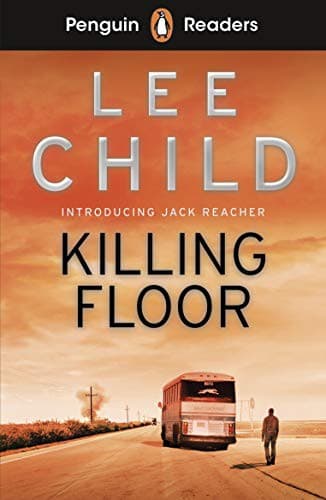
Book details and cover from Google Books.
Ready to read Killing Floor?
Get your copy on Amazon, or listen to it on Audible. We earn a commission if you buy through these links.