
We earn a commission if you buy through these links. Learn more
Just So Stories
Kipling's playful, rhythmic tales explain how the leopard, camel and elephant got their features, built for reading aloud and still funny to children today.
What It's About
Just So Stories is a set of short tales, first published in 1902, in which Kipling invents origin stories for animal features and a few natural wonders. Why does the leopard have spots, why does the camel have a hump, how did the whale come to have such a small throat? Each story answers its question with a little invented drama, told in the cadence of someone speaking to a child at bedtime. Kipling also drew the illustrations himself, which gives the book a deliberately naive, quirky charm.
The prose is the main attraction. Kipling leans on repetition, refrains, lists, and invented words, and he clearly expects the book to be read out loud. Sentences rise and fall, sudden asides address the listener, and the comedy depends on timing as much as on the jokes. The stories were first told to his daughter, and that origin shows: they feel like improvised bedtime talk that has been polished until the rhythm sounds effortless. Some pieces are closer to chanted songs than to conventional narrative.
Reading them silently still works, though you lose some of the music. The stories are brief, so the whole collection can be finished in an evening, and adults often find the wit lands differently than it does for children. The moral world is simple: pride gets punished, curiosity leads to trouble, and cleverness usually comes with a cost. Expect a book that rewards attention to sound and word choice more than to plot or character.
Read this if you…
- enjoy reading aloud to a young child and want something that rewards the voice
- like folk tales, myths, and playful invented explanations of the natural world
- want to see the lighter, sillier side of Kipling's writing
Skip it if you…
- want a continuous plot, believable characters, or any accurate natural science
- find heavy repetition and archaic phrasing tiresome, or object to colonial-era attitudes in children's books
Key Ideas
- 1
Origin stories as playful invention
Each tale offers a make-believe reason for a real animal trait, from spots to humps to throats. Kipling is not teaching natural history; he is doing comic myth-making, so the science is wrong and that is the point. Treat the stories as fun inventions rather than factual explanations, and you will enjoy them far more.
- 2
Sound and rhythm as the real engine
Repetition, refrains, and cadence do most of the work here. Several pieces read like chants or songs, and the humour often lives in a repeated phrase or a rolling list. Expect to hear these stories in your head more than to follow a plot, and you will get the most from them.
- 3
Cleverness, pride, and consequences
Characters who overreach, show off, or misbehave tend to receive a lasting mark or change. The moral is folk-tale plain: be careful what you ask for, and cunning has costs. Many tales hinge on a small or foolish creature whose choices permanently alter how it looks or lives.
- 4
Imperial-era assumptions in some tales
Some stories, and parts of the wider framing, reflect the colonial attitudes of their period, with non-European people and places presented through a lens of superiority. Read with that awareness rather than assuming the book is neutral, and be ready to discuss it if you read it with children.
Limitations
The stories are of their time. Several depict non-European people and places through a colonial lens, which some readers will find jarring and which may need context for children. The science is invented, so the book is no substitute for nature writing. The rhythmic style that delights many readers can feel mannered or wearying to others, and some humour relies on Edwardian references that a modern child may not catch without explanation.
Questions Readers Ask
- Is Just So Stories still suitable for children today?
- Mostly yes, especially for reading aloud to younger children, since the stories are short, funny, and full of vivid animals. Adults should be ready to talk through the colonial-era attitudes in a few pieces. That can turn bedtime reading into a useful conversation rather than an awkward moment.
- How does it compare with The Jungle Book?
- The Jungle Book has longer, more ambitious narratives with a stronger sense of place and character, and it reads more like a novel in linked stories. Just So Stories is shorter, lighter, and more focused on sound and wit. If you enjoyed the animals in The Jungle Book but want something quicker, these are a good next step.
- Do I need to read the stories in order?
- No. Each story stands alone, so you can pick one by its animal and read it in a few minutes. The stories do not build on each other, so you can dip in and out as you like.
- Published
- 1922
- ISBN
- 9798766617334
- Difficulty
- beginner
- Category
- Children's Books
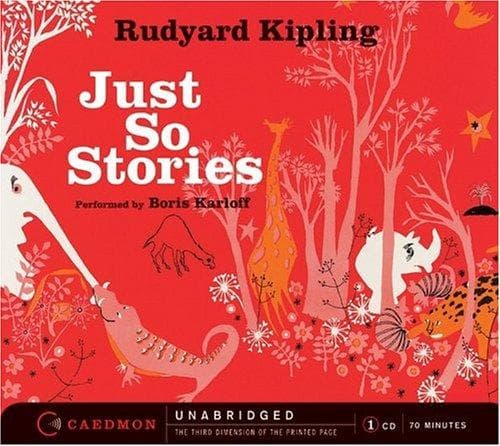
Book details and cover from Google Books.
Ready to read Just So Stories?
Get your copy on Amazon, or listen to it on Audible. We earn a commission if you buy through these links.