
We earn a commission if you buy through these links. Learn more
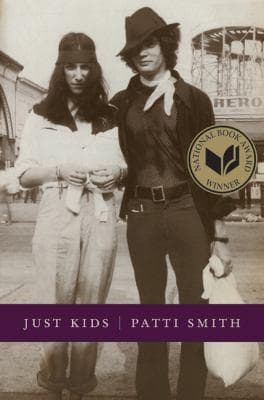
Just Kids
Guide by the Books of the Day editors · Updated · How we write our guides
A tender, unvarnished memoir of two young artists building their lives in 1960s and 70s New York, worth reading for its portrait of devotion and creative ambition rather than its rock-and-roll backdrop.
What Creators Say About Just Kids
2 creators reviewed Just Kids on YouTube between 2017 and 2023, with 19.2K views between them. Their opinions are their own; we picked these reviews, we didn't write them.
What It's About
Just Kids is Patti Smith's memoir of her early years in New York with the photographer Robert Mapplethorpe, whom she met in 1967 when both were young, broke, and largely unknown. It follows the two of them as they find their footing: sharing cheap rooms, scraping together money, making art out of whatever is at hand, and slowly building the reputations that would carry them into the wider world. The Chelsea Hotel recurs as a setting, a place full of artists and eccentrics that becomes something like a home base.
The book is written in a plain, rhythmic voice that favors sensory detail and close attention to small moments over sweeping analysis. Smith writes about objects, streets, meals, and conversations with the same care she gives to the famous figures who pass through their lives. Reading it feels less like following a plot and more like sitting with someone who remembers a period vividly and wants you to feel its texture.
Because Smith is best known as a musician and poet, readers expecting a music-industry memoir will find something more concerned with friendship, devotion, and the making of an artistic life. The emotional center is the long bond between two people who pushed each other, and the later part of the book, which deals with Mapplethorpe's illness and death, is quiet and unsparing. It is a book about the cost of ambition as much as its rewards. Note that the category listed for this page is Fiction, but Just Kids is a memoir.
Read this if you…
- Want a close, personal portrait of the New York art scene in its gritty years
- Are interested in how artists support and challenge each other over a lifetime
- Enjoy lyrical, observational prose more than fast-moving narrative
Skip it if you…
- Are looking mainly for backstage stories or a detailed account of Smith's music career
- Find slow, reflective writing hard to stay with over a full book
Key Ideas
- 1
Devotion as the engine of an artistic life
The relationship between Smith and Mapplethorpe is the book's spine. Their mutual faith in each other's gifts, long before either had proof, shows how much of making art depends on having one person who takes your work seriously when no one else does. The book treats that loyalty as both sustaining and demanding.
- 2
Poverty as a working condition for artists
Money is constantly short, and the book describes getting by on odd jobs, borrowed space, and improvised materials without romanticizing it. Smith presents scarcity as a practical problem that shapes what gets made, and as a shared experience that bonded the young artists in her circle.
- 3
New York as a community of makers
Rather than a city of glamour, New York here is a web of studios, bookstores, cafes, and hotel rooms where artists trade ideas and encourage one another. The Chelsea Hotel in particular becomes a crossroads, showing how a physical place can hold an entire creative scene together.
- 4
Looking closely as a way of living
Smith's attention to objects, rituals, and small domestic details reflects a belief that art grows out of observation. Her prose often lingers on what others would skip, which gives the memoir its texture and makes its emotional moments land with more weight than grand statements would.
Limitations
Some readers find the book selective to the point of gaps. Smith covers her early years with Mapplethorpe in intimate detail but moves more quickly through the wider world of later decades, so the reader gets a strong sense of one period and less of the whole life. Others find the prose sentimental in places or the myth-making around famous names a little uncritical. Mapplethorpe's own perspective is necessarily filtered through Smith's memory, and the book does not attempt a full, independent account of his work or the controversies later attached to it.
Questions Readers Ask
- Who is Just Kids for?
- It suits readers who enjoy memoirs about friendship and creative struggle, especially anyone interested in 1960s and 70s New York or in Patti Smith's work. It is accessible for general readers because the prose is clear and direct. It works best for people who are happy with a reflective, personal book rather than one driven by plot or dramatic incident.
- Is Just Kids still relevant today?
- Yes, mostly because its core subject, two people sustaining each other through poverty and the early pursuit of art, remains widely recognizable. Some details of the era and the city have changed a great deal, so readers may find parts of it read as a period piece. Its emotional honesty about ambition and loss holds up well.
- How does it compare to Smith's other writing?
- Readers who know Smith mainly through her music will find the book more intimate and less concerned with performance or lyrics. Her later memoir M Train is more fragmented and meditative, while Just Kids follows a clearer chronological arc centered on one relationship.
- Published
- 2006
- ISBN
- 9780062109385
- Difficulty
- beginner
- Category
- Fiction
Book details and cover from Google Books.
Ready to read Just Kids?
Get your copy on Amazon, or listen to it on Audible. We earn a commission if you buy through these links.