
We earn a commission if you buy through these links. Learn more
Jubilee
Margaret Walker's grounded novel shows slavery, the Civil War, and Reconstruction through one Black woman's daily survival, told in the rhythms and voices of the people who lived it.
What It's About
Jubilee follows Vyry, a woman born enslaved on a Georgia plantation before the Civil War, the child of an enslaved mother and the white man who owned them. The novel covers her girlhood, her marriage, the upheaval of war, and the uncertain years of emancipation and Reconstruction. Walker drew on the life of her own great-grandmother and on family stories, which gives the book the feel of a remembered history rather than a conventional romance of the period.
The approach is episodic and layered. Scenes move between field and household work, religious life, music, violence, and the close bonds of a community trying to hold together. Dialogue uses the folk speech of rural Black Southerners, which can be demanding at first, while the narration is more formal. Walker pays close attention to daily detail, so the story often reads more like a chronicle than a tightly plotted novel.
Reading it is slow, immersive, and emotionally weighty. You live inside long stretches of labor and small kindnesses, while the larger war and political upheaval arrive in pieces. The reward is a portrait of endurance and self-determination rather than heroics, and a sustained look at what freedom meant to people who had been denied almost everything.
Read this if you…
- want historical fiction that shows slavery and the Civil War from inside a Black family's daily life
- are interested in Southern oral history and folk speech in fiction
- prefer a slow, episodic novel that builds meaning through accumulated detail
Skip it if you…
- want a fast-moving plot with clear suspense or a tidy, satisfying resolution
- find heavy dialect dialogue a constant barrier and are unlikely to push through the early pages
Key Ideas
- 1
History rooted in family memory
The novel grows out of Walker's own family history, and that origin shapes everything about it. Instead of viewing the period from the planter's house or from national politics, it stays with one family's memory. The result is a counter-narrative to the white-centered stories many readers grew up with, built from oral history and private detail.
- 2
Survival as the central subject
Vyry's life is less a series of dramatic turns than an ongoing act of getting through. The book is interested in how people keep families together, keep working, and make choices within narrow limits. Survival here is practical, moral, and emotional at once, and the novel treats it with respect rather than sentiment.
- 3
Freedom as more than legal status
The book keeps asking what liberty actually means once the law changes. Questions of land, labor, family ties, and dignity sit beside the question of who is legally free. Readers see how hard it was to turn a declaration into a stable life, and how uneven that process was for ordinary people.
- 4
Folk speech, religion, and song
Walker places dialect, spirituals, church life, and folk custom at the center of the story rather than at its edges. These are not decorative touches; they are how the characters think, grieve, and find meaning. Readers who come to the book for the texture of Black Southern culture will find much of it here.
- 5
Women's labor and motherhood
Much of the novel's emotional force comes from the work women did to sustain households under slavery and after it. Childbearing, caretaking, and domestic labor are presented as central to survival, not as background. The book gives these roles weight and complexity without reducing its female characters to symbols.
Limitations
The episodic structure can feel loose, and some readers find the shifts between formal narration and dialect uneven. The pacing is deliberate, and the story sometimes moves through years quickly while lingering elsewhere. The book is centered on one family in rural Georgia and Alabama, so it says less about urban life and the wider national politics of the era. Its mid-century prose style and sentimental moments can also feel dated to some contemporary readers.
Questions Readers Ask
- Is Jubilee based on a real person?
- Yes. Walker based the novel on the life of her great-grandmother, drawing on family stories and oral history. Vyry is a fictional character shaped by that inheritance, so the book blends documented historical context with imagined scenes and dialogue. Readers who want the full background of the writing can find more on Walker's own account of its origins.
- How does Jubilee compare to Gone with the Wind?
- Gone with the Wind centers white Southern planter society and a romance set against the war. Jubilee takes the opposite view, showing slavery, the war, and Reconstruction from the position of enslaved and newly freed Black people. Jubilee is slower and more episodic, while Gone with the Wind is more plot-driven and romantic.
- Is Jubilee still worth reading today?
- Yes, especially for readers interested in the history of American fiction about slavery and Reconstruction. It is often read alongside later novels in the same tradition. Its dialect and pacing take some adjustment, but it offers a perspective that remains rare in the mainstream canon.
- Published
- 1966
- ISBN
- 9780553257915
- Difficulty
- intermediate
- Category
- Fiction
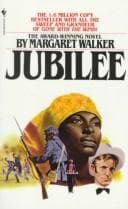
Book details and cover from Google Books.
Ready to read Jubilee?
Get your copy on Amazon, or listen to it on Audible. We earn a commission if you buy through these links.