
We earn a commission if you buy through these links. Learn more
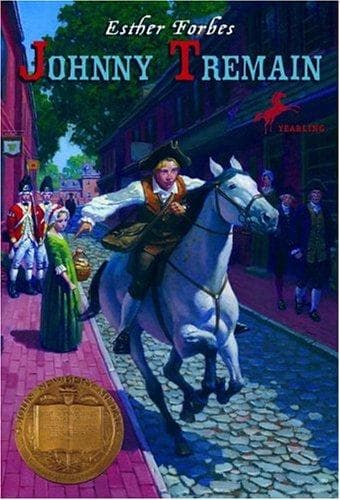
Johnny Tremain
A teenage silversmith's apprentice is pulled into the fight over Boston's future, and the novel shows the Revolution through the eyes of working people rather than generals.
What It's About
Johnny Tremain is a 1943 historical novel set in Boston in the early 1770s, as the colonies drift toward open conflict with Britain. Its hero is a teenage apprentice in a silversmith's shop whose life is upended by a workshop accident. Esther Forbes builds the story around his daily work and the street-level talk of artisans, printers, and agitators who argued over liberty in taverns and meeting houses.
The book is part adventure, part coming-of-age story, and part history lesson delivered through character. Forbes drew on her research into the period, and the political events arrive as they would to a young worker: rumor, errands, crowds, and sudden decisions. The prose is brisk and direct, and the chapters move quickly, so the book reads faster than its length suggests.
Reading it feels like walking through a working eighteenth-century town with a companion who knows the trades. You get a sense of how things were made, who ran errands for whom, and why a young man's pride and resentment could matter as much as national politics. It is a book about becoming responsible for yourself as much as it is a story about a war.
Read this if you…
- are curious how the American Revolution felt to ordinary people in a single city
- want a historical novel that works for teenagers and adults alike
- enjoy stories about craft, apprenticeship, and a young person finding his footing
Skip it if you…
- want a detailed, documented account of the Revolution rather than fiction set against it
- find older children's-book conventions and a strongly patriotic tone off-putting
Key Ideas
- 1
Craft as a way of seeing
The silversmith's shop gives the novel its texture and its moral center. Johnny's skill, and his sense of what he has lost when he can no longer do the work he trained for, carry an argument about the dignity of labor. Forbes lets you notice how objects are made, which makes the period feel tactile rather than abstract.
- 2
Revolution told from the street
Instead of focusing on battles and officials, the book follows the ideas as they spread through meetings, print shops, and back rooms. Characters hear about events secondhand, misread them, and act on incomplete information. This makes the political stakes feel immediate and uncertain, the way they would have to people living through them.
- 3
Pride, injury, and self-respect
Johnny's injury forces him to reckon with his sense of worth. He is proud, quick to take offense, and used to measuring himself by what his hands can do. The novel tracks how he adjusts, sometimes badly, and how his relationships with others shape that adjustment. It is less a tidy redemption story than an honest look at a difficult young man.
- 4
History carried by daily life
Forbes's research surfaces through routines, streets, clothing, food, and the rhythms of a port town rather than through lectures. Readers who want a sense of how colonial Boston functioned will get a lot from the everyday details. The historical background is present throughout, but it stays in the service of the characters.
- 5
Divided loyalties in one city
Boston was not united against Britain, and the novel shows how friends, families, and employers could end up on opposite sides. Loyalties shift according to personal relationships as much as principle. This gives the story a sense that the Revolution was a conflict among neighbors, not only a contest between nations.
Limitations
The novel was written in the early 1940s and frames the Patriot cause heroically, which can feel one-sided to modern readers. Loyalists and British soldiers are drawn thinly, and the wider enslaved and free Black population of Boston barely appears. Some period phrasing and assumptions about gender and class will also feel dated. Readers who want balance or a fuller social picture should pair it with a more recent history.
Questions Readers Ask
- Is Johnny Tremain still worth reading today?
- Yes, especially for its vivid sense of eighteenth-century Boston and its focus on craft and everyday life. Its patriotic framing and limited attention to Black and Loyalist perspectives mean it works best as one part of a reading list. Pairing it with a modern history of the period gives a fuller picture.
- How does it compare to other Revolution-era novels?
- It is smaller in scope than sweeping epics about generals and battles. Its strength is intimacy: the story stays with one young worker and his city. Forbes also wrote a respected biography of Paul Revere, so the novel's Boston details come from someone deeply versed in the period.
- Published
- 1943
- ISBN
- 9780694504046
- Difficulty
- beginner
- Category
- History
Book details and cover from Google Books.
Ready to read Johnny Tremain?
Get your copy on Amazon, or listen to it on Audible. We earn a commission if you buy through these links.