
We earn a commission if you buy through these links. Learn more
It's a Book
A short, funny picture book in which a donkey tries to figure out what a printed book is for, making it a light, sharp way to talk with children about reading and screens.
What It's About
It's a Book is a picture book by Lane Smith, the illustrator and author who worked with Jon Scieszka on the playful classic The Stinky Cheese Man. The premise is simple. A donkey and a monkey are together, and the monkey is absorbed in a sleek electronic device. The donkey is handed a book and tries to understand what it is, measuring it against the things he already knows how to use.
The humor comes from the mismatch. The donkey's questions are reasonable, and the answers he gets, or doesn't get, expose how differently a page and a screen behave. Smith's art is bold and graphic, with plenty of expressive faces and clear staging, so the joke lands visually as well as in the text. The book is short enough to read in one sitting and works best read aloud, where timing and a child's reactions do much of the work.
The experience is less a lesson than a conversation starter. Adults reading it will probably find themselves laughing at the donkey and then thinking about their own habits. Children tend to respond to the sense that something familiar has suddenly become strange, which is a useful way into talking about what books offer and what they ask of the reader.
Read this if you…
- want a short, funny picture book to read aloud to a young child
- are looking for a gentle way to start a conversation about reading and screens
- enjoy the deadpan humor and bold graphic style of Lane Smith's work
Skip it if you…
- want a story with a plot, character development, or emotional depth beyond the central joke
- are looking for a detailed guide to children's media habits or a serious argument about technology
Key Ideas
- 1
A familiar object seen as strange
The book's central move is to make a printed book look unfamiliar. By placing it beside a screen and asking what it can do, Smith invites readers to notice features they have stopped seeing, such as the lack of buttons, updates, or sharing. The gag works because the donkey is sincerely trying to make sense of the thing, not simply being silly.
- 2
Humor built on earnest questions
The donkey's questions are logical within his own frame of reference, which is why they are funny. Adults will catch the gap between his expectations and the object in front of him, while younger children enjoy the simple rhythm of question and response. The comedy depends on taking his confusion seriously rather than mocking it.
- 3
Screens versus pages, without a lecture
The contrast between the device and the book carries the theme, but Smith avoids preaching about technology. The book does not declare one medium better. It simply lets the reader compare how each one works. That restraint makes it easier to share with children, who can draw their own conclusions and argue about them.
- 4
Pictures that carry the joke
Smith's illustrations do much of the storytelling, using expressive faces, simple backgrounds, and deliberate staging to deliver the punchline. Reading the pictures closely rewards a second look and gives adults and children something to point at together. The text is kept spare so the images can do the comic timing.
Limitations
The book is slight by design. Its single joke carries it, and some adult readers may find the premise thin on a second reading. Critics who want a more developed narrative or a sharper argument about digital life will be disappointed, since the book prefers a light touch to a pointed message. Its humor also relies on a shared sense of what a book is, which may not land as clearly with very young children who have had little exposure to printed books.
Questions Readers Ask
- Who is It's a Book best for?
- It suits preschool and early elementary readers, especially when read aloud by a parent, teacher, or librarian. Adults who enjoy wry, understated humor often enjoy it as much as children do. It is a good choice for a family reading session or a classroom discussion about books and screens, though it is not a substitute for longer stories.
- Is It's a Book still relevant?
- Yes, arguably more so. The contrast it draws between a printed book and a device has become more familiar since publication, so the joke may feel even sharper to adults now. The core question about what a book offers that a screen does not remains a useful starting point for conversation with children.
- Published
- 2010
- ISBN
- 9788449442025
- Difficulty
- beginner
- Category
- Children's Books
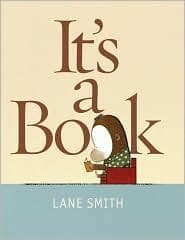
Book details and cover from Google Books.
Ready to read It's a Book?
Get your copy on Amazon, or listen to it on Audible. We earn a commission if you buy through these links.