
We earn a commission if you buy through these links. Learn more
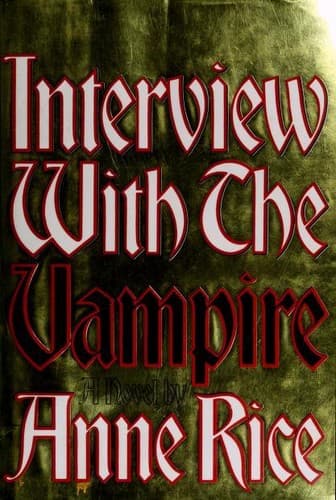
Interview With the Vampire
by Anne Rice
A vampire's confession, told over several nights to a young reporter, makes Anne Rice's 1976 novel a moody, sensual meditation on guilt, loneliness, and endless life rather than a straightforward monster story.
What It's About
Interview With the Vampire (1976) is Anne Rice's first novel in what became her Vampire Chronicles. It is narrated by Louis, a vampire who agrees to tell his life story to a young journalist in a San Francisco room over several nights. Rather than a conventional horror plot, the book is a long confessional memoir, and most of its power comes from Louis's voice: self-lacerating, sensual, and often wistful about his appetites and his losses.
The story moves from late eighteenth-century Louisiana through New Orleans and into Europe, with its richest passages set in the city's houses, streets, and church silences. Rice writes in lush, ornate sentences heavy with description of sensation, décor, and inner feeling. The pacing is leisurely, and long stretches are given to reflection. Some readers will find this immersive; others will find it slow.
Reading it feels less like watching a monster film than like listening to a man who has lived for two centuries try to reckon with what he has done and what he has become. The horror is mostly moral and emotional, built from guilt, hunger, and the question of whether a being that cannot die can still find meaning. It rewards patience and often rewards a second reading.
Read this if you…
- want Gothic atmosphere and a slow, reflective narrator more than jump scares
- are drawn to vampire stories that take guilt and loneliness seriously
- enjoy lush, sensual prose and don't mind a long, digressive confession
Skip it if you…
- want a fast plot with frequent action and clear turning points
- find ornate, long-winded prose tiring to read
Key Ideas
- 1
Hunger as both nature and burden
The novel treats vampire appetite as something that is at once biological necessity and moral weight. Louis does not simply feed; he agonizes over what feeding means, and that tension between instinct and conscience drives most of the book's emotional force. Readers looking for a clean good-versus-evil divide will find something murkier here.
- 2
The interview frame as a moral mirror
The confession is addressed to a reporter who functions as a stand-in for the reader. Louis knows he is being judged, and that awareness shapes what he reveals and what he withholds. The frame keeps the narrative personal and invites the reader to weigh his self-justifications against his own accounts of his actions.
- 3
Decadence and Catholic guilt in New Orleans
Rice draws heavily on the atmosphere of old New Orleans, its religious ritual, wealth, and sensual excess. The setting gives the Gothic material a particular texture: beauty and rot sit side by side, and the characters live with a sharp sense of sin. The sensory detail is a large part of what makes the book memorable.
- 4
Immortality without purpose
Much of the book asks what a life without end is for. Louis's loneliness is less about being hunted than about outliving everyone he loves and struggling to find a reason to continue. This existential thread gives the novel a reflective, almost elegiac quality that many later vampire fictions borrowed or reworked.
Limitations
The prose is dense and deliberately ornate, and many readers find the pacing slow, especially in the middle sections where reflection outweighs events. The plantation setting and its handling of enslaved people are criticized as romanticized and underexamined by modern standards. The novel's view of its female characters is also dated by today's expectations. Its tragic, self-pitying tone may frustrate readers who want the vampire as a more active or less brooding figure.
Questions Readers Ask
- Is Interview With the Vampire still worth reading after decades of vampire fiction?
- Yes, though it reads differently now. Many later vampire novels and films took its sympathetic, brooding vampire as a template, so some of its ideas may feel familiar. Reading the original shows where those conventions began and offers a more deliberate, interior style than much of what followed.
- How does it compare to Dracula?
- Dracula is an epistolary Victorian novel built around a group of hunters pursuing a threatening outsider. Rice's book is a first-person confession told from inside the vampire's own perspective, making the monster sympathetic and reflective rather than purely frightening. If you prefer suspense and external threat, Dracula will suit you better.
- Published
- 1672
- ISBN
- 9782265079625
- Difficulty
- intermediate
- Category
- Horror
Book details and cover from Google Books.
Ready to read Interview With the Vampire?
Get your copy on Amazon, or listen to it on Audible. We earn a commission if you buy through these links.